The modern style is characterised by the creation of balanced, functional and visually orderly spaces. Far from relying on ornate décor, it focuses on carefully selecting each element and ensuring that the furniture, materials, colours and lighting all form part of a cohesive whole.

A modern home can incorporate different influences and adapt to both spacious properties and small spaces. The key lies in striking a balance between aesthetics and functionality.
Table of Contents
- How to plan a home in a modern style
- Opt for clean lines and simple shapes
- Keep spaces visually uncluttered
- Use a neutral colour palette
- Create contrast with dark colours
- Combining functionality and design
- Incorporating wood to add warmth
- Combining contemporary materials
- Playing with different textures
- Making the most of natural light
- Combining different types of lighting
- Maintaining a consistent aesthetic across rooms
- Create a modern home tailored to you
How to plan a home in a modern style
Before choosing furniture or decorative items, it is a good idea to assess the available space and consider how each room is used. The modern style aims for the décor to complement the home’s practical needs, which is why planning is particularly important.
Here are some of the key points you can bear in mind.
Opt for clean lines and simple shapes
One of the most recognisable features of the modern style is the use of simple shapes and well-defined lines.
Sofas with clean lines, and simple tables or shelves, help to create a tidy look.
Straight lines tend to make quite a statement, although curved shapes can also be introduced through a round side table, an armchair or a lamp. This contrast helps to soften the décor without losing its modern character.
The key is to avoid having too many different shapes competing with one another within the same room.
Keep spaces visually uncluttered
The modern style does not seek to fill every available surface. Leaving certain spaces free allows you to better appreciate the furniture, the materials and the architecture of the home itself.
This means selecting furniture with greater care, being mindful of what you need and what you want to achieve. You must also take proportions into account; they are essential for creating a balanced atmosphere.
A sofa that is too large can make a small living room feel cluttered, whilst using furniture that is too small in a spacious room can make the space seem empty or disjointed.
Before choosing a piece of furniture, it is advisable to consider both its dimensions and the space that will remain around it.
Use a neutral colour palette
Neutral shades usually form the basis of modern interiors.
White, beige, sand and so on allow you to create schemes that are easy to coordinate and help maintain a sense of continuity between the different rooms.
White is useful for enhancing brightness, whilst beige and earthy tones lend a greater sense of warmth. Greys, on the other hand, can create a somewhat more understated atmosphere.
It is not necessary to use just one colour. Combining different neutral shades can add depth and prevent the result from looking too uniform.
Create contrast with dark colours
Dark shades can be used to highlight certain elements within a predominantly neutral décor.
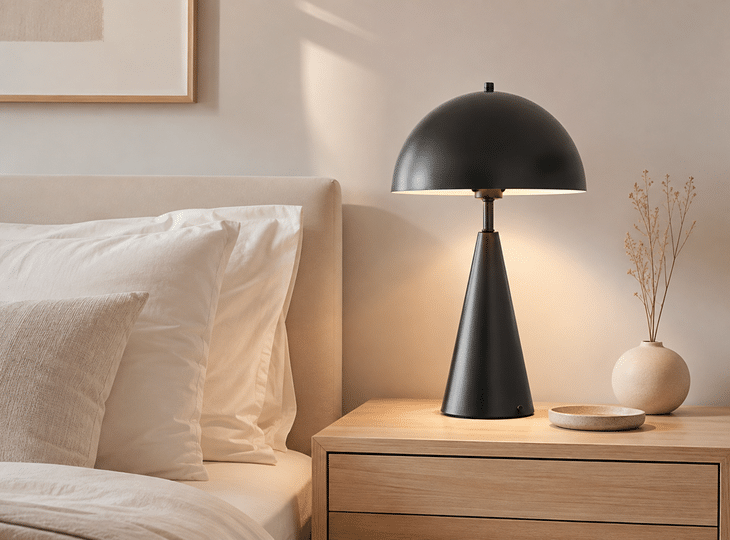
Black is commonly found in metal structures, furniture legs, lamps, frames, taps and small decorative details.
Anthracite grey, dark browns or other similar finishes can also be used.
In small rooms or those with little natural light, it is best to use them sparingly to prevent the space from losing brightness.
Combining functionality and design
In a modern home, furniture should meet both aesthetic and practical criteria.
Before adding a new piece, it is worth considering how it will be used within the space.
A side table can provide an extra surface next to the sofa, whilst a storage bench allows you to fulfil two functions with a single piece of furniture.
In small homes, extendable tables, modular furniture, beds with storage or compact desks can also be useful.
Modern interior design aims precisely to integrate these practical solutions into the room’s design.
Incorporating wood to add warmth
Wood is one of the easiest materials to incorporate into a modern interior. It can be found in furniture, flooring, side tables, etc.
Light-coloured woods help to maintain a bright and natural feel, whilst darker shades provide greater contrast.
Furthermore, its texture helps to balance out cooler materials such as metal, glass or stone.
Not all wooden elements need to be exactly the same. Different finishes can be combined as long as there is a certain degree of consistency between them.
Combining contemporary materials
The modern style allows for the use of very different materials within the same home.
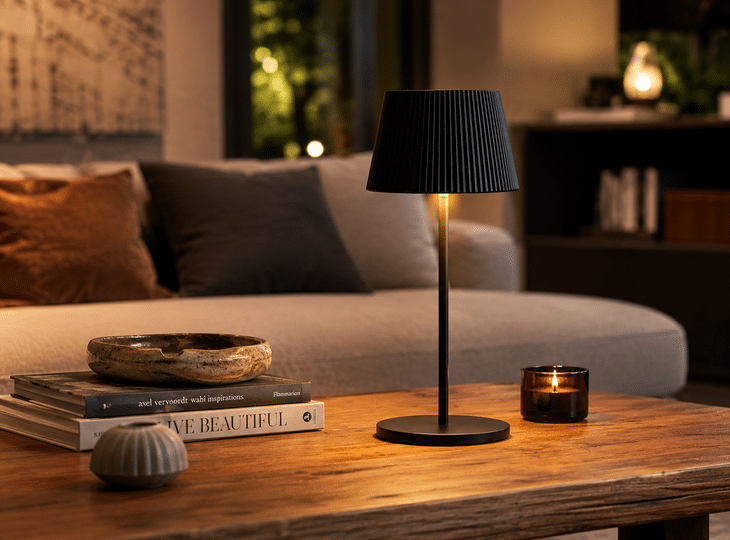
Metal, glass, stone, ceramics, wood or seamless surfaces can be combined to add depth to the décor.
Metal can be found in the frames of tables and shelves or in modern lamps, whilst glass is an interesting choice when you want to reduce the visual weight of certain pieces of furniture.
Stone, porcelain or similar finishes can also be used in kitchens and on other surfaces. The key is to avoid introducing too many different materials without a clear relationship between them.
Playing with different textures
A décor based solely on smooth surfaces and neutral colours can end up looking too flat. Textures allow you to add interest without having to incorporate too many colours or elements.
A rug with a distinctive weave or some cushions with different finishes can transform a room. The contrast between soft surfaces and stiffer materials helps to create a modern yet cosy atmosphere.
Making the most of natural light
Natural light should be taken into account from the moment you start planning the layout.
Avoiding tall furniture in front of windows and using curtains that allow you to control the amount of light coming in helps you make the most of the available daylight.
Light colours can also enhance the feeling of brightness.
Furthermore, certain areas, such as a desk or a reading corner, can be positioned near windows where the layout allows.
Combining different types of lighting
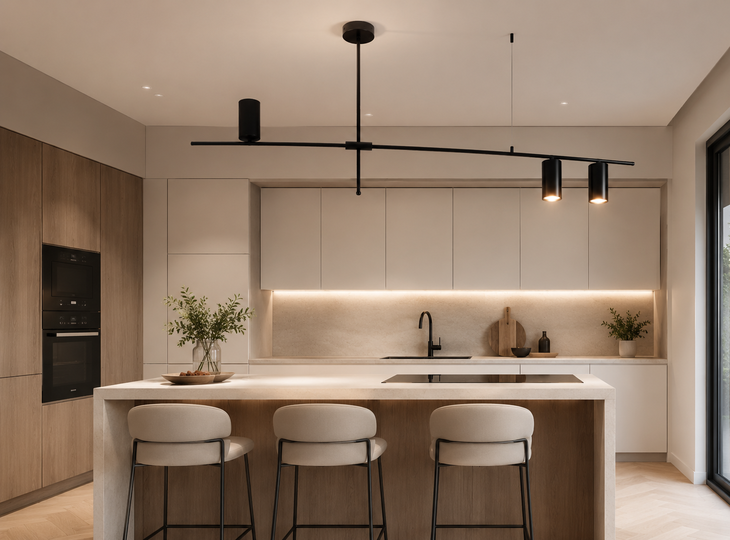
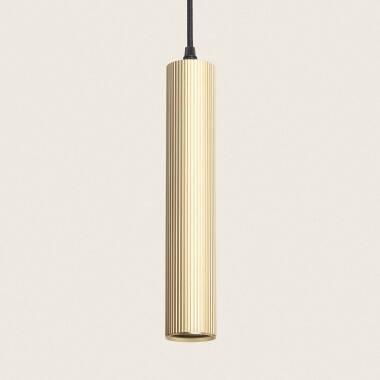
A modern home shouldn’t rely solely on a single lamp. Combining several light sources allows modern lighting to be adapted to the different activities carried out in a room.
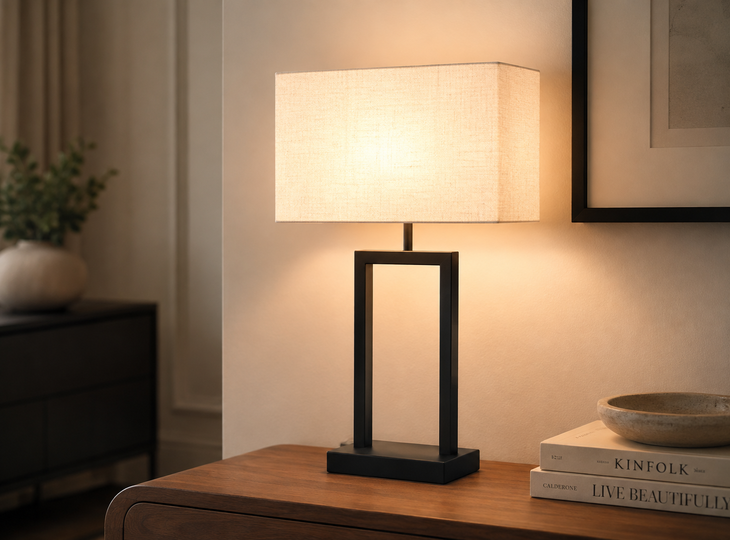
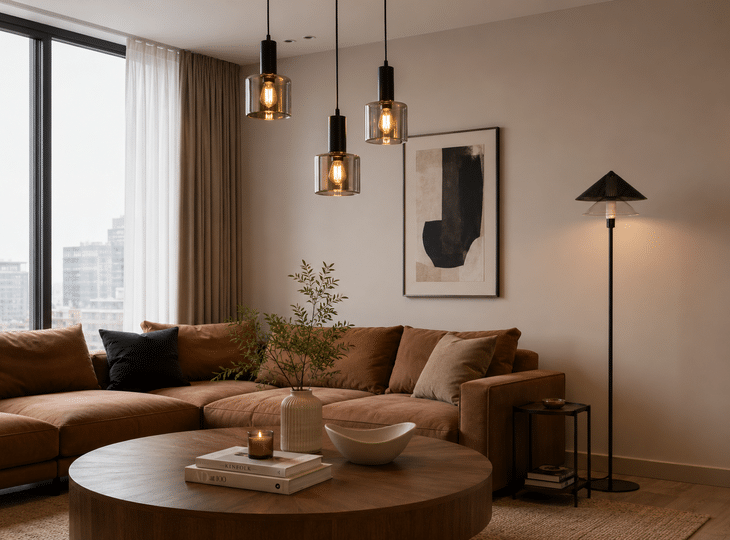
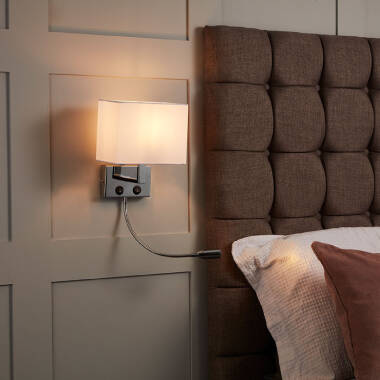
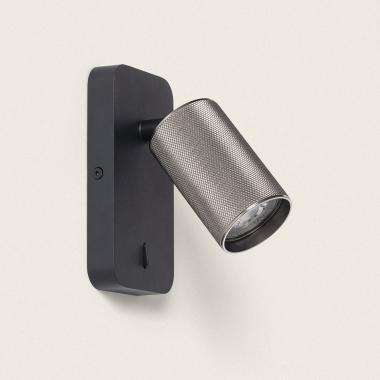
General lighting can be complemented by modern floor lamps, table lamps or wall lights.
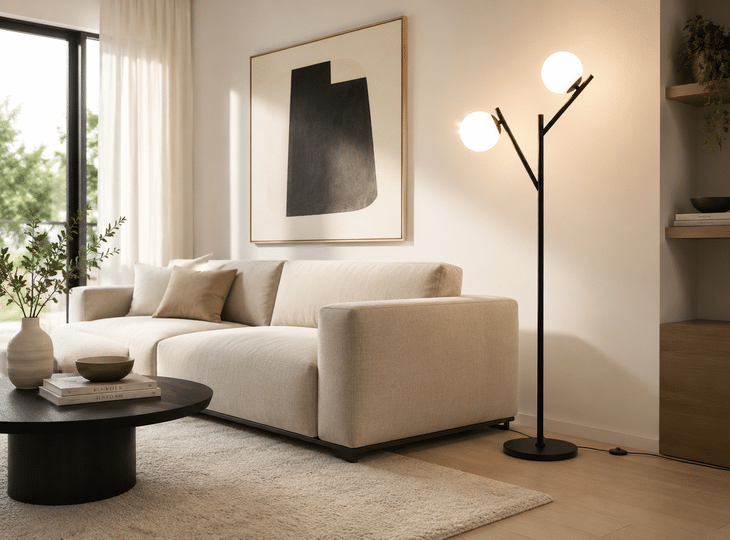
For example, in a living room, you can use the main lighting for everyday use and add a floor lamp next to the sofa to create a more cosy atmosphere in the evening.
Combining different light sources also helps to avoid spaces that feel too flat and enhances the sense of comfort.
Recommended products
In Stock, delivery in 24/48h
49.99 £
Reflect Linnen Pendant Lamp
View product
In Stock, delivery in 15-20 days
33.89 £
Waldorf Metal Wall Lamp with Flexo for Reading
View product
In Stock, delivery in 15-20 days
23.29 £
Aritz Aluminium 1 Spotlight Pendant Lamp
View product
In Stock, delivery in 24/48h
18.99 £
Breixo Aluminium Wall Light
View product
Maintaining a consistent aesthetic across rooms
Each room can have its own character, but it is advisable to maintain a certain degree of continuity throughout the home.
Repeating certain colours, materials or finishes helps to visually link the different spaces.
It is not necessary for all rooms to be the same. It is simply a matter of using a few common elements that help one to perceive the house as a whole.
Create a modern home tailored to you
Achieving a modern-style home is all about striking a balance between aesthetics, functionality and comfort. A well-thought-out layout, a coherent colour scheme and the right choice of furniture and lighting all help to create spaces with character. Rather than following strict rules, the key is to adapt this style to the characteristics of each home and the needs of those who live there.