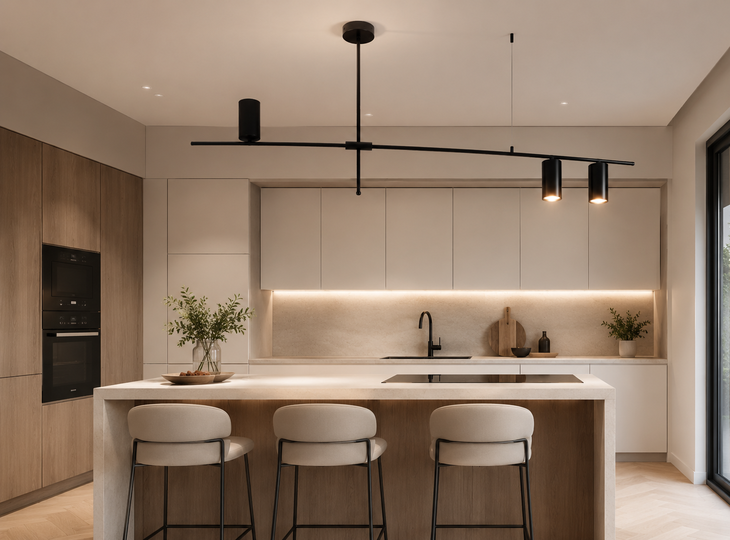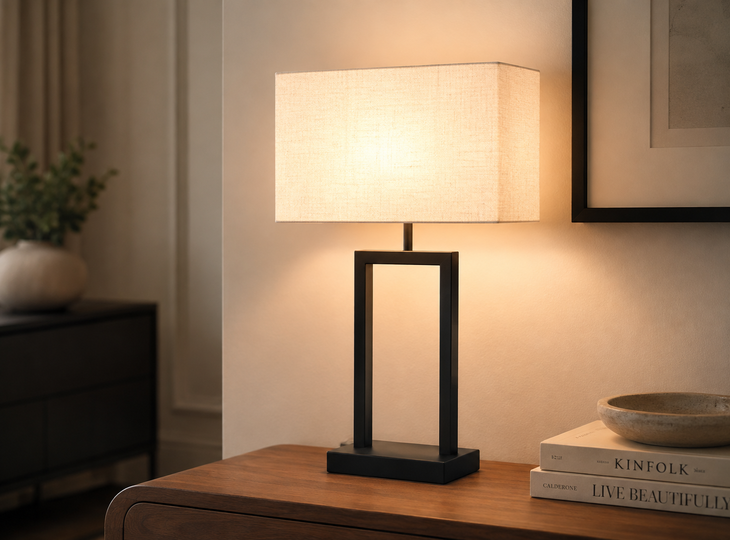
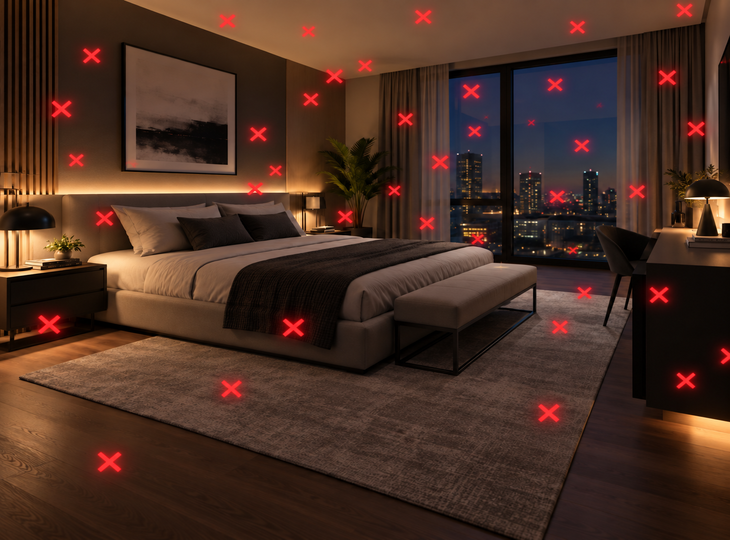
Decorating a modern home is not just about choosing furniture with clean lines, using neutral colours or keeping decorative elements to a minimum. Although this style is often associated with uncluttered spaces, achieving a good result requires striking a balance between comfort and personality.

One of the main risks when designing a modern interior is taking some of its principles to extremes. That is why, before decorating a home in this style, it is worth being aware of some of the most common mistakes and knowing how to avoid them.
Table of Contents
- Things that can ruin a modern interior design
- Overcrowding spaces with furniture and accessories
- Creating spaces that feel too cold
- Failing to take lighting into account
- Failing to take colour temperature into account
- Buying all your furniture in the same style
- Prioritising aesthetics over comfort
- Choosing furniture without considering proportions
- Failing to make the most of natural light
- How to achieve a balanced, modern décor
Things that can ruin a modern interior design
In modern interior design, certain details can easily disrupt the sense of balance and harmony. We’ll look at them below:
Overcrowding spaces with furniture and accessories
One of the fundamental principles of modern style design is visual clarity. This does not mean that rooms should be practically empty, but rather that every item should serve a purpose or contribute something to the overall look.
Piling up furniture or objects can hinder movement and create a sense of clutter. Even when each piece works well on its own, combining too many elements can cause the space to lose its balance.
Before adding a new object, it is worth asking yourself whether it really adds value to the room. In many cases, removing items improves the overall effect more than adding new ones.
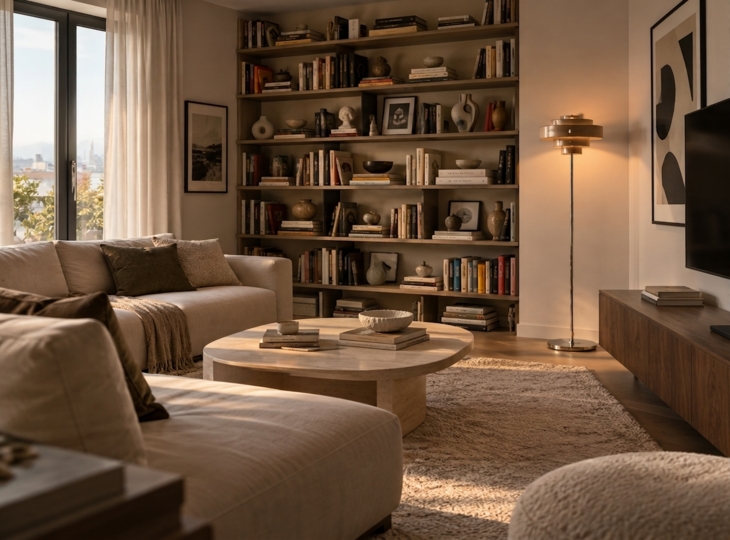
Creating spaces that feel too cold
White, grey, beige and black are common features in many modern interior design schemes. Their versatility allows you to create visually uncluttered spaces and makes it easier to combine different pieces of furniture and materials.
However, overusing them can result in interiors that feel excessively cold.
This effect is often exacerbated when neutral colours are combined exclusively with hard materials such as metal, glass, stone or completely smooth surfaces.
To avoid this, it is advisable to introduce elements that provide visual and tactile warmth.
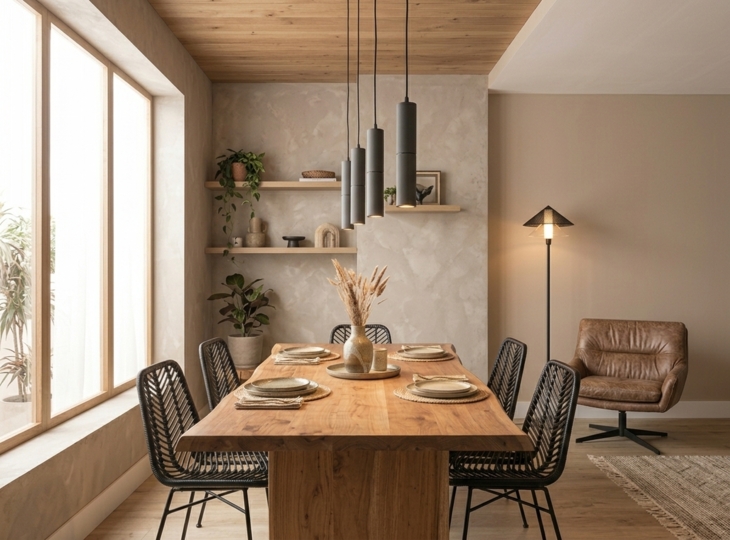
Wood is one of the most commonly used materials because it works very well alongside contemporary materials. A wooden table can soften a dining room with metal chairs, whilst a piece of furniture with a natural finish can balance a room dominated by light colours.
Failing to take lighting into account
Modern lighting is a fundamental part of interior design, and choosing light fittings solely for their design can be a mistake. Every room has different needs: a kitchen requires functional lighting to make everyday tasks easier, whilst a bedroom usually calls for warmer, more relaxed lighting.
Before choosing a light fitting, it is advisable to consider the use of the space, the layout of the furniture, the ceiling height and the amount of natural light entering the room. It is also important to avoid relying on a single light source, as whilst a modern ceiling light can provide general lighting, it does not always cater for all the activities carried out in a room.
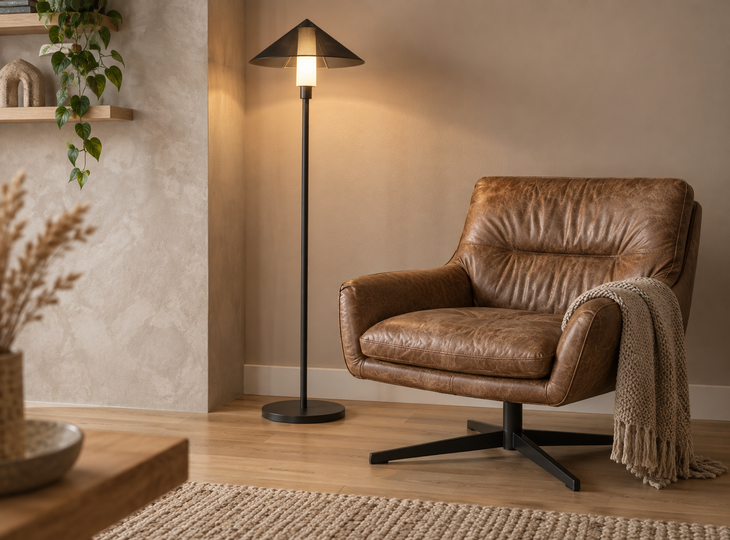
Combining different layers of lighting allows you to create more comfortable and versatile spaces. Ceiling lights can provide general lighting, whilst modern floor lamps, table lamps or wall lights help to illuminate specific areas and create a more cosy atmosphere.
Recommended products
In Stock, delivery in 24/48h
49.99 £
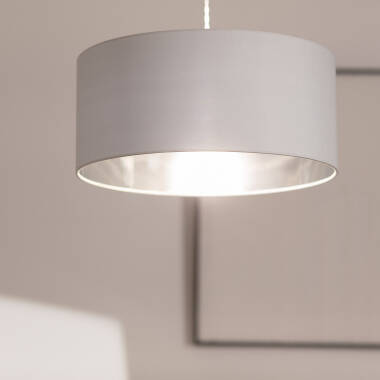
Reflect Linnen Pendant Lamp
View product
In Stock, delivery in 15-20 days
33.89 £
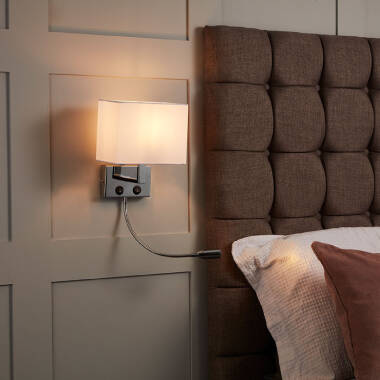
Waldorf Metal Wall Lamp with Flexo for Reading
View product
In Stock, delivery in 24/48h
23.29 £
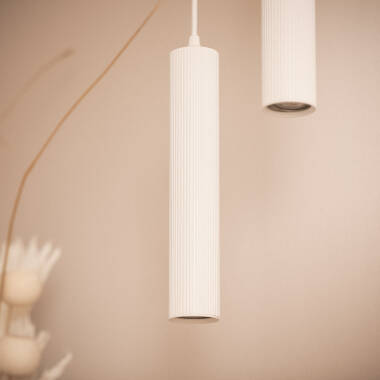
Aritz Aluminium 1 Spotlight Pendant Lamp
View product
In Stock, delivery in 15-20 days
19.99 £
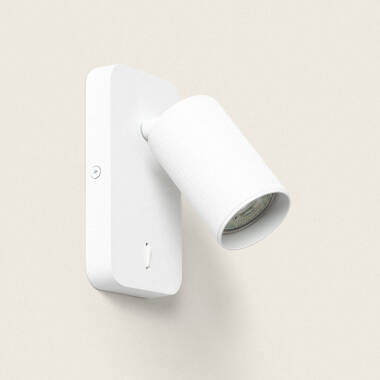
Breixo Aluminium Wall Light
View product
Failing to take colour temperature into account
The amount of light is not the only factor that influences how a room is perceived. Colour temperature can also significantly alter the atmosphere.
Warmer light tends to create a cosy and relaxing atmosphere, whilst more neutral or cooler light may be more suitable for spaces where greater concentration or visual precision is required.
Using excessively cool lighting in areas intended for relaxation can make the home feel less comfortable, particularly where materials such as concrete, marble or metal predominate.
Conversely, introducing warm lighting can soften these materials and make the overall effect more pleasant.
The key is to adapt the lighting to the activity taking place in each area and to maintain a certain consistency between the different light sources within the same room.
Buying all your furniture in the same style
Achieving consistency does not mean that all the furniture has to be part of the same collection.
When pieces of furniture share exactly the same finishes and shapes, the result can seem a bit too predictable. Modern interiors are often more interesting when they combine different pieces that share some common element.
This could be a colour palette, a type of material or specific design features.
Prioritising aesthetics over comfort
A home should be adapted to the people who live in it.
A piece of furniture may have an attractive design, but if it is uncomfortable or impractical, it will probably end up being a poor choice.
This problem often arises when choosing furniture and lighting. Modern design is all about integrating form and function. That is why comfort should be part of the selection process right from the start.
Before buying an item, it is worth considering how it will be used on a daily basis and whether it truly meets the needs of the space.
Choosing furniture without considering proportions
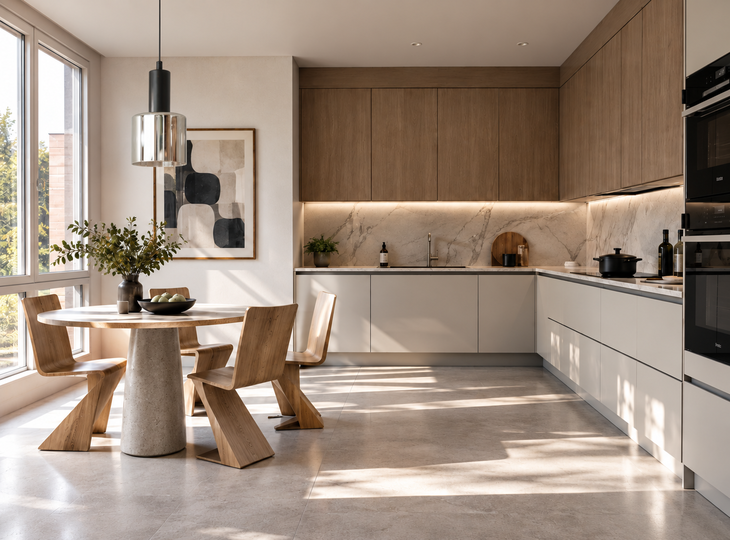
Proportions are essential for achieving a balanced interior.
A common mistake is buying furniture simply because you like individual pieces, without considering how they will work within the available space.
Before buying furniture, it is a good idea to measure the room carefully and consider the areas needed for movement. It can also be helpful to mark out the approximate dimensions of the furniture on the floor to visualise how much space it will actually take up.
Failing to make the most of natural light
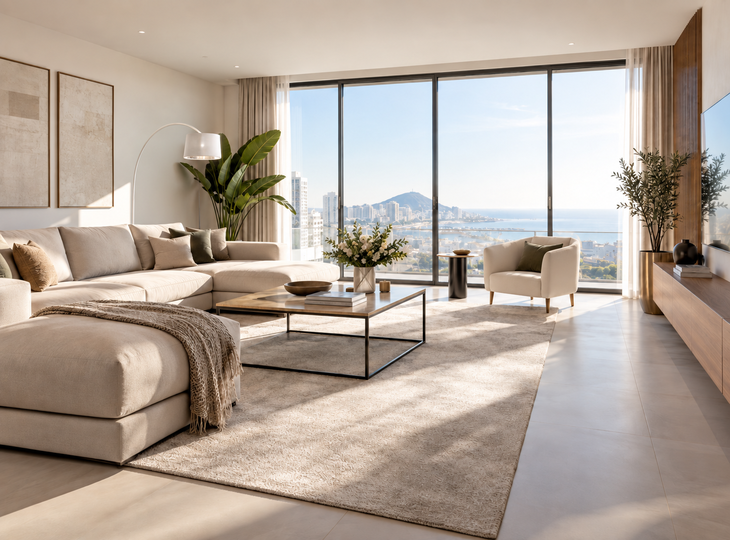
Natural light can completely transform the feel of an interior.
Blocking it out with furniture that is too tall, curtains that are too heavy or a poorly thought-out layout can make a home seem smaller and darker.
Whenever possible, it is best to keep the area around the windows clear. Artificial lighting should complement natural light, not replace it throughout the day.
How to achieve a balanced, modern décor
Achieving a balanced modern interior design involves combining aesthetics, functionality and comfort. Rather than simply following certain trends, the important thing is to create coherent, pleasant spaces that are suited to everyday use.
Choosing the right furniture, materials, colours and lighting helps to maintain that sense of order and harmony characteristic of the modern style, without sacrificing personality. The ultimate aim is to create a contemporary, practical and cosy home.