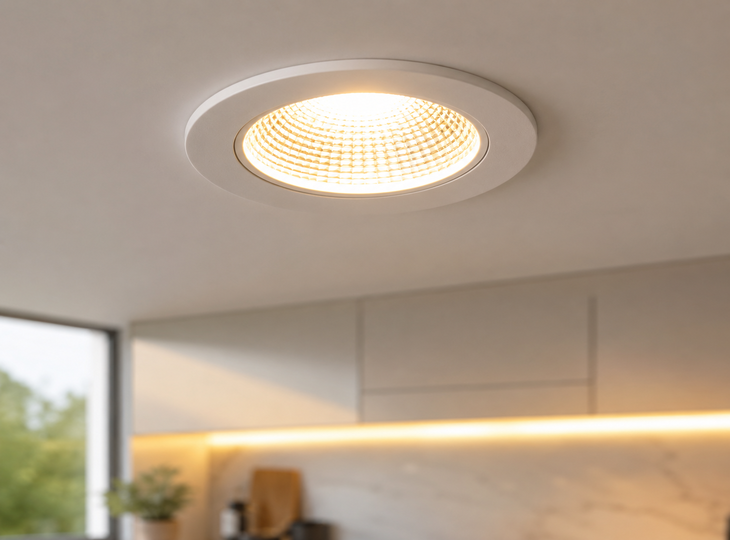
Choosing the right wattage for an LED downlight is one of the most important factors in achieving balanced lighting in any space. However, one of the most common mistakes is to focus solely on the product’s wattage (W), as this figure indicates power consumption but does not, on its own, determine the amount of light the fitting will emit.

Below, we explain the relationship between the wattage and the lumens of a downlight:
Table of Contents
Which is more important in an LED downlight: wattage or lumens?
Although wattage is one of the most commonly checked specifications when buying LED lighting, it is not always the most relevant factor in determining whether a downlight will provide sufficient light. The amount of light a room receives depends mainly on the luminous flux, expressed in lumens (lm).
Two downlights with the same wattage may provide different amounts of light depending on the quality of their components, the efficiency of the LED or the design of the luminaire. For this reason, when comparing different models, it is advisable to always check the lumens as well as the watts.
What the lumens of an LED downlight indicate
Lumens indicate the total amount of visible light emitted by a light source. The more lumens a downlight has, the more light it can provide for the space.
This information helps you determine whether a light fitting is suitable for a particular room. For example, a small bathroom may require fewer lumens than a spacious kitchen, as the lighting requirements are not the same.
What does the wattage (W) mean for an LED downlight?
Power, expressed in watts (W), indicates the amount of electrical energy the downlight consumes whilst in operation. It is therefore related to the light fitting’s energy efficiency, but does not directly represent the amount of light produced.
With old-style incandescent bulbs, it was common to assume that more watts meant more light. However, LED technology has changed this relationship, as it allows for greater light output whilst using less energy.
For example, a modern 10 W LED downlight can provide more light than an older, higher-wattage model thanks to its improved luminous efficacy.
The relationship between lumens and watts in LED downlights
To assess the performance of an LED downlight, it is advisable to look at the ratio of lumens to watts, known as luminous efficacy (lm/W). This value indicates how much light a luminaire produces for every watt consumed.
As a rough guide, for example, a 15 W downlight can produce approximately between 1,200 and 1,500 lumens. These figures are approximate and may vary depending on the manufacturer, the LED technology used and the product specifications.
How many lumens does an LED downlight need, depending on the room?
To choose the correct wattage for an LED downlight, you first need to work out how much light the space requires. Not all rooms require the same amount of light, as a kitchen, a bedroom or a hallway are used for different purposes.
LED downlight wattage for the kitchen
The kitchen is one of the rooms where the choice of lighting is most important. It is a space where tasks requiring good visibility are carried out, such as cooking or cleaning surfaces.
The required wattage will depend mainly on the size of the kitchen, the layout of the light fittings and the amount of natural light available. In small kitchens, several medium-wattage LED downlights may be sufficient to achieve even lighting. Conversely, in larger kitchens or those with little natural light, it is advisable to install more units or use models with a higher luminous flux.
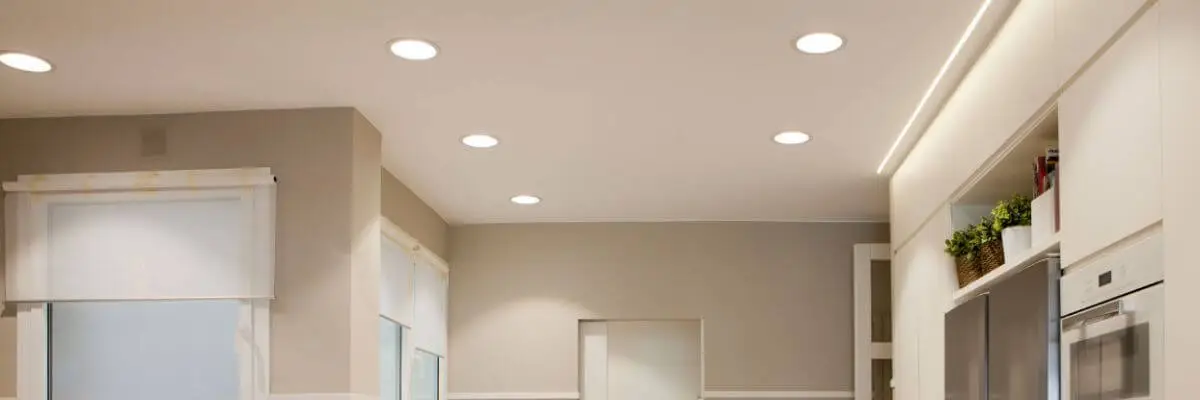
Rather than choosing a single, higher-wattage kitchen LED downlight, it is usually more efficient to distribute several light points across the ceiling. This achieves more even lighting, reduces shadowed areas and improves visual comfort when cooking or working at the worktop.
Recommended products
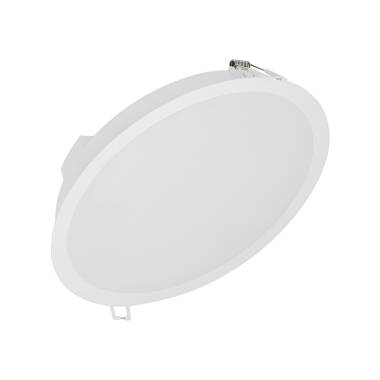
In Stock, delivery in 16-21 days
19.09 £
30W LED Downlight LEDVANCE 100lm/W with Ø200 mm Cut Out IP44
View product
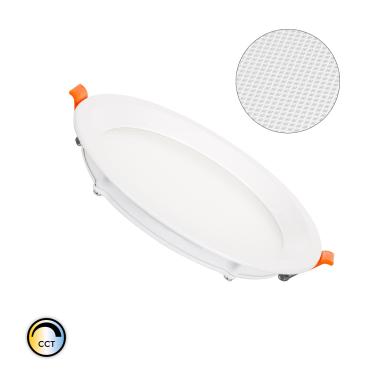
In Stock, delivery in 24/48h
8.69 £
16W LED Downlight Ø150mm Cut Out Selectable CCT Microprismatic LIFUD
View product
In Stock, delivery in 15-20 days
17.99 £
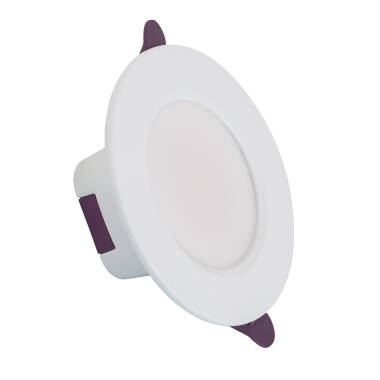
Round 25W LED Downlight for Bathroom Ø145mm Cut Out IP44
View product
In Stock, delivery in 24/48h
7.39 £
Round 8W LED Downlight for Bathroom Ø75mm Cut Out IP44
View product
LED downlight wattage for the bathroom
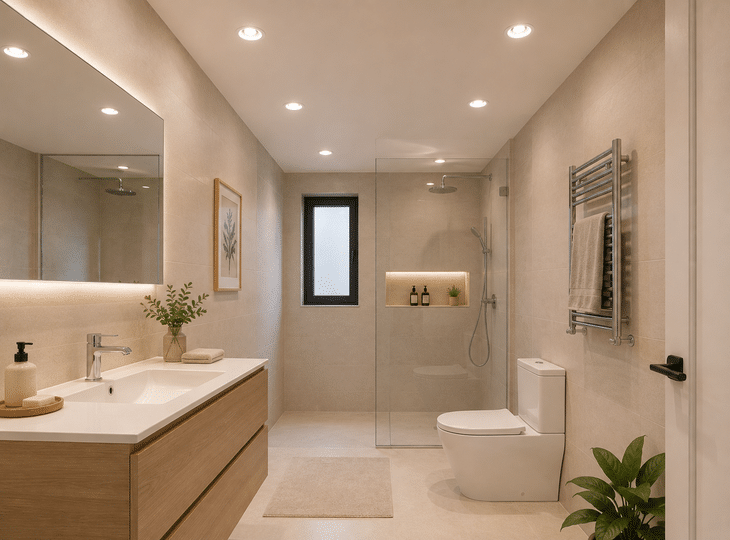
The bathroom requires bright, even lighting that allows you to carry out activities such as washing or applying make-up in comfort. Furthermore, as it is a damp room, it is also important to consider technical aspects such as the IP rating.
In small spaces, one or more LED bathroom downlights with a moderate luminous flux may be sufficient to achieve uniform lighting. In larger bathrooms or those with little natural light, it will be necessary to increase the amount of light by adding more light fittings or using models with a higher luminous flux.
In addition to general ceiling lighting, it is advisable to pay particular attention to the area around the mirror, where more direct light is usually required to avoid shadows. Finally, as this is a damp room, it is important to check that the downlight has an appropriate IP rating, especially if it is installed near areas exposed to water.
How to calculate the required lumens for a room
To make a simple estimate, you can multiply the floor area of the room by the recommended lumens for its intended use.
As a guide:
| Room | Recommended lumens | Approximate wattage |
| Corridor | 100–200 lm/m² | 3–7 W |
| Bedroom | 100–200 lm/m² | 5–12 W |
| Living room | 150–300 lm/m² | 10–15 W |
| Bathroom | 200–400 lm/m² | 8–15 W |
| Kitchen | 300–500 lm/m² | 10–20 W |
This table serves as a general guide, but the final choice will always depend on the specific characteristics of the space and the model of downlight selected.
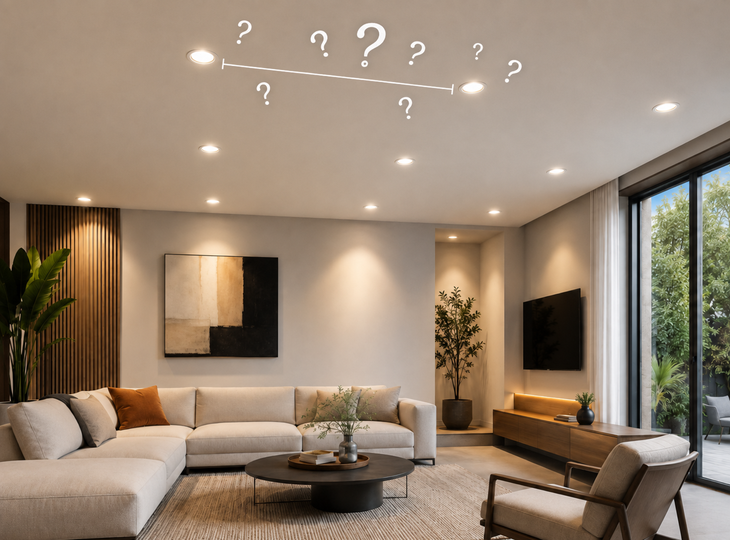
Furthermore, it is important to remember that it is usually better to use several downlights of moderate power rather than installing just a few units that are too powerful. This helps to achieve more even lighting and reduce areas of shadow.
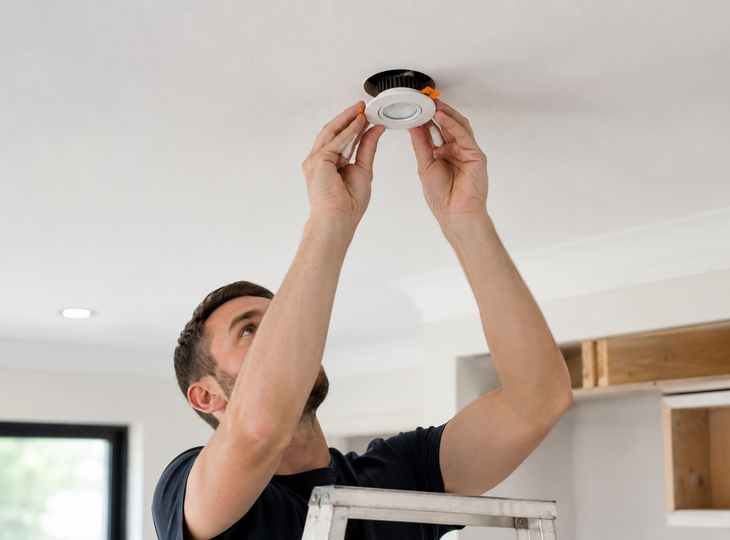
Once you have chosen the right model based on the required wattage and lumens, it is important to install it correctly to ensure it works properly and is safe. In our guide on how to install an LED downlight, we explain the connection process and the points you should bear in mind before putting it into operation.
Recommended lumens for LED downlights in other rooms
LED downlights for the living room and dining room
The living room usually requires more comfortable and flexible lighting. It is not always necessary to use the maximum brightness, as it is normally combined with accent lighting or ambient lighting.
Balanced general lighting can be achieved with medium-power LED downlights positioned correctly across the ceiling.
LED downlights for bedrooms
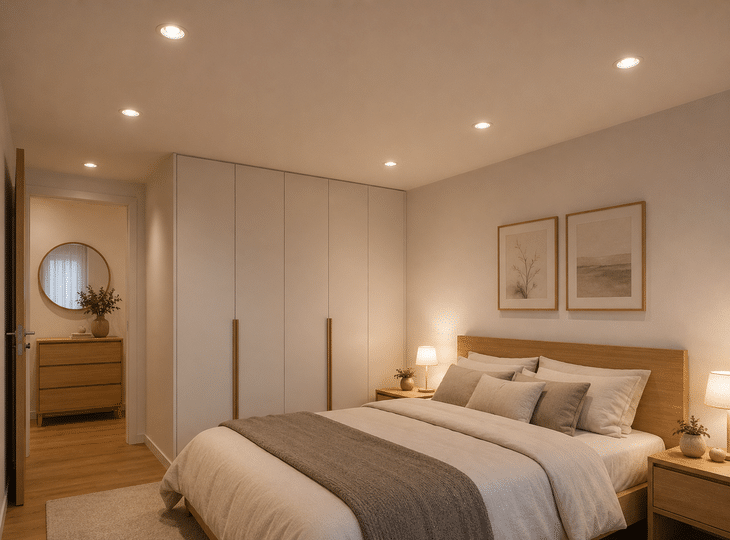
In bedrooms, people usually prefer a more relaxed light. Although it is important to have sufficient lighting for activities such as reading or getting dressed, it is not usually necessary to use large amounts of lumens.
Models with a warm light tend to help create a cosier atmosphere.
LED downlights for hallways and passageways
Corridors and hallways require less light intensity than other rooms. In these spaces, achieving uniform lighting is usually more important than having a large amount of light.
Lower-wattage LED downlights may be sufficient provided they are spaced correctly.
Factors determining the recommended lighting
As well as the lumens and wattage of the LED downlight, there are other factors that can affect how the lighting is perceived.
The number of downlights installed
The number of light fittings has a direct influence on the distribution of light. In many cases, it is better to install several lower-wattage downlights than to use just a few very powerful ones.
The beam angle of the downlight
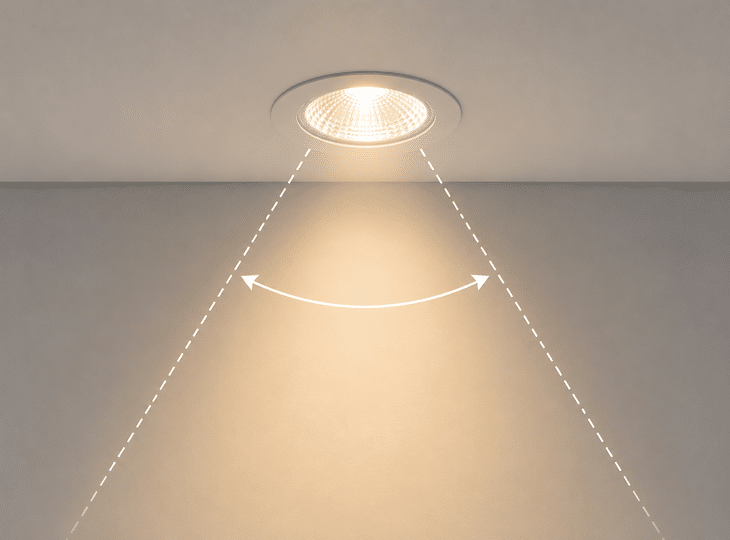
The beam angle determines the area illuminated by each light fitting.
A wide beam angle allows the light to be distributed more evenly, whilst a narrow beam angle concentrates the light on a specific point.
Light colour and the sensation of light
Colour temperature also influences how we perceive lighting.
Warm light is often used in spaces where the aim is to create a cosy atmosphere, whilst neutral light is commonly found in kitchens and bathrooms as it provides a more natural feel.
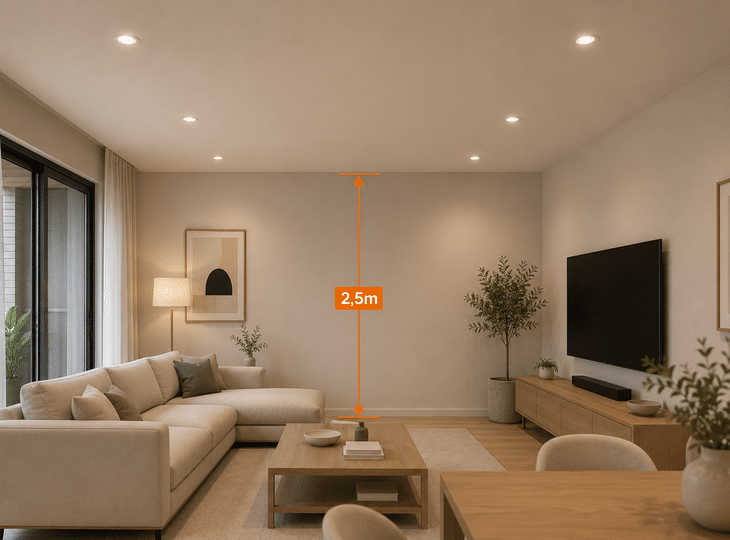
Ceiling height
Ceiling height also affects the amount of light required. In a room with high ceilings, the distance between the light fitting and the surface to be illuminated increases, so it may be necessary to use downlights with a higher luminous flux.
Conversely, in rooms with low ceilings, excessive light output can result in lighting that is too intense or causes glare.
The colour of walls and surfaces
Light colours reflect light better and can make a room appear brighter. In spaces with dark walls or lots of decorative features, it may be necessary to increase the amount of light slightly.
How to choose the right LED downlight based on its lumens
Although wattage is one of the most commonly looked-up specifications when choosing an LED downlight, lumens are the most important indicator of just how much light a light fitting will actually provide.
Therefore, before buying an LED downlight, you should always check the luminous flux and choose an appropriate number of lumens for each situation. This will ensure you achieve efficient lighting that is tailored to the needs of each room.