When choosing a ceiling fan one of the points to take into account is the type of motor. This directly influences aspects such as power consumption or the level of noise it makes.

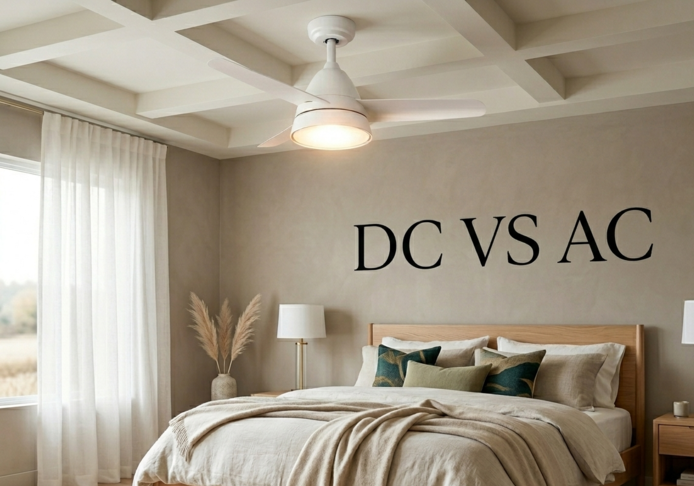
When comparing DC ceiling fans with AC ceiling fans, the main difference is in the type of current they use and how they transform that energy.
AC (alternating current) motors have been the traditional choice for decades. They operate directly connected to the electrical grid, however they have limitations in energy efficiency and speed control.
DC (direct current) motors, on the other hand, have an electronic system that converts the energy before moving the blades. This allows a number of advantages that we will see below.
Table of Contents
What is the DC motor in ceiling fans?
To understand what is the DC motor in ceiling fans, it is important to know that these equipments do not work directly with domestic direct current. In fact, they integrate an internal converter that transforms alternating current into direct current.
This type of motor works with advanced electronics that optimizes each rotation allowing to maintain a constant and stable speed. Many of these models offer more speed levels than traditional motors. Thanks to this, a smooth breeze is generated even at low revolutions, reducing noise and vibrations.
Advantages of DC ceiling fans
DC ceiling fans are characterized by:
- Energy efficiency: They allow for reduced power consumption compared to AC models.
- Noise level: They work with a more stable operation that reduces the perceived noise even at high speeds.
- Number of speeds: They offer more levels of adjustment than AC motors. These models allow to adapt the air flow according to the needs.
In addition to the advantages already discussed, DC ceiling fans incorporate different features that expand their functionality and enhance the user experience, such as:
- Design and size: there is a wide variety of formats and sizes, allowing you to choose the fan depending on the size of the room. In addition, water-resistant models such as outdoor ceiling fans are available.
- Summer-winter mode: Some models include the summer-winter function, which allows reversing the rotation of the blades. This improves air distribution in both seasons.
- Intelligent programming: There are also models such as ceiling fans with remote control or WIFI-enabled fans that allow for automated operation.
- Integrated LED light: Ceiling fans with light allow ventilation and lighting to be combined in a single unit without the need for additional elements.
If you have doubts about how to choose a ceiling fan with or without light, here is an explanatory guide about the advantages and our recommendations.
Recommended products
In Stock, delivery in 24/48h
65.99 £
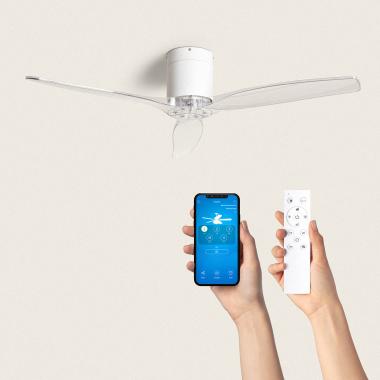
Minimal Silent Ceiling Fan with DC Motor White 132cm
View product
In Stock, delivery in 24/48h
88.99 £
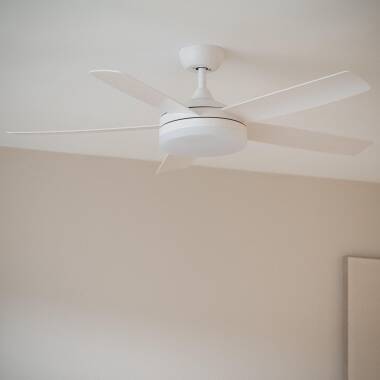
Angistri Silent Ceiling Fan with DC Motor White 132cm
View product
In Stock, delivery in 24/48h
103.99 £
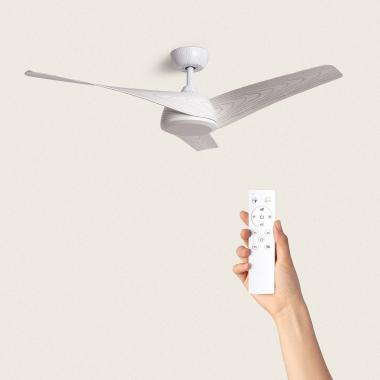
Patroclo Silent Ceiling Fan with DC Motor White 132cm
View product
In Stock, delivery in 24/48h
76.99 £
Eubea Silent Ceiling Fan with DC Motor 132cm
View product
Differences in energy savings
DC motors can consume up to 40-70% less energy than AC motors, with greater savings at lower operating speeds.
This is mainly because they minimize energy loss due to heat and maximize electrical conversion into motion. In addition, their electronic control allows real-time monitoring and adjustment of operation, optimizing energy use at all times.
In prolonged daily use, such as in summer, the difference in electricity bills can be significant. As mentioned above, many models include automatic modes or timers that can help further optimize consumption.
Which type of ceiling fan is quieter: AC or DC?
One of the most common questions is which of the two is quieter.
The answer is clear: DC fans are quieter.
This is because their design reduces internal friction, allowing a smooth, jerk-free start-up. This lack of vibration results in more stable operation. For example, a DC fan can run overnight without generating much noise.
In contrast, AC motors, relying on direct electromagnetic induction, can generate more mechanical noise, which is accentuated at high speeds or after prolonged use.
Control and ease of use
The models of ceiling fans with WIFI or DC motor control incorporate advanced control systems. Thanks to these options it is possible to adjust the number of speeds, change the direction of the blades or switch on and off, even when you are not at home. In addition, they also allow integration with voice assistants such as Amazon Alexa or Google Assistant, offering voice control.
If your needs include automatic fan management and control, a DC model with remote control or WIFI can be a very practical option.

When to choose an AC Ceiling fan?
AC motor fans remain a valid option when fan use is occasional and continuous operation is not required.
In addition, AC models may be suitable in spaces where noise level is not an important consideration, such as walk-through areas or second homes. They are also practical in simple installations, where advanced functions such as multiple speeds or integration with home automation systems are not required. In these cases, they correctly fulfill their basic ventilation function.
When to choose a DC Ceiling fan?
In conclusion, choosing a fan with a DC motor is a wise decision when looking for energy efficiency, low noise level and greater control over operation. Because of these characteristics, they are especially recommended in cases of frequent use, where you are looking for silence and low consumption, such as in bedrooms, offices or any space where these factors are important on a daily basis.

Maintenance and durability
In both AC and DC motors, periodic blade cleaning and proper installation are necessary to ensure proper performance and extend the life of the fan. Over time, dust accumulation can affect the balance of the blades and cause small losses in efficiency and even generate additional vibrations or noise during operation. For this reason, regular cleaning with a soft cloth or non-abrasive products is recommended, always avoiding the accumulation of dirt on the surfaces and motor.
In addition, occasional checking of hardware and fixing points helps to maintain the stability of the equipment, especially on fans installed on high ceilings. In DC models, although mechanical wear is less, it is also important to check motor ventilation to avoid overheating. In general, a basic but constant maintenance is enough to keep the fan working properly. If you need more information, here you can find a complete guide on how to clean your fan properly.