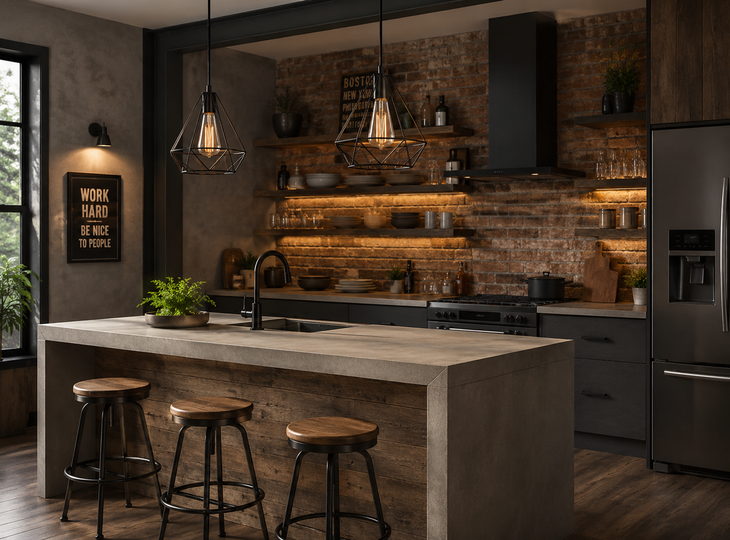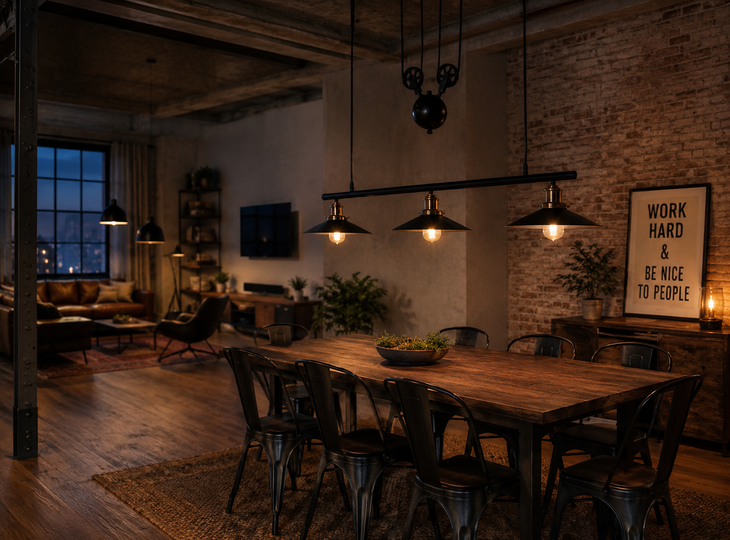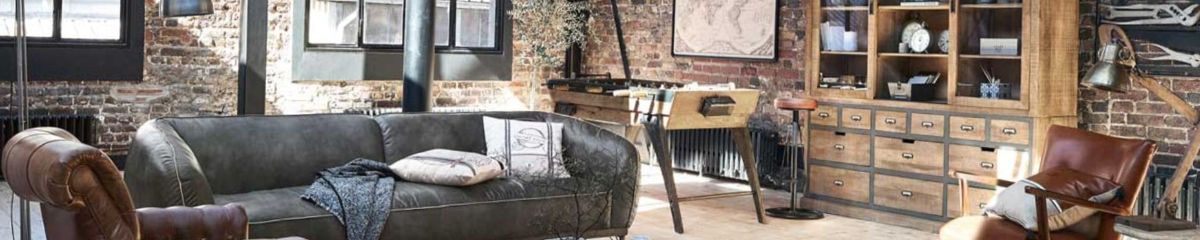
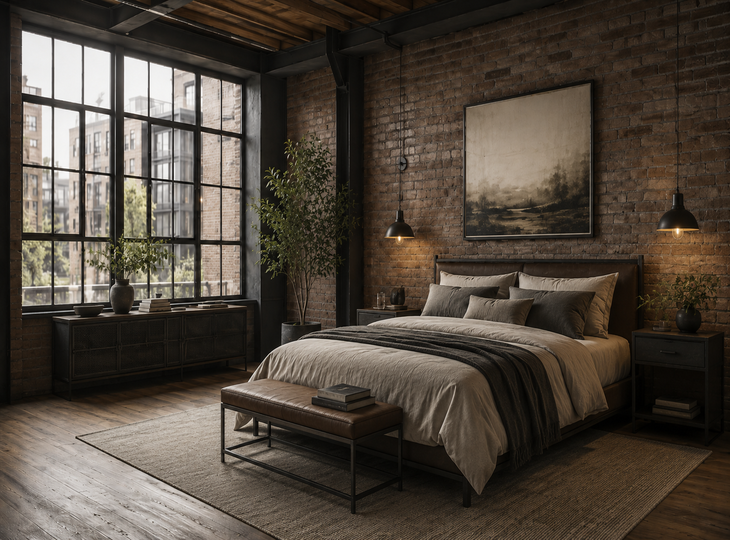
The industrial style is one of the most recognizable interior design styles due to its urban and timeless character. Its origins are linked to old factories, warehouses, and workspaces converted into homes, where structural materials were left exposed and the decor prioritized functionality over excessive ornamentation. Brick, metal, wood, etc., along with lamps with a technical aesthetic, are part of its visual identity.

Table of Contents
- What mistakes should you avoid when decorating your home in an industrial style?
- Creating a cold decor scheme
- Choosing furniture that’s too heavy
- Using a Palette That’s Too Dark
- Underestimating the importance of lighting
- Choosing Unrealistic Imitations
- Forgetting About Comfort
- Failing to adapt the style to each room
- Neglecting textiles
- Placing Too Many Decorative Pieces
- Failing to balance the new and the aged
- Final Tips for Achieving a Balanced Industrial
What mistakes should you avoid when decorating your home in an industrial style?
Although the industrial style allows you to create spaces with a lot of personality, some mistakes can make the result look too cold, overloaded or not very functional.
Before choosing furniture or materials, it is important to be clear about the most common mistakes:
Creating a cold decor scheme
One of the most common mistakes is associating the industrial style solely with dark and unwelcoming spaces. It’s true that this type of decor uses materials like metal, concrete, exposed brick, or weathered wood, but that doesn’t mean the space has to feel cold.
A home needs to convey comfort. If all the elements have harsh finishes or muted colors, the room can lose its balance. The industrial style works best when bold materials are combined with details that soften the overall look.
Natural wood, rugs, warm lighting, and earthy tones help balance out the presence of metal or concrete. This way, the space retains its urban aesthetic without feeling too austere.
Choosing furniture that’s too heavy
Sturdy furniture fits very well with this style, but not all spaces can accommodate large, bulky pieces.
The mistake lies in choosing furniture based solely on its appearance, without considering the room’s proportions. Industrial furniture should have a strong presence while still allowing for comfortable movement. If it blocks the way, makes the room look smaller, or leaves little open space, the result will be impractical.
Before adding a large piece, it’s best to consider the size of the space. In small apartments, a lighter version with furniture featuring simple lines and open structures may work better.
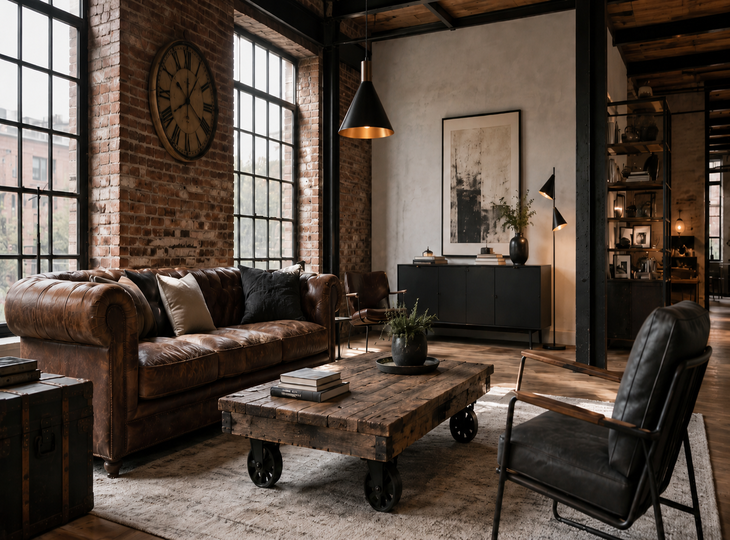
For example, a table with a wooden top and slender metal legs can provide the same character as a completely solid-wood table, but with a lighter feel.
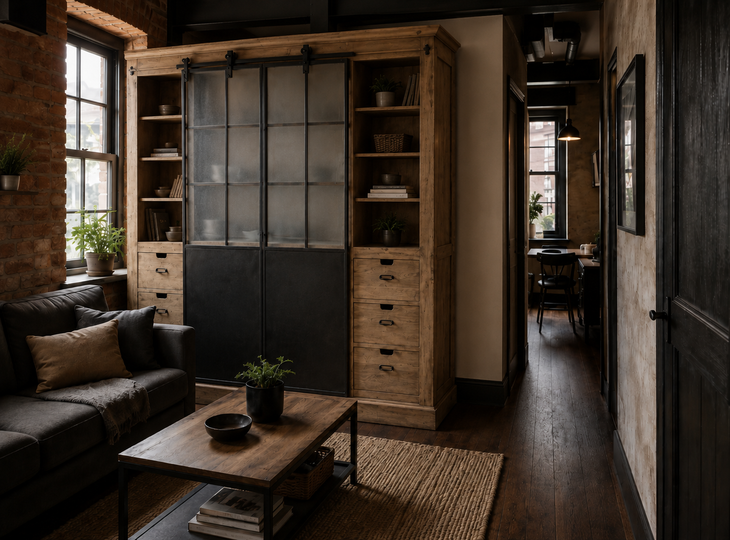
Using a Palette That’s Too Dark
Black, gray, and brown tones are common in this type of interior, but an excessively dark palette can make the space feel dreary. This mistake is especially noticeable in homes with little natural light or in small rooms.
The industrial style doesn’t always have to rely on bold colors. Lighter tones can also be part of the look. Walls in off-white, soft gray, or beige help balance heavier materials and allow the furniture to stand out better.
A good strategy is to work with a neutral base and add depth through specific details. Black can appear in lamps, picture frames, door handles, or metal structures. Brown can be incorporated through wood or natural fibers.
Contrast is important, but it must be controlled. The balance between the two tones is what allows you to achieve a more elegant result.
Underestimating the importance of lighting
Lighting is one of the aspects that most influences the perception of a space. A space may have high-quality materials and appropriate furniture, but if the lighting is poorly designed, the result will feel flat or uninviting.
One of the most common mistakes is using a single general ceiling light. This solution can illuminate the room, but it does not always help create depth or highlight the materials. Industrial lighting needs different layers: a main light, accent lighting and ambient lighting.
Industrial lamps make it possible to create these layers. In a kitchen, for example, pendant lights above the counter help reinforce the decorative character without sacrificing functionality. In a bedroom, table lamps with metallic finishes or accents add a more subtle industrial touch. In a living room, an industrial floor lamp can also be combined with other light fixtures.
It’s also important to pay attention to color temperature. Light that’s too cool can make the space feel harsh and make materials appear less inviting. For relaxation or social areas, warm or warm-neutral light usually works best.
Recommended products
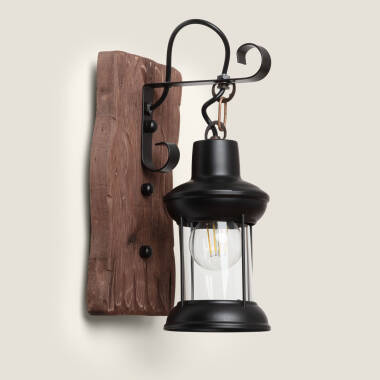
In Stock, delivery in 24/48h
27.99 £
Fanala Metal & Wood Wall Lamp
View product
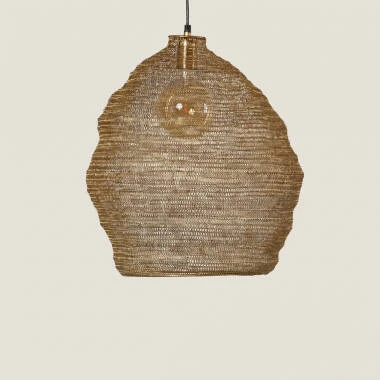
In Stock, delivery in 15-20 days
74.99 £
Milos Metal Pendant Lamp
View product
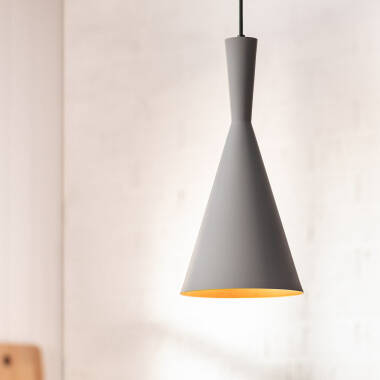
In Stock, delivery in 24/48h
23.99 £
Lennon Aluminium Pendant Light
View product
In Stock, delivery in 15-20 days
55.99 £
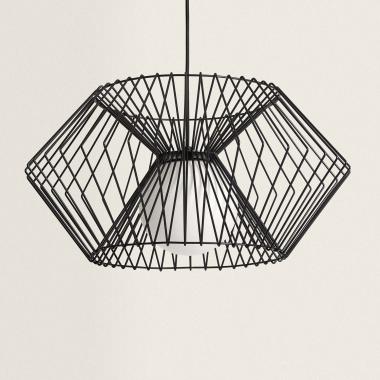
Hexagon Metal Pendant Lamp
View product
Choosing Unrealistic Imitations
Exposed brick, concrete, and weathered wood are materials commonly found in industrial decor. However, it’s not always possible to use authentic materials. In these cases, imitations can be a practical solution as long as they’re chosen wisely.
The mistake is to use finishes that are too flat or artificial. Unrealistic brick-patterned wallpaper or vinyl that imitates concrete without texture can detract from the overall look.
If you opt for decorative materials, it’s best to choose finishes with relief, color variations, and a believable texture. It’s also important not to cover all the walls with imitations. Sometimes it’s enough to highlight a specific area, such as the wall behind the sofa or a section of the kitchen. The rest can be kept in neutral tones to avoid overwhelming the space.
Forgetting About Comfort
A home shouldn’t just be aesthetically pleasing it should be livable. In the industrial style, this aspect is often neglected because many pieces of furniture and materials have a bold look but aren’t always comfortable.
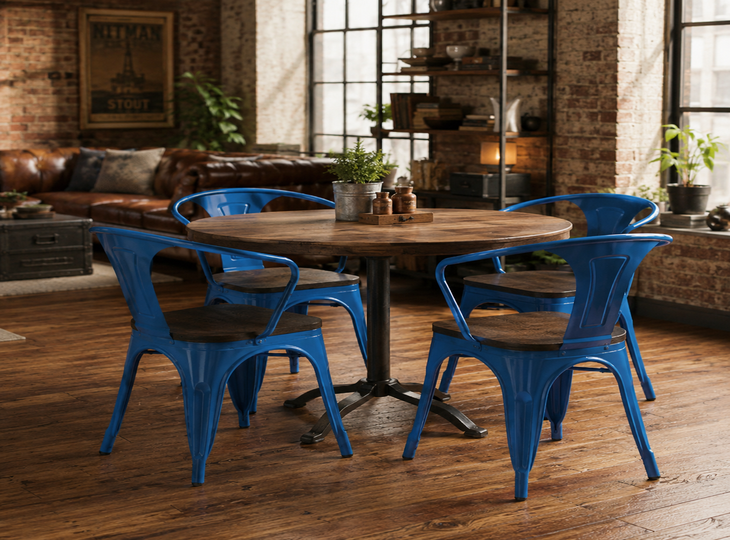
Metal chairs may be visually appealing, but they can be uncomfortable if they don’t have a good seat; every piece should serve a real purpose. Aesthetics are important, but they cannot take precedence over everyday use.
For example, in dining rooms, chairs should allow you to sit comfortably, and in bedrooms, the style should adapt to a more relaxed atmosphere.
Failing to adapt the style to each room
Applying the same level of intensity throughout the entire house can result in a monotonous look. The industrial style should be adapted to the needs of each room. It doesn’t require the same presence in a living room as it does in a bedroom.
In the living room, it can take center stage with a wood-and-metal coffee table, an open shelving unit, or a striking industrial ceiling lamps. In the kitchen, it often works very well with pendant lights, metal stools, and black faucets.
Each room serves a different purpose. Therefore, the style should be tailored to the room’s function, the available light, and the atmosphere you want to create.
Neglecting textiles
Although the industrial style is associated with hard materials, textiles play an important role in decor. Without them, the home can feel cold or uncomfortable.
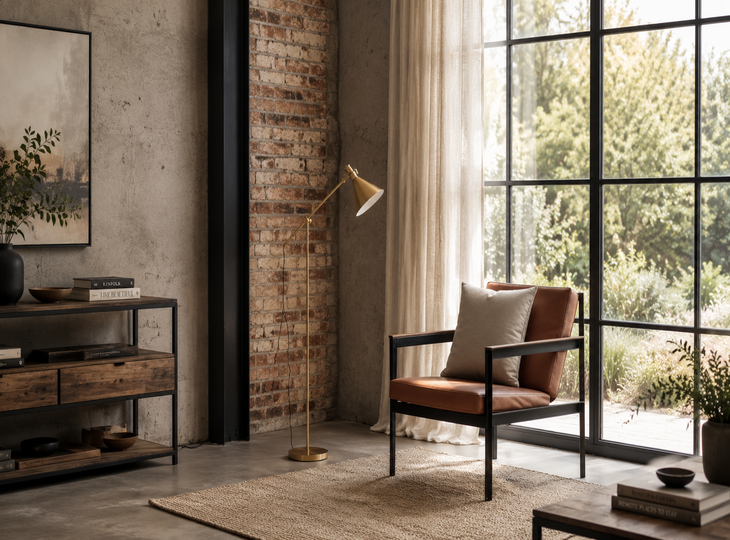
A common mistake is to leave them out for fear of compromising the industrial aesthetic. However, when chosen well, they not only preserve the look but also make the space more livable. Natural fibers, such as linen or heavy cotton, work very well. Additionally, textiles improve acoustics. In interiors with hard floors or bare walls, sound can bounce around too much.
Placing Too Many Decorative Pieces
The industrial style works best when the decor is understated. It doesn’t need many small objects, but rather pieces with character. Too many accessories can make the space lose its impact and look cluttered.
When too many elements are crammed together, the result looks more like a theme than a sophisticated design. It’s better to select just a few objects and give them a clear place. A wall might feature a large-format print, and a bookshelf could combine books, a plant, and a metallic accent.
Empty space is also part of the design. Leaving areas uncluttered allows materials and light to “breathe” more freely.
Failing to balance the new and the aged
The charm of the industrial style is closely tied to weathered surfaces: wood with pronounced grain, textured metal, aged leather, or irregular brick. However, if everything looks old or worn, the space can appear neglected.
The opposite mistake also exists. If all the finishes are new and too polished, the atmosphere can lose its authenticity. Industrial decor requires a certain contrast between modern pieces and elements with character.
A reclaimed wood table can be paired with more contemporary chairs. The goal is to prevent the space from looking too new or too old. A controlled mix adds depth and makes the home feel more authentic.
Final Tips for Achieving a Balanced Industrial
To apply the industrial style correctly, you need to combine visual strength, functionality and warmth. Avoiding the most common mistakes allows you to achieve a more natural and long-lasting industrial décor.
When materials, furniture, lighting, and details are carefully selected and tailored to your needs, the result is a functional and welcoming space. To decorate your home in this style, simply create a cohesive, comfortable atmosphere suited to everyday use.