The industrial style is one of the most recognizable decorative trends for its sober, functional and urban character. Its origin lies in the adaptation of old factories and warehouses to residential spaces, especially in large cities where industrial buildings began to be transformed into loft-style housing.

Selecting the right elements and materials, adapting the whole to the real needs of each space, allows the result to work correctly.
Below, we explain the main keys to incorporate the industrial style at home in a coherent way:
Table of Contents
Keys to apply the industrial style in home decoration.
The industrial style is recognized by leaving in sight that which other styles tend to hide. Instead of covering walls, ceilings or installations, it takes advantage of its presence as part of the interior design. Its appeal lies precisely in this material honesty. It does not seek perfect surfaces or overly polished finishes, but textures with character.
Use of building materials such as brick, beams and pipes.
The following is an analysis of the most common materials used in the industrial style:
Face brick
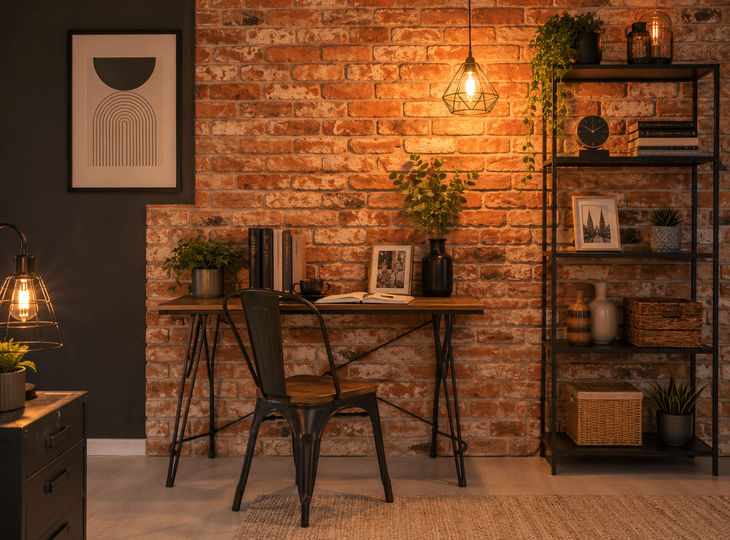
Face brick is one of the most used solutions to introduce an industrial aesthetic in the home. It can be applied on a wall or entire area, such as the front of the living room or the headboard of the bedroom.
In homes where there is no original brick, you can resort to decorative coatings that mimic this finish. The choice should be made with care, since a texture that is too artificial can detract from its authenticity. The ideal is to opt for pieces with relief, variations in tone and visible joints, avoiding flat surfaces that appear to be printed.
The color of the brick also has a great influence on the result. Reddish and orange tones convey a more classic and warm air. White brick fits best in small spaces or spaces with little natural light, as it maintains texture without being too dark. Gray or black versions can work in more contemporary settings, although they should be used sparingly.
Beams and columns
Metal or wooden beams are another very interesting element to reinforce this aesthetic. In high ceilings, they can become the visual axis of the entire room. In more conventional homes, an exposed beam or a structural column can be integrated into the design if combined with appropriate materials.
When the beams are wood, they add warmth and help soften the visual strength of metal, concrete or brick. If they are metallic, in black, dark gray or steel, they create a more urban, architectural feel.
Piping
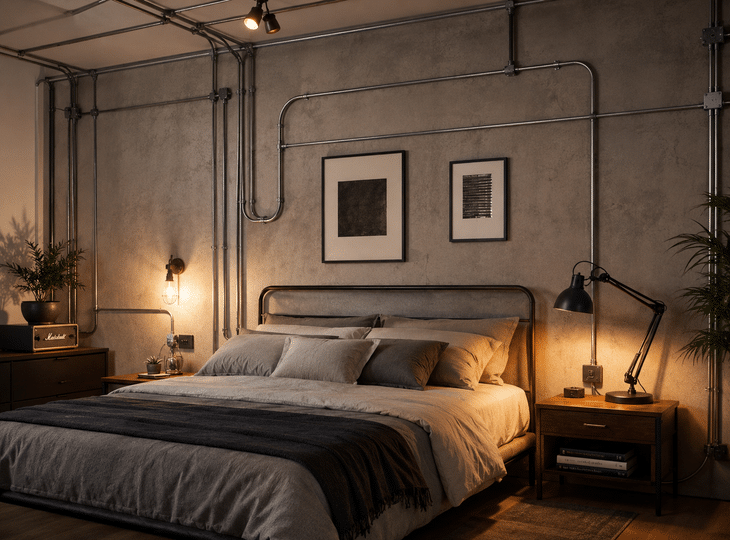
Exposed pipes are also part of industrial decoration. In kitchens or bathrooms they can be left exposed when the project allows it and as long as they meet technical and safety criteria. In other cases, decorative elements inspired by metal bars, shelves with a pipe structure or lamps with visible wiring are used.
The goal should be to take advantage of aesthetics when it makes sense. A home can adopt an industrial style without showing all the fixtures. In fact, an excess of visible elements can visually saturate the environment and make it less comfortable.
Sober color palette: grays, blacks and rust tones.
The chromatic range is fundamental to achieve a balanced industrial decoration. This style usually relies on sober colors linked to construction materials.
Grays are a very common base because they are reminiscent of cement, concrete and metal. They can appear on walls, floors or furniture. Light tones provide spaciousness, while dark grays create more enveloping environments.
Black is another widely used color, especially in metal structures, lamps, mirror frames or faucets. It should be used as an accent, not as the only protagonist, especially in small homes.
Rust tones, copper, aged leather, etc. help to break the coldness of gray and black. These shades connect very well with brick, wood and aged metals and can appear in furniture and decorative objects.
How to avoid making the space too dark?
One of the most common mistakes when applying the industrial style at home is to abuse intense colors in rooms with little natural light. Although black, gray and aged finishes are very characteristic, using them in excess can visually reduce the space.
To avoid this, it is advisable to create a more neutral base and reserve dark tones for specific points. For example, a brick wall, a black lamp and some metallic details can be enough to define the aesthetic without dulling the room.
Light tones can also be introduced for balance. These do not eliminate the industrial character, but make the environment more livable and luminous.
Functional vintage furniture and pieces
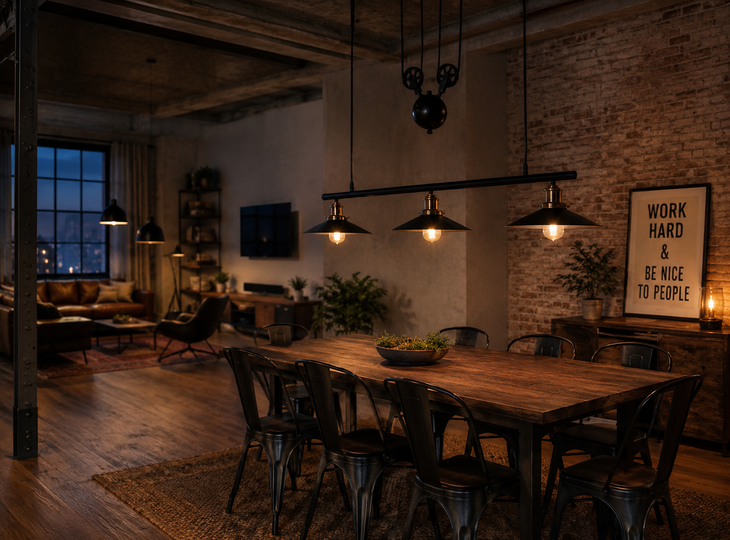
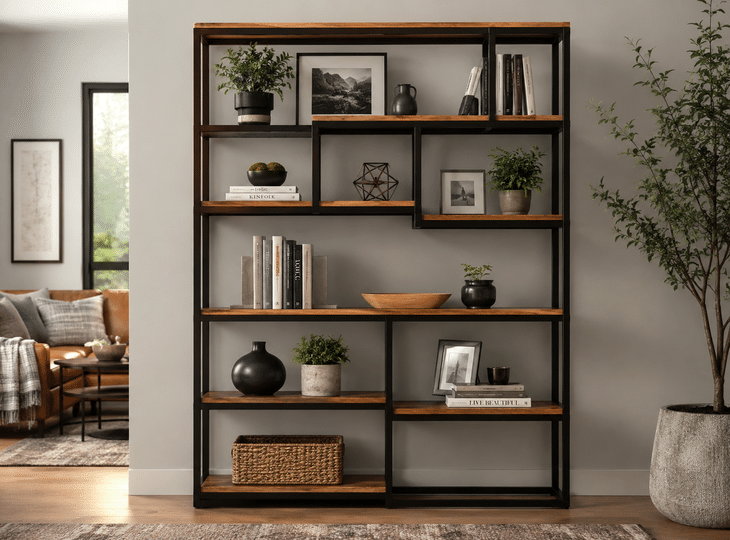
Industrial furniture is characterized by solid pieces, with simple lines and resistant materials, where both functionality and aesthetics are taken into account. Solid wood tables with metal legs are one of the most representative resources, as they provide urban character with iron or steel, working very well in dining rooms or kitchens. In living rooms, coffee tables with metal structure or aged finishes help to reinforce the air of a converted workshop or warehouse.
Open metal and wood shelving, display cabinets, locker-type furniture or pieces inspired by old offices and workshops also fit the bill. It is important to choose furniture with personality and real utility so that it fits in naturally.
The importance of lighting in the industrial style
Industrial style lighting allows you to improve the functionality of each room and also helps to reinforce the aesthetics of the whole. In this style, industrial lamps are used as part of the aesthetics and decoration of the home.
Although lighting in this style is often associated with harsh materials, the color temperature can help create a more pleasant atmosphere. In lounge areas such as dining rooms and living rooms, it is often advisable to use warm or warm neutral light. In this way, metal or brick do not appear so cold.
In kitchens or work areas, a more neutral light can be used to improve visibility. The key is to combine different points of light: general lighting, spot lighting and decorative elements. In this way, depth is achieved and a flat or too hard room is avoided.
Recommended products
In Stock, delivery in 24/48h
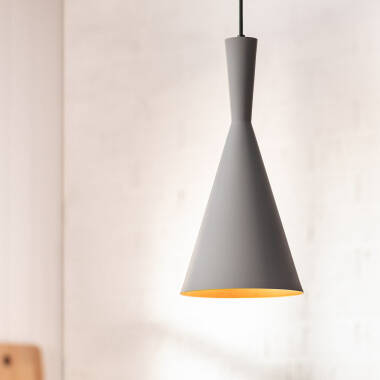
27.99 £
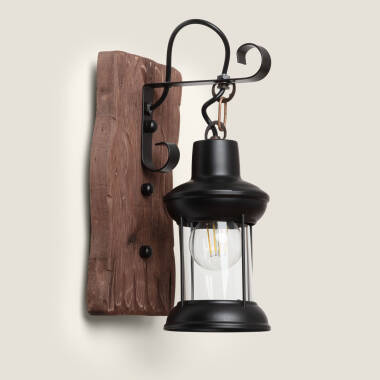
Fanala Metal & Wood Wall Lamp
View product
In Stock, delivery in 24/48h
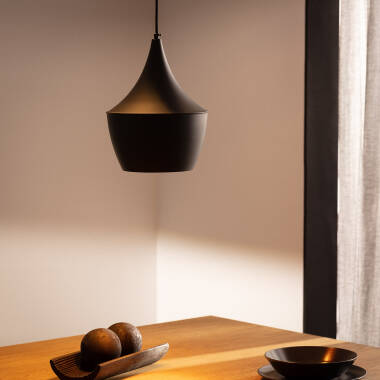
23.99 £
Lennon Aluminium Pendant Light
View product
In Stock, delivery in 24/48h
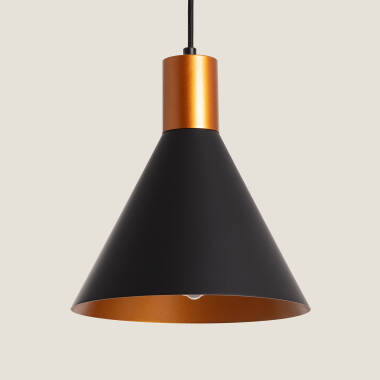
26.49 £
Daro Aluminium Pendant Lamp
View product
In Stock, delivery in 24/48h
26.99 £
Orbat Aluminium Pendant Lamp
View product
Ideas to apply the industrial style in every room of your home.
The industrial style can be adapted to different areas of the house, but it does not have to be applied with the same intensity in all of them. Each room has different needs and should adjust materials, colors and lighting according to their use.
Industrial living room
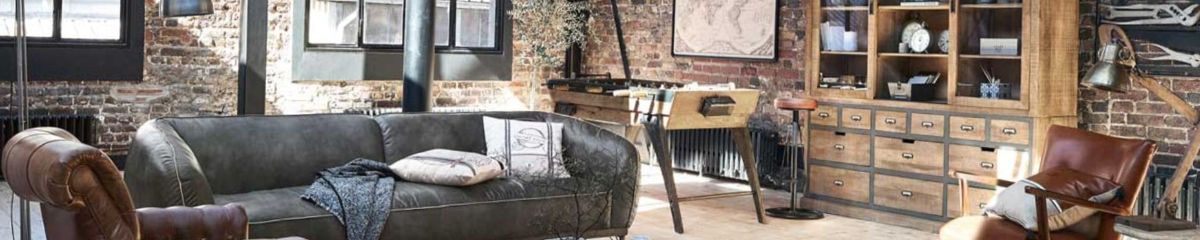
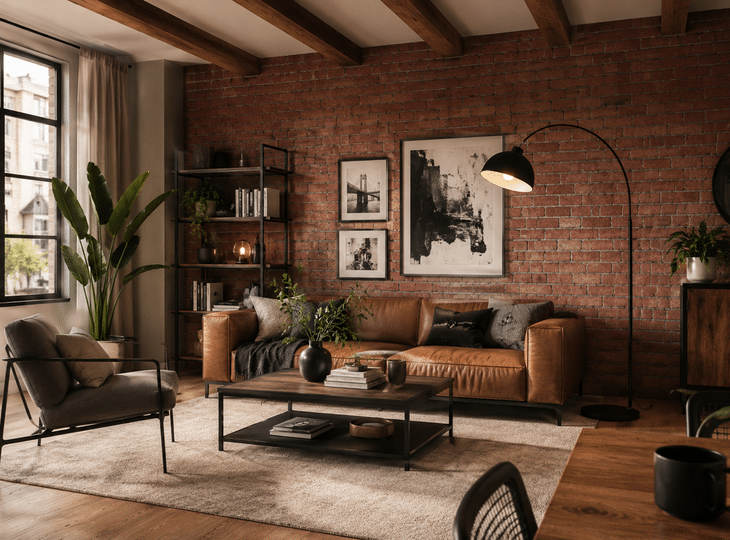
The living room is one of the spaces where this aesthetic can look better. A brick wall, a leather sofa and an industrial floor lamp can create a very solid base. This type of lamps are interesting because they provide decorative presence without overloading the space, in addition to offering a perfect auxiliary light to create a warmer atmosphere next to the sofa or in seating areas. So that the result is not too cold, you can add textiles, wood and some vegetal elements.
Plants can also work in industrial environments, although they should be chosen judiciously. Large-leaved species, cement, metal or clay pots and simple compositions fit better than too delicate decorations. Green introduces freshness and breaks the rigidity of materials.
Industrial kitchen
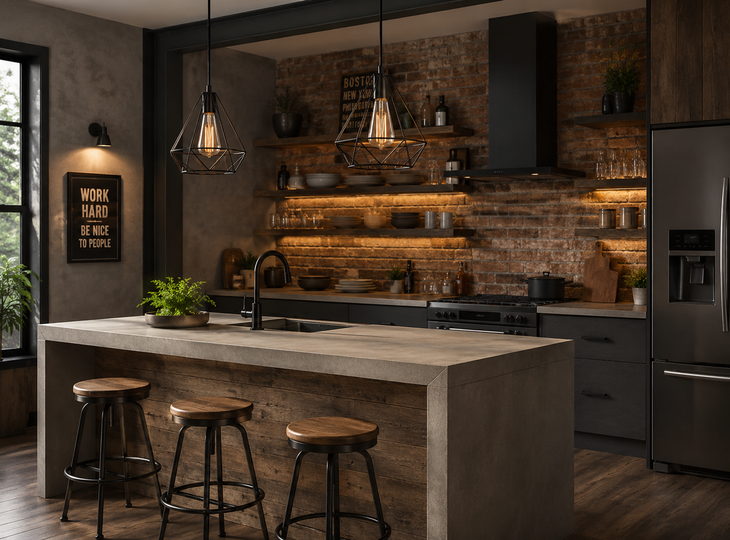
The industrial kitchen is based on practical surfaces and sturdy furniture. Stone, steel, treated wood or porcelain countertops can be combined with black faucets and industrial pendant lamps. This type of lighting is especially interesting over islands, bars or kitchen tables, as it allows light to be directed towards the work areas and, at the same time, reinforces the aesthetics of a workshop or old industrial space. Subway tiles are also a good option, especially in white or artisan finish.
Industrial bedroom
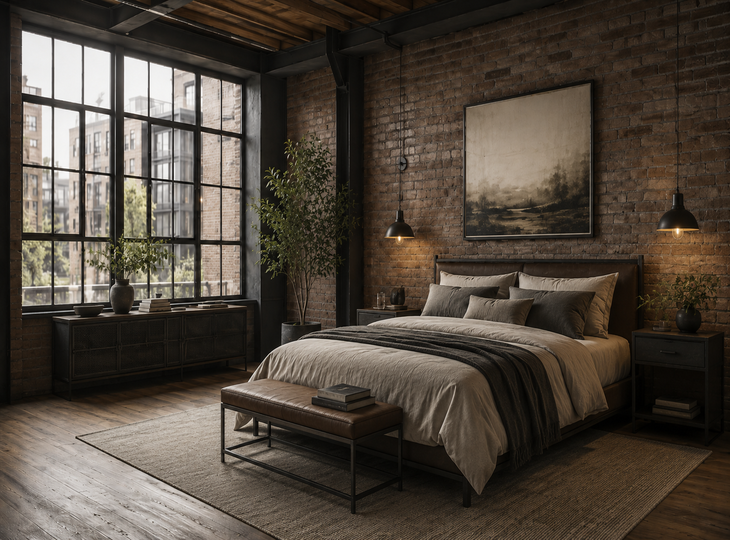
In the bedroom it is convenient to apply this aesthetic in a more contained way. Rest requires a pleasant atmosphere, so it is preferable to soften the harder materials. A brick wall in the headboard, metal bedside tables, a simple bed frame and industrial table lamps may be enough to introduce the industrial style without overloading the space. This type of lamps are interesting because they provide a warm and close light, ideal for reading or creating a more relaxed atmosphere before going to sleep. In addition, models in black metal, aged brass, cement or with exposed bulb fit very well with this aesthetic and help to reinforce the character of the bedroom in a discreet way.
Industrial bathroom
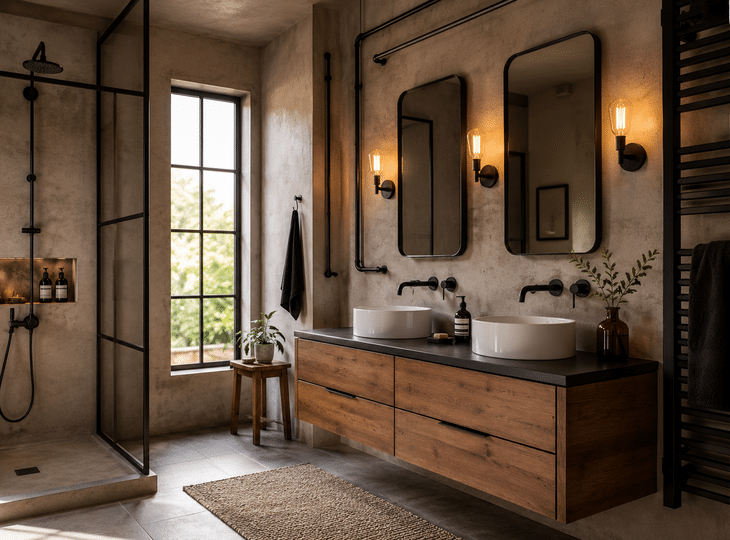
The bathroom is a room where this style can be applied with a lot of personality. Black faucets, screens with dark profiles, countertop sinks and cement-effect coatings work very well.
Industrial wall lamps can also be incorporated next to the mirror, as they provide a practical light for everyday use and reinforce the industrial finish without taking up too much space. Models in black, antique copper or matte metal combine well with dark-framed round mirrors and simple details. As the bathroom is usually a smaller space, it is advisable not to overuse dark tones on all surfaces.
Materials that work best in an industrial decoration
Materials are the basis of this style. It is not enough to choose dark colors or metallic furniture; the industrial style is achieved through textures, finishes and contrasts.
- Agedwood brings warmth and helps the house not to be impersonal. It can appear on tables, shelves, floors or doors. The more natural the finish, the better it will work within the whole.
- Metal is essential, especially in black, steel, iron or aged finishes. It is used in structures, lamps, chairs, shelves, frames and small decorative details. Its presence must be balanced so as not to harden the environment too much.
- Concrete and cement provide a sober and contemporary base. They work very well on floors, walls, countertops or bathrooms. When combined with wood and warm light, the result can be elegant and cozy.
- Leather, especially in brown or camel tones, adds a very interesting vintage touch.
Textiles and details
A well-planned industrial decoration should not be uncomfortable or cold. To achieve this, textiles are a point to take into account. Carpets, curtains, cushions, blankets and upholstery help to introduce visual and acoustic comfort.
Rugs made of natural fibers, wool or discreet geometric designs can bring warmth without breaking the aesthetics. Cushions in earth tones, gray, black, beige or distressed leather help complete the living room or bedroom. Light curtains can soften the entry of light without overloading the windows.
It is also important to take care of decorative objects. Vintage pieces, books, prints, wall clocks, vases, etc. can add personality. In this style it usually works best to select a few pieces, but well chosen.
Final keys to get a balanced industrial home
Applying the industrial style in the home requires working with honest materials, sober colors and functional pieces with balance. Its visual strength can be very attractive, as long as it is combined with elements that bring warmth and comfort. The key is to adapt it to your home and give it a personal character. With a good choice of furniture, materials and lighting, it is possible to achieve an industrial decoration with personality and practical for everyday life.