
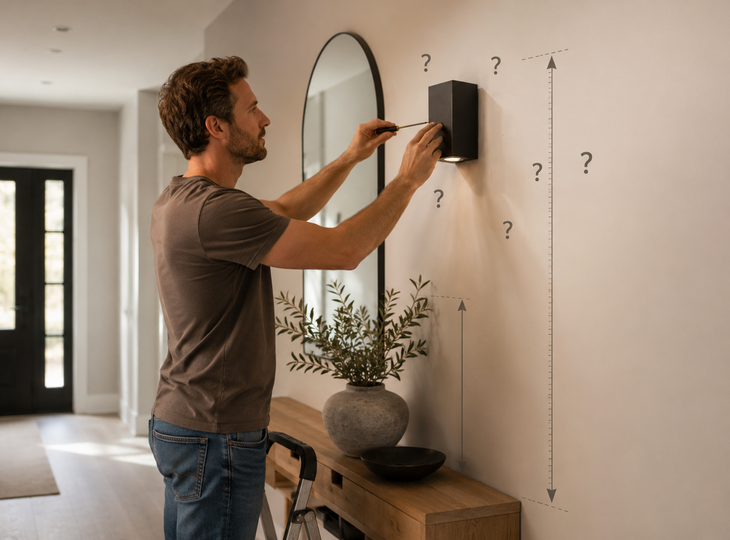
Wall lights are one of the most versatile lighting solutions for any home. However, for them to function properly, it’s not enough to simply choose an attractive design. The height and placement of the sconce directly influence the quality of the lighting and the overall aesthetic.

Table of Contents
Why Does the Placement of Wall Sconces Matter?
Interior lighting doesn’t depend solely on the wattage of the bulb or the color temperature. The position from which the light is projected determines how the light is distributed throughout the room and how we perceive the space.
When a wall sconce is installed correctly, the light is distributed evenly, reducing the appearance of uncomfortable shadows and enhancing the sense of spaciousness. Conversely, poor placement can cause reflections, dark spots, or glare that affect both the comfort and functionality of the room.
In addition, wall sconces are often part of the decorative design. Placed at the right height, they help visually balance the wall, frame furniture, and bring symmetry to the room.
It’s also important to consider the day-to-day use of the space. In high-traffic areas, it’s best to avoid obstacles, and in relaxation areas, softer, more comfortable lighting is preferable.
For all these reasons, before installation, it’s advisable to plan both the height and the spacing between fixtures, taking into account the room’s dimensions, existing furniture, and the desired lighting effect.
General Rules for Installing Wall Sconces
Before deciding the exact location of each wall light, it is advisable to take into account a series of general criteria that affect both visual comfort and the functionality of the room:
1. The ideal standard height to avoid glare
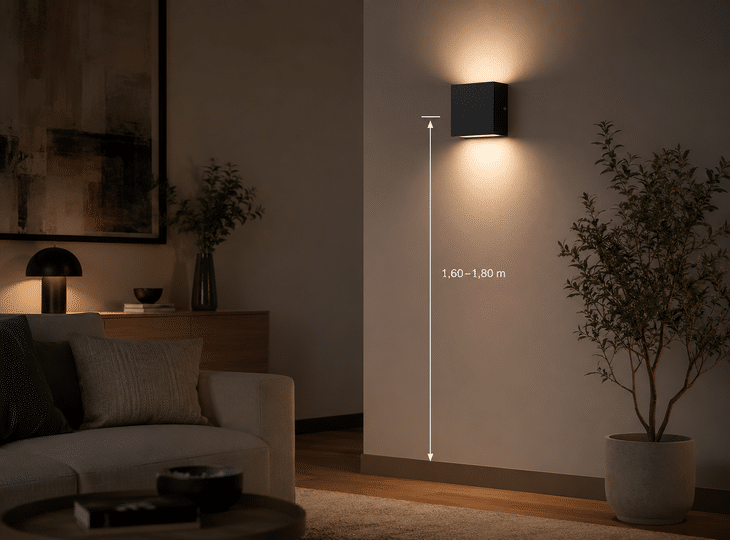
Although there is no universal measurement that applies to all homes, the most recommended height for installing a wall sconce is between 1.60 and 1.80 meters from the floor to the center of the fixture.
This guideline ensures that the light source is approximately at eye level or slightly above, preventing the bulb from being fully exposed when people walk through the room.
In homes with high ceilings, it may be advisable to raise this height slightly to maintain good visual balance. Conversely, in rooms with low ceilings, it usually works best to stay close to the lower end of the range.
When wall sconces are installed in pairs, it’s best to ensure they are perfectly aligned to maintain the symmetry of the wall.
2. The depth of the light fixture and walkways
It’s not just the height that matters; you also need to consider how far the wall sconce protrudes from the wall.
In narrow hallways or entryways, a model that’s too bulky can become an obstacle; it’s best to choose models that aren’t very deep.
On the other hand, in small homes, compact or recessed designs usually work better.
It’s also advisable to leave enough space between the wall sconce and doors and windows to prevent it from restricting their opening.
3. Electrical Planning
One of the most common mistakes is choosing the light fixture first and then deciding where to install it. It’s best to plan the lighting layout before carrying out the electrical installation.
During this planning phase, it’s important to consider aspects such as:
- The routing of the wiring.
- The location of switches.
- The ability to control multiple light fixtures from different locations.
- The final height of the furniture.
- The future layout of the room.
During renovations, it’s much easier to adapt the electrical installation to the actual lighting needs. On the other hand, when working on a home that’s already finished, it may be a good idea to use plug-in wall sconces.
Height and placement of wall sconces according to each room
In addition to following general guidelines, it’s best to adapt the height and placement of wall sconces to the type of room and the desired effect. Below, we’ll examine the different rooms:
Hallways and entryways
Hallways are typically long, narrow spaces where the goal is to achieve even lighting without creating areas that are too bright or dark corners.
In these spaces, wall sconces are usually installed at a height of between 1.50 and 1.80 meters.
When the hallway is long, it’s common to distribute several light sources evenly spaced apart. The distance will depend on the wattage of each fixture, though it usually ranges from two to three meters.
In small entryways, one or two wall sconces are sufficient to complement the ceiling lighting and create a warmer, more welcoming atmosphere.
If the hallway is narrow, it’s best to choose shallow models to avoid accidental bumps.
Recommended products
In Stock, delivery in 15-20 days
36.99 £
Iris 18W Aluminium LED Wall Lamp White
View product
In Stock, delivery in 24/48h
44.99 £
Lenny 7W Bathroom Mirror Aluminium LED Light
View product
In Stock, delivery in 15-20 days
19.09 £
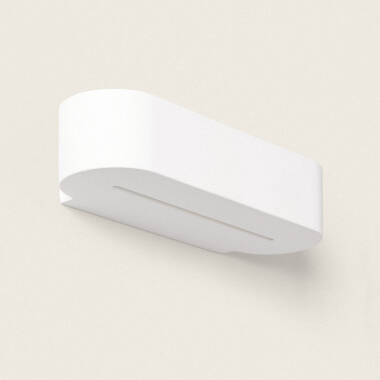
Lonjong Plaster Double Sided Wall Light
View product
In Stock, delivery in 15-20 days
16.99 £
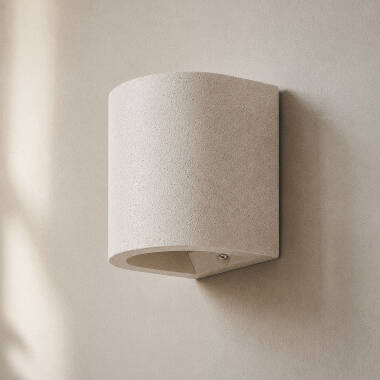
Kediri Cement Double Sided Wall Light
View product
Living Room or Dining Room
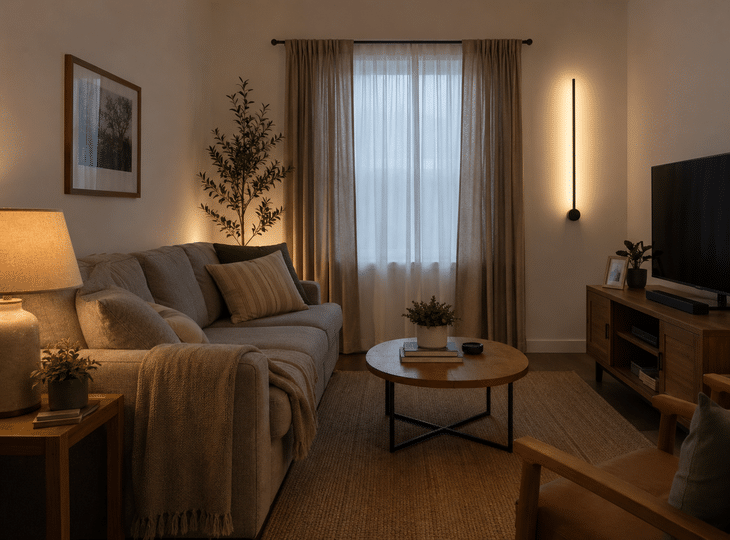
Living room wall lights serve primarily an ambient and decorative function.
They can be used to complement the main lighting, create different lighting scenes, or highlight various elements.
When installed next to a sofa, they are usually placed approximately 20 to 30 centimeters above the height of the backrest so that the light does not shine directly into the eyes of those sitting there.
If they are placed next to a low cabinet or a sideboard, it is advisable to leave enough space so that both elements have visual breathing room and the composition appears balanced.
In dining rooms, wall sconces can be used as accent lighting to reduce the contrast created by the main light fixture above the table.
Bedroom
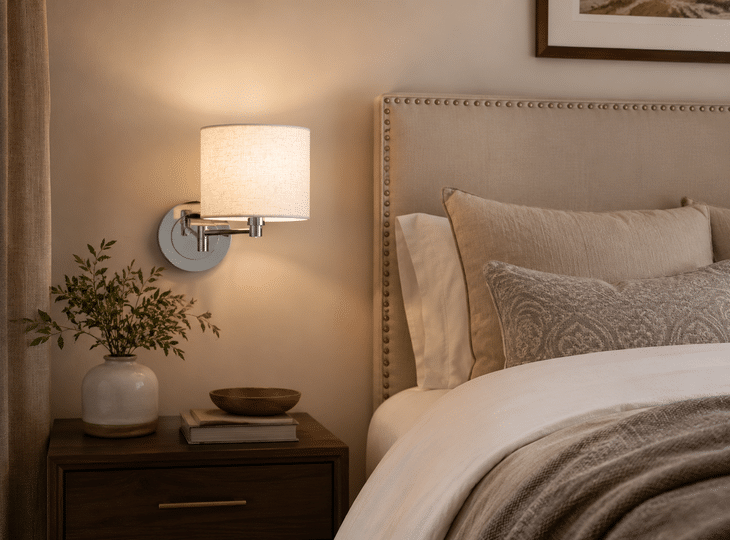
The bedroom is probably one of the rooms where wall sconces offer the greatest advantages over table lamps.
They free up space on the furniture, make cleaning easier, and provide very comfortable lighting for reading before bed.
When used in place of bedside lamps, they are typically installed between 90 and 120 centimeters above the mattress, depending on the height of the headboard.
It’s also a good idea to position them approximately 15 to 30 centimeters to each side of the bed to avoid bumping your head and to make it easier to reach the switch.
Bathroom
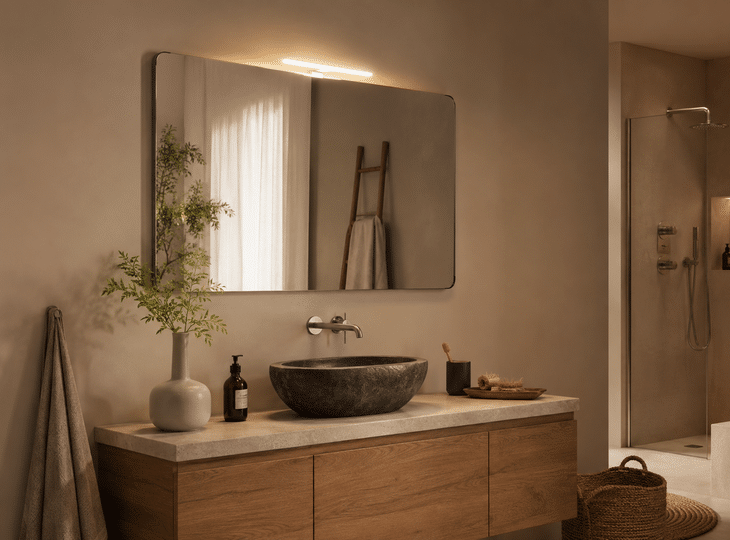
For bathroom wall lights, placement depends mainly on the mirror.
The best lighting for the face is achieved by placing two vertical wall sconces on either side of the mirror at approximately face height. This reduces shadows during tasks such as shaving or applying makeup.
When installing only one wall sconce, it’s best to position it centered above the mirror and ensure it casts an even downward light.
In addition to height, it’s essential in this room to comply with the IP protection ratings required for damp locations, especially when fixtures are located near showers.
How does the type of wall sconce affect its placement?
Not all wall sconces cast light in the same way. Their design determines both the height and the most suitable position for achieving the best result.
Direct-light wall sconces
Direct-light models focus the light beam on a specific area.
They are commonly used in bedrooms or home offices. To make the most of their lighting, they should be positioned so that the beam falls exactly on the surface you want to illuminate, preventing the light from shining directly into your eyes.
For adjustable models, make sure they have enough range to adjust the direction without needing to modify the installation.
Indirect Wall Sconces
Indirect wall sconces project light toward the wall or ceiling, allowing the light to bounce off the surfaces before spreading throughout the room.
This type of lighting is very pleasant because it reduces glare and creates a relaxed atmosphere.
Since they do not rely as heavily on the direct orientation of the bulb, they offer a bit more flexibility in terms of installation height, although they still work best within the standard range of 1.50 to 1.80 meters.
They are an excellent choice for living rooms, hallways, and relaxation areas where ambient lighting is desired.
Wall sconces with articulated or extendable arms
These models stand out for their flexibility.
Thanks to their movable arms, you can adjust the light’s position as needed, making them very popular in bedrooms and home offices.
Precisely because of this mobility, it’s important to plan for the space the arm will occupy when fully extended.
It’s also a good idea to check that it doesn’t interfere with doors or people passing by.
If installed next to a bed, it should be easy to operate while lying down.
Common Mistakes When Installing Wall Sconces and How to Avoid Them
Even a well-chosen wall sconce can lose much of its effectiveness if the installation isn’t planned correctly. Here are some of the most common mistakes and how to avoid them.
- Installing all wall sconces at the same height without considering the room’s use: Although there are generalguidelines , every room has different needs. The height should be adapted to the function the light fixture will serve.
- Installing the light source where it’s too visible: When the bulb is directly in view, it often causes annoying glare. Choosing models with diffusers or adjusting the height more carefully helps improve visual comfort.
- Failing to consider the furniture: Wall sconces are often installed before the final placement of the furniture is decided, which later forces you to put up with impractical lighting.
- Choosing a disproportionate size: An overly large wall sconce can visually overwhelm a small wall, while one that’s too small may go unnoticed in spacious rooms.
- Forgetting color temperature: A well-chosen location loses some of its effect if the light isn’t suitable for the room. Warm tones generally work best in living rooms and bedrooms, while neutral light is usually more practical in bathrooms or work areas.
- Failing to follow safety standards in the bathroom: It is essential to use fixtures with the appropriate IP rating and to maintain safe distances from showers, bathtubs, and sinks.
Ultimately, installing wall sconces correctly involves much more than simply deciding where to place them. A well-planned installation improves light distribution, enhances daily comfort, and allows you to make the most of each fixture’s capabilities. Before choosing the final model, it’s worth taking a few minutes to study the room’s layout and the type of lighting you actually need.