
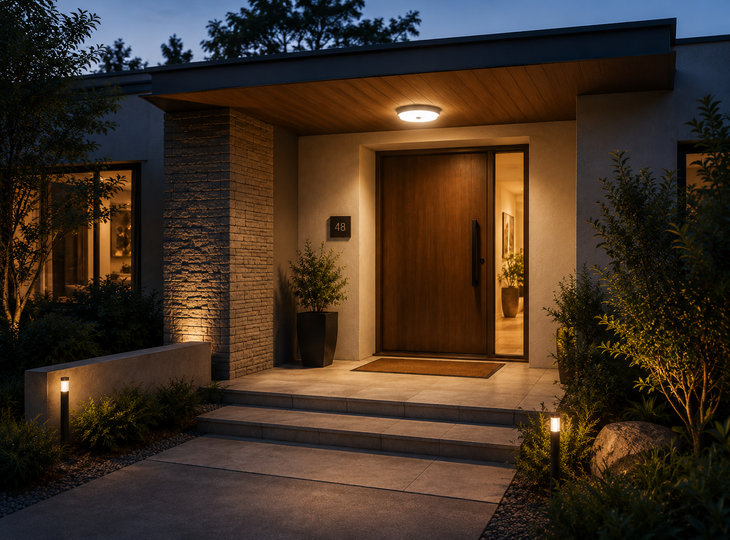
Technology has transformed the way we live, work, and interact with our surroundings. In the home, this evolution is particularly evident in home automation—a set of solutions that allows us to automate, control, and optimize various functions within the home. From turning on a light with your phone to programming the climate control, improving security, or reducing energy consumption,homeautomation has become an increasingly accessible and useful tool.

For years, home automation was associated with luxury homes or complex installations. However, today there are simple systems compatible with the day-to-day life of any household. Smart light bulbs, sensors, cameras, and Wi-Fi-enabled ceiling fans are just a few examples of how technology can be integrated into the home without the need for major renovations.
Table of Contents
What is home automation and what is it used for?
Home automation refers to the set of technologies applied to the intelligent control and automation of a home; its goal is to simplify the management of various home systems.
In practice, home automation allows certain elements of the home to operate automatically or be controlled remotely; for example, you can set the living room lights to turn on at dusk.
Home automation devices primarily serve to improve four aspects of a home: comfort, security, efficiency, and control. One of the major advantages today is that it’s not always necessary to install a complete home automation system from the start. Many homes begin with specific solutions, such as lighting, and then expand the system as needed.
How does home automation work?
Home automation works through communication between devices, sensors, controllers, and users. Each connected element collects information, receives commands, or carries out actions within a shared system.
A home automation installation can include different components. Sensors detect changes in the environment, such as movement, temperature, humidity, presence, or natural light levels. Actuators are the devices that perform an action, such as switching on a lamp. The controller coordinates the system’s operation, although in many modern solutions this function can be managed through a mobile app. Finally, the user interacts with the system using a smartphone, remote controls, and other devices.
Devices can be connected using different technologies, such as Wi-Fi, Bluetooth, or wired systems. In existing homes, wireless solutions are usually the most common because they allow for the integration of smart devices without the need for construction work. In new construction projects or comprehensive renovations, a more comprehensive, wired installation may also be considered.
Smart home lighting: one of the most common applications
Smart home lighting is one of the most popular applications in home automation, both because of its ease of installation and the impact it has on daily comfort. Smart lighting control allows you to adapt each room to its current use and reduce unnecessary energy consumption.
A smart lighting system can consist of light bulbs, smart LED strips, motion sensors, or dimmers. Thanks to these devices, users can turn the lights on or off, adjust the brightness, or schedule lighting from various control points.
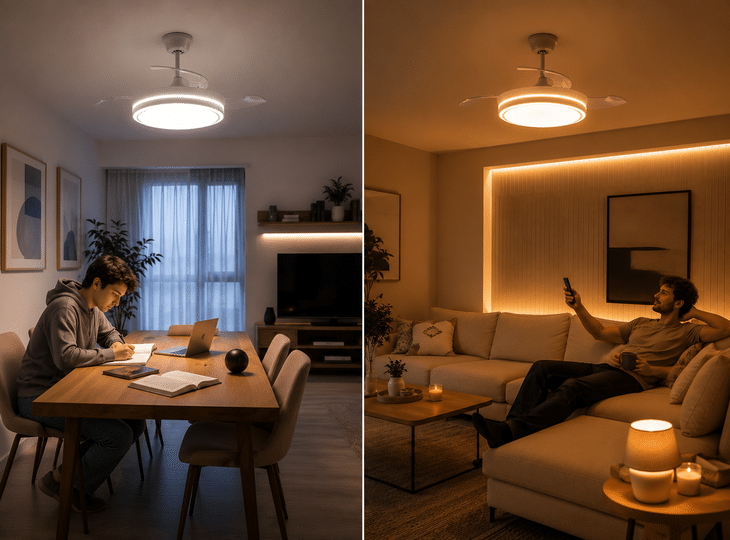
At home, lighting also influences the perception of space and well-being. Warm, dimmable lighting can make the living room feel cozier at night, while more neutral or intense lighting can be useful in a workspace, kitchen, or bathroom. Home automation allows you to adjust these settings without always relying on traditional light switches.
In addition, smart home lighting is especially useful in high-traffic areas, such as hallways or staircases. In these spaces, motion sensors can turn the lights on only when needed and turn them off automatically after a few seconds or minutes. This prevents lights from being left on unnecessarily.

How does a smart lighting system work?
How a smart lighting system works depends on the type of devices installed and the level of automation you want to achieve.
In a basic setup, the system can operate using smart bulbs connected to a Wi-Fi network and controlled via a mobile app. In this case, the user can turn the lights on or off, adjust the brightness, change the color temperature, or set schedules from their phone. They can also link the bulbs to voice assistants to control them using voice commands.
In a more advanced setup, smart lighting can be integrated with sensors, smart switches, and customised scenes. A scene is a combination of settings that can be activated with a single command. For example, a reading scene can switch on a specific lamp at medium brightness and with a warm colour temperature.
Lighting can also be automated according to the time of day, the presence of people, or the amount of natural light available. If a room receives plenty of daylight, the system can keep the lights switched off or dimmed.
This type of control not only improves the user experience but also helps prevent unnecessary energy consumption.
Examples of home automation
Examples of home automation are becoming increasingly diverse. The technology can be applied to different areas of the home and adapted to very specific needs.
Automated Lighting
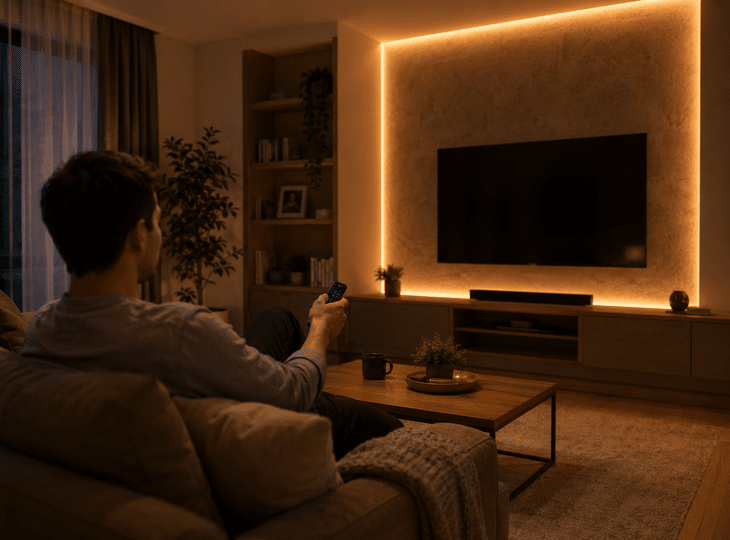
Automated lighting is one of the most versatile ways to enhance the atmosphere of a home. Unlike a conventional setup, it allows you to customize the lighting according to the needs of each user and each room. Automated lighting is one of the clearest examples. A home can feature lights that turn on when motion is detected, smart Wi-Fi LED strips, or systems that simulate occupancy when no one is home.
One important advantage is the ability to adjust the brightness. The same amount of light is not always needed. In many cases, lighting at 40% or 60% is sufficient, especially during moments of relaxation.
In addition, dimming and control systems make it possible to manage lighting more precisely, flexibly, and efficiently by adapting the brightness, switching, scenes, or behaviour of each light source to the needs of the space.
Smart climate control
Climate control is another area where home automation adds significant value. Smart thermostats, temperature sensors, and connected systems allow you to adjust heating or air conditioning based on occupancy, the time of day, or the outdoor temperature.
This prevents common situations such as leaving the heat on when no one is home or using more energy than necessary to reach a comfortable temperature. A smart home can anticipate its users’ routines and adjust climate control more efficiently.
Automated Blinds, Curtains, and Awnings
Automating blinds, curtains, and awnings allows you to control the amount of natural light entering the home and regulate the indoor temperature. During the sunniest hours of the day, the system can partially lower the blinds to reduce the amount of heat entering the home. In the morning, it can automatically raise them to take advantage of natural light.
This feature is particularly useful in homes with large windows or those facing a very sunny direction. When properly configured, it can help improve thermal comfort and reduce the use of artificial climate control.
Security and Access Control
Home automation is also used to enhance home security. Motion sensors, smart locks, cameras, alarms, and intercoms allow for better monitoring of what’s happening inside and outside the home.
These systems can send notifications to your cell phone, record video, activate sirens, or automatically turn on lights when suspicious activity is detected.
Ceiling Fans
Among the examples of home automation, it’s also worth mentioning ceiling fans, an increasingly attractive solution for improving thermal comfort without relying exclusively on air conditioning. Today’s ceiling fans have evolved significantly and can incorporate smart features, remote control, a timer, speed control, reversible rotation, and Wi-Fi connectivity.
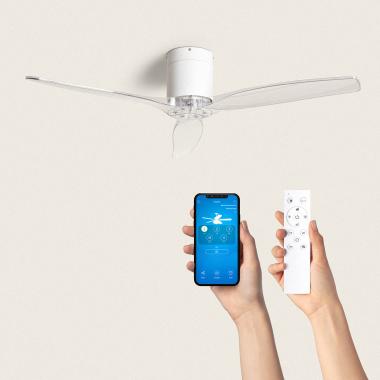
A Ceiling Fan with WiFi allows you to control the device from your smartphone, even when you’re not at home. It can also be integrated with automation apps to create personalized routines. For example, you can program the fan to turn on at a certain time or to turn off automatically when no one is in the room.
Recommended products
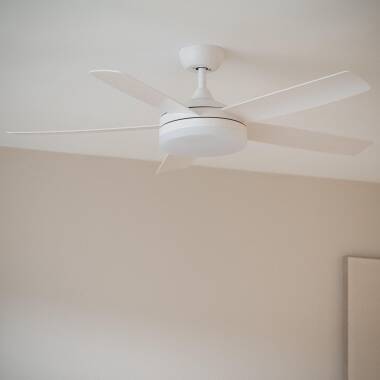
In Stock, delivery in 24/48h
103.99 £
Patroclo Silent Ceiling Fan with DC Motor White 132cm
View product
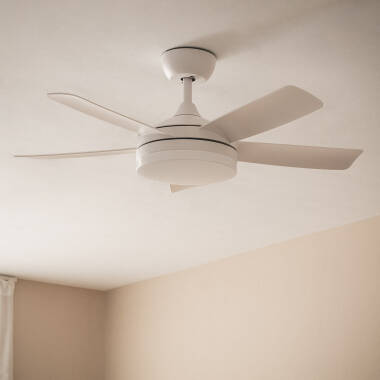
In Stock, delivery in 24/48h
90.99 £
Patroclo Silent Ceiling Fan with DC Motor White 106cm
View product
In Stock, delivery in 24/48h
65.99 £
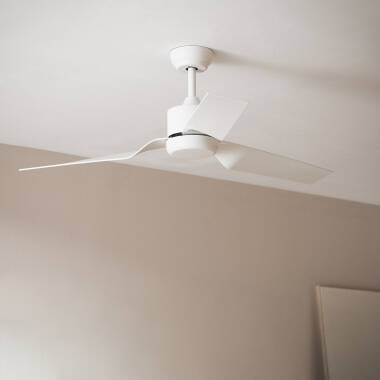
Minimal Silent Ceiling Fan with DC Motor White 132cm
View product
In Stock, delivery in 24/48h
88.99 £
Angistri Silent Ceiling Fan with DC Motor White 132cm
View product
Home automation applied to ceiling fans is especially practical in bedrooms or home offices. In the summer, it helps create a more comfortable temperature and can reduce the need to use the air conditioner for as many hours. In some models with a reverse function, it can also help better distribute the warm air that accumulates at the top of the room during the winter.
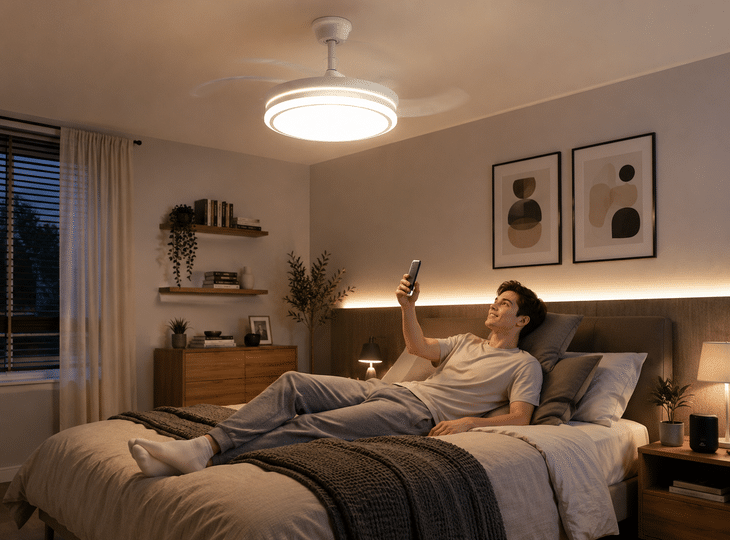
Furthermore, when a ceiling fan includes a light, two functions can be combined into a single device: ventilation and lighting. In this case, Wi-Fi connectivity allows you to control both the movement of the blades and the built-in light.
Home automation and energy efficiency
The relationship between home automation and energy efficiency is one of the most important factors to consider when evaluating these solutions. A smart home aims not only to be more comfortable but also to use its resources more efficiently.
A home’s energy consumption depends largely on lighting, climate control, appliances, and usage habits. Home automation helps manage these elements more precisely. Instead of relying solely on manual actions, the system can automate decisions to prevent waste.
When it comes to lighting, motion sensors and scheduled timers prevent lights from staying on unnecessarily.
Energy efficiency is not only about consuming less, but also about consuming more wisely. For example, a smart ceiling fan can help improve thermal comfort while using less energy than other climate control systems.
In addition, the information provided by many home automation systems makes it easier to make better decisions. Knowing how much energy a device consumes helps identify inefficient habits and correct them.
Advantages and disadvantages of home automation
Like any technology, smart home technology offers significant benefits, but it also has some aspects that should be considered before installation. Analyzing the pros and cons allows you to make more realistic decisions and choose solutions tailored to each home.
Advantages of Home Automation
One of the main advantages is convenience. Being able to control lights, fans, or electrical devices from your smartphone simplifies many daily tasks. Additionally, automation allows the home to respond automatically to certain situations.
Another advantage is energy savings. Although it depends on the type of installation and how it’s used, home automation can help reduce unnecessary energy consumption. Security is also improved. Sensors, cameras, alarms, and other devices allow for better monitoring of the home and real-time alerts. This is useful both in daily life and during extended absences.
Customization is another strong point. Each user can adapt the system to their routines, schedules, and preferences. A single home can have different “scenes” for working or relaxing.
Drawbacks of Home Automation
One of the main drawbacks is the initial cost. Although affordable devices are available, a complete installation may require a larger investment, especially if you want to integrate lighting, climate control, security, and other systems.
Another aspect to consider is compatibility between devices. Not all products work with the same apps or voice assistants. Therefore, before purchasing, it’s a good idea to check that the devices you’ve chosen can integrate properly.
Reliance on an internet connection can also be a drawback in some systems. Many Wi-Fi devices require a stable network to function optimally. If the connection fails, some remote functions or automations may be limited, although many devices still offer manual controls.
Finally, poor planning can make home automation more complex than necessary. Installing too many devices without a clear strategy can lead to confusion or automations that aren’t very useful. It’s best to start with specific needs and expand the system gradually.
Tips for Choosing a Home Automation System
Choosing a home automation system requires paying attention to several factors. The first is compatibility. As mentioned earlier, it’s important to verify that the devices are compatible with the ecosystem you intend to use.
The second aspect is ease of use. A home automation system should simplify life, not complicate it. Therefore, it’s important for the app to be intuitive, for the controls to be clear, and for the automations to address real needs.
Scalability is also a key consideration. A good system should allow you to start with just a few devices and expand over time. This is especially useful for those who want to start by testing out smart lighting or a smart ceiling fan before investing in a more comprehensive setup.
The quality of the devices matters, too. When it comes to connected products, you shouldn’t just look at the price, but also at reliability, security, and technical support. A cheap but unstable device can end up causing more problems than it solves.
Finally, it’s advisable to always keep a manual option available. Although automation is very convenient, switches and remote controls are still useful for ensuring ease of use for everyone in the home.
How to Effectively Automate a Home
Understanding home automation—what it is and what it’s for—allows you to assess its true value. Thanks to it, you can create a home that’s more comfortable, secure, efficient, and personalized. The key is to choose solutions that address specific needs and can be easily integrated into your daily routine.
Although there are advantages and disadvantages of home automation that are worth keeping in mind, good planning allows you to take advantage of its benefits and avoid complications. Starting slowly, choosing compatible devices, and prioritizing the most useful features are essential steps for turning any home into a smarter, more comfortable, and more efficient space.