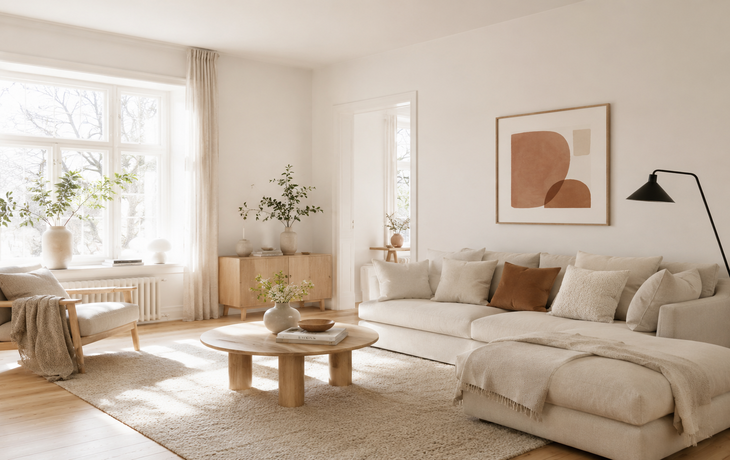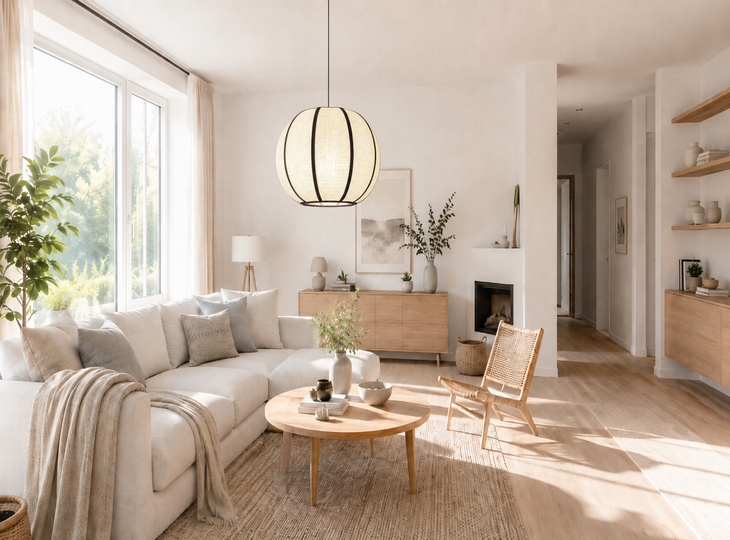
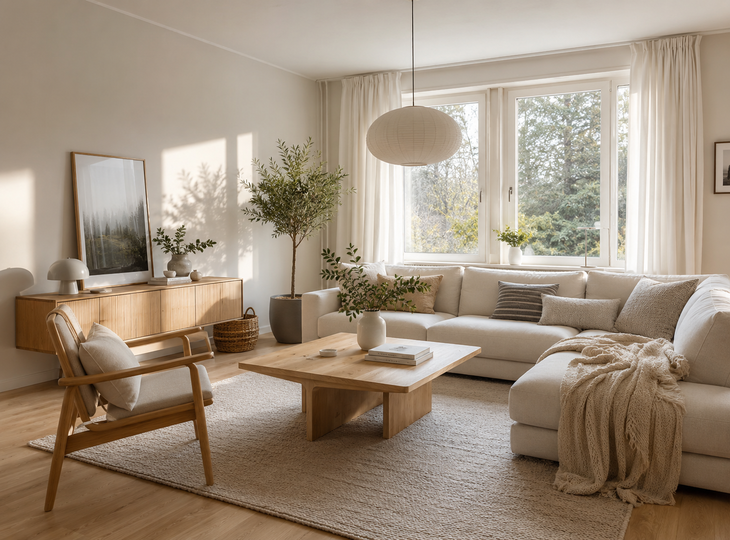
Nordic decor is often associated with bright, tidy, and comfortable living spaces. Its aesthetic is based on natural materials, soft tones, functionality, and an approach to home design that is closely tied to everyday well-being. However, when interpreted too rigidly, it can lose some of its charm and end up feeling cold.

The problem isn’t the white or the simplicity. The real mistake occurs when too many nuances are stripped away from the space. A Nordic home needs clarity, but it also needs depth.
Table of Contents
- What makes Nordic decor look cold?
- Mistakes to Avoid for a Warmer Nordic Decor
- Using Too Much White Without Creating Contrast
- Choosing Lighting That’s Too Cool
- Confusing minimalism with a lack of life
- Forgetting the Importance of Textures
- Choosing wood that’s too pale throughout the house
- Leaving the Walls Completely Bare
- Overusing shades of gray
- Not Incorporating Plants or Natural Elements
- Failing to Define Areas Within an Open Space
- Choosing décor unrelated to daily use.
- Final Tips for Achieving a Warmer Nordic Decor
What makes Nordic decor look cold?
Nordic decor can feel cold when it focuses solely on the visual aspects of the style and overlooks its most important element: the sense of comfort. Many homes try to replicate a catalog image based on white walls, light-colored furniture, and few decorative objects, but they don’t always succeed in creating a cozy atmosphere.
The origins of the Nordic style are rooted in the need to make the most of natural light, create practical interiors, and make the home feel pleasant during the darkest months of the year. That’s why, even though its aesthetic is simple, it should never feel distant.
When a room feels cold, there are usually several factors at play. It may lack texture, the lighting may be too white, the materials may seem flat, or the layout may not be conducive to daily use. The absence of personal touches or a lack of contrast also plays a role.
Mistakes to Avoid for a Warmer Nordic Decor
Before examining each case, it’s important to understand that a cold feel in Nordic decor rarely stems from a single element. It usually results from the accumulation of small design choices.
Using Too Much White Without Creating Contrast
White is one of the most common colors in Nordic decor because it helps reflect light and creates a sense of spaciousness. It works very well on walls, ceilings, textiles, and furniture, especially in small homes or those with limited natural light. However, when used without any contrast, it can make a room look flat.
An all-white room needs elements to break up the uniformity. It’s not about randomly introducing bold colors, but rather adding visual layers that give depth to the overall look. Wood, sandy tones, natural linen, or subtle black accents can make a big difference.
The most common mistake is thinking that the whiter a room is, the more Nordic it will feel. In reality, too much white can erase the space’s character. The decor loses its depth, the furniture blends together, and the home can seem unlived-in.
To avoid this, it’s best to work with a light base, but not one that’s entirely monochromatic. A wall in an off-white shade, a natural wood table, a textured rug, or a lamp with a warm finish can provide balance without altering the essence of the style.
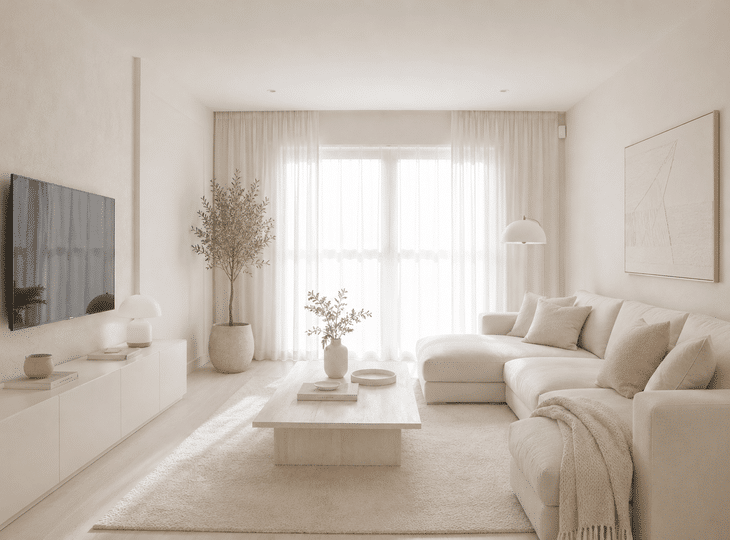
Choosing Lighting That’s Too Cool
Nordic lighting plays a very important role in creating your home’s decor. It’s not enough to have a white room and simple furniture if the artificial light is harsh. A color temperature that’s too cool can completely change how the space is perceived, making even a well-chosen decor scheme seem uninviting.
In Nordic-inspired homes, warm or warm-neutral lighting usually works best. This type of lighting softens the appearance of materials, complements natural textiles better, and creates a more pleasant atmosphere at the end of the day. In contrast, very white light can be reminiscent of offices, industrial kitchens, or non-residential workspaces.
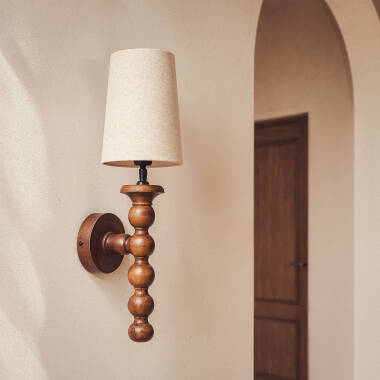
Another common mistake is relying on a single overhead light. This solution provides even lighting but doesn’t always create ambiance. The Nordic style requires different light sources distributed throughout the room. Scandinavian table lights, wall sconces, floor lamps, or small accent lights help create cozier areas.
In a living room, for example, a scandinavian ceiling light can serve as the main source of light, but it shouldn’t be the only one. A lamp next to the sofa or a wall sconce near a reading nook on a sideboard allows you to adjust the atmosphere depending on the time of day.
Recommended products
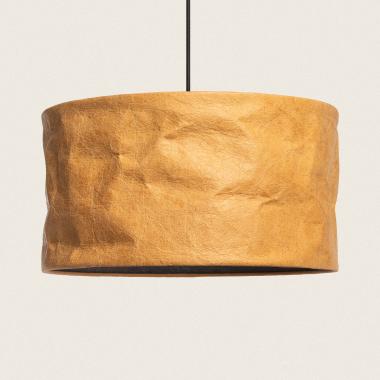
In Stock, delivery in 15-20 days
26.49 £
Diana Tyvek Pendant Lamp
View product
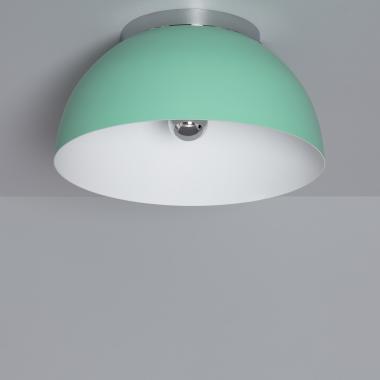
In Stock, delivery in 16-21 days
18.59 £
Bosco Silver Aluminium Ceiling Lamp Ø305
View product
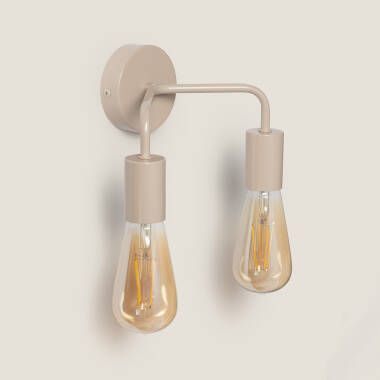
In Stock, delivery in 15-20 days
10.59 £
Jayso 2 Spot Wall Lamp
View product
In Stock, delivery in 15-20 days
52.99 £
Vibhuti Wall Lamp ILUZZIA
View product
Confusing minimalism with a lack of life
The Nordic style is closely associated with simplicity, but that doesn’t mean the decor should look empty. One of the biggest mistakes that makes a home feel cold is removing too many elements out of fear of cluttering the space.
A home can be tidy and, at the same time, have personality. In fact, the most interesting Nordic interiors often include well-chosen everyday objects.
The problem arises when minimalism is interpreted as a strict rule. A table with nothing on it, a completely bare wall, or a bedroom with no textiles beyond basic bedding can create a cold, uninviting atmosphere. The room looks clean, but not necessarily cozy.
To avoid this effect, it’s best to introduce details with intention. Nordic decor doesn’t need excess, but it does need small touches that speak to the people who live there.
Forgetting the Importance of Textures
Texture is one of the most effective ways to add warmth to a Nordic decor. When a room is based on soft colors, richness doesn’t always come from color contrast, but rather from the combination of surfaces.
Linen, cotton, wool, rattan, wood, and other materials can coexist beautifully in a Nordic interior. Each material contributes a distinct feel and prevents the decor from appearing flat. Even a single color palette can become much more interesting when paired with varied textures.
The mistake occurs when all the finishes are smooth, glossy, or too uniform. A light-colored sofa with cushions made of the same fabric, a flat rug, and laminate-finished furniture can create a functional room, but one that feels unwelcoming.
To add warmth, textiles are a good place to start. A natural-fiber rug, softly draping curtains, cushions made of different fabrics, or a knitted throw can transform the feel of a room. Wood also plays a key role, especially when it features visible grain and natural tones.
Choosing wood that’s too pale throughout the house
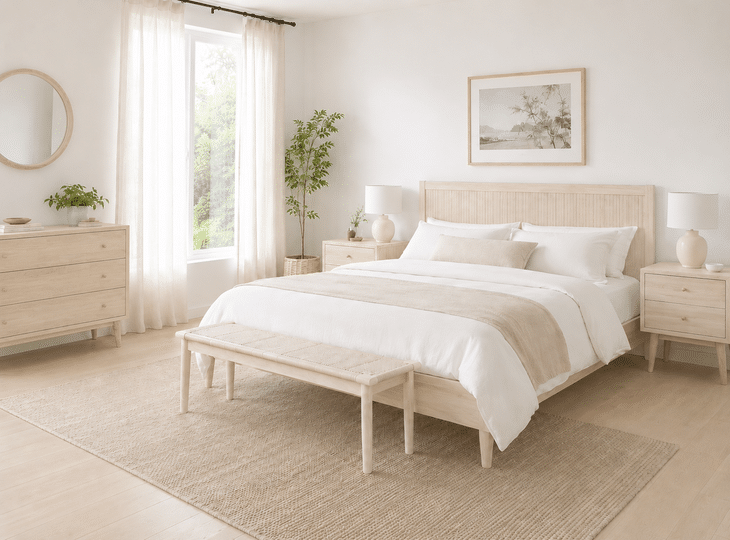
Light wood is one of the most iconic materials of the Nordic style. It brings a natural feel, connects with Scandinavian aesthetics, and pairs beautifully with light-colored walls. However, when all the wood in the home is an excessively pale shade, the result can feel too flat.
Not all light woods convey the same feeling. Some have a very pleasant warm undertone, while others can appear cold when paired with pure white and neutral textiles. The finish also plays a role: a surface that’s too smooth or artificial can lose some of its character.
One way to avoid this is to combine different shades within the same color family. Wood shouldn’t be used solely as a decorative finish. When integrated into other elements, it helps create a warmer, more enduring foundation.
Leaving the Walls Completely Bare
White walls can be a great asset in a Nordic home, but leaving them completely bare isn’t always the best decision. A bare wall can work in some spaces, especially if the architecture is striking or if there’s an interesting source of light. But in many homes, that emptiness makes the room feel incomplete.
The Nordic style allows for discreet and carefully curated solutions—such as framed prints, black-and-white photographs, and so on. The mistake lies in thinking that an empty wall is always more elegant. A home needs focal points that guide the eye and connect the different areas.
In bedrooms, for example, the wall behind the headboard usually needs some visual interest. This could be a simple arrangement of prints, a different texture, Scandinavian lighting, etc.
Overusing shades of gray
Gray has been one of the most widely used colors in Nordic interiors for years. It’s versatile, understated, and pairs easily with other colors. Even so, overuse can detract from the warmth of a space, especially if you choose cool grays or apply them to too many elements at once.
The space may look elegant, but it can also feel a bit dreary if it isn’t paired with warm materials or more natural tones. A cozier alternative is to work with warm neutrals. Gray doesn’t have to disappear entirely. It can work very well as an accent color; the key is not to make it the sole color scheme for the entire home.
Not Incorporating Plants or Natural Elements
Plants pair very well with Nordic decor because they bring life and color without overwhelming the space. Their presence breaks up the rigidity of the furniture and adds an organic touch that softens the overall look.
Completely doing without natural elements can make a room look too contrived. Wood and textiles help, but plants introduce a sense of movement that no decorative object can achieve in the same way.
There’s no need to turn your home into an indoor garden. A large plant by a window or small potted plants on a shelf can be enough. The Nordic style seeks a peaceful connection with nature. That’s why, when a home lacks any living or natural elements, it can lose some of that connection.
Failing to Define Areas Within an Open Space
Open spaces fit very well with the Nordic aesthetic because they maximize light and create a sense of spaciousness. However, when areas aren’t clearly defined, they can feel cold or impersonal.
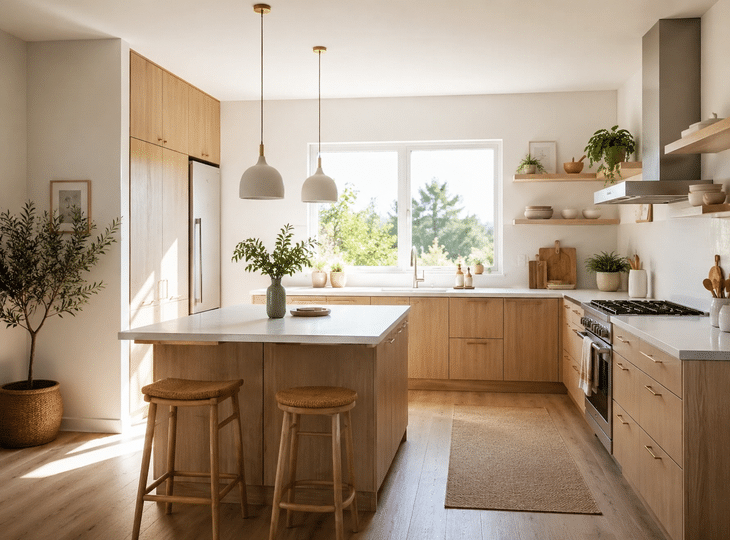
In an open-concept living-dining room, each area needs a certain identity. A rug can define the seating area, pendant lighting can highlight the dining table, and a low bookshelf can serve as a visual transition. These elements help organize the space without creating barriers.
The mistake is to leave all the furniture floating in a large room with no connection between them. Even if the decor is cohesive, the home can feel unwelcoming if there are no defined areas.
Nordic décor works very well with connected spaces, but each area should invite a specific use.
Choosing décor unrelated to daily use.
A Nordic home should be beautiful, but above all, it must be functional. When decor is chosen solely for its aesthetics, it’s easy to create spaces that feel cold or uncomfortable.
A dining room with beautiful but uncomfortable chairs or a bedroom without enough storage may look visually appealing in a photograph, but they don’t work well for everyday life. Over time, that lack of practicality affects how the space is perceived. Nordic design has a very functional foundation. Every piece should make sense within your daily routine.
Final Tips for Achieving a Warmer Nordic Decor
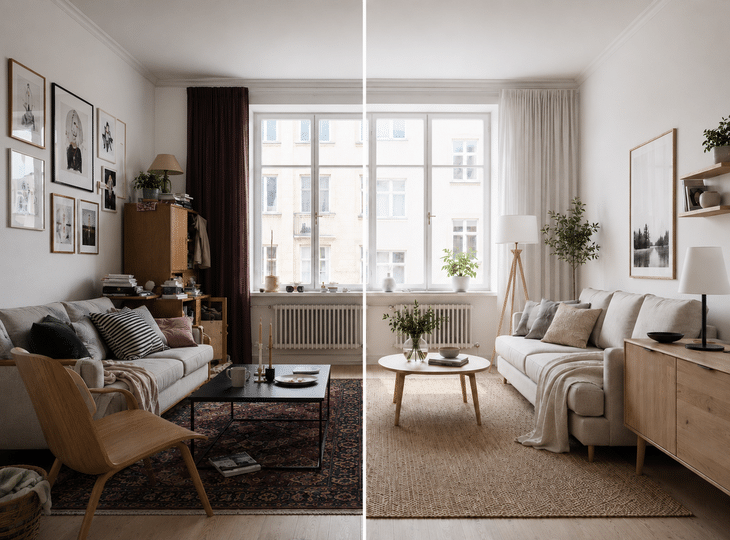
The mistakes that make Nordic décor feel cold usually have one thing in common: they remove layers. Color is reduced, materials are oversimplified, walls are left bare, lighting is limited, and so on.
The true strength of the Nordic style lies in its ability to create interiors that are both simple and human. A well-designed Nordic home features uncluttered spaces, lived-in corners, and maintains a serene aesthetic, allowing the home’s personality to shine through in the details.
Avoiding these mistakes helps you achieve a warmer, more balanced, and longer-lasting Nordic decor. Because in the end, the goal isn’t for the home to look perfect, but for it to make you want to stay there.