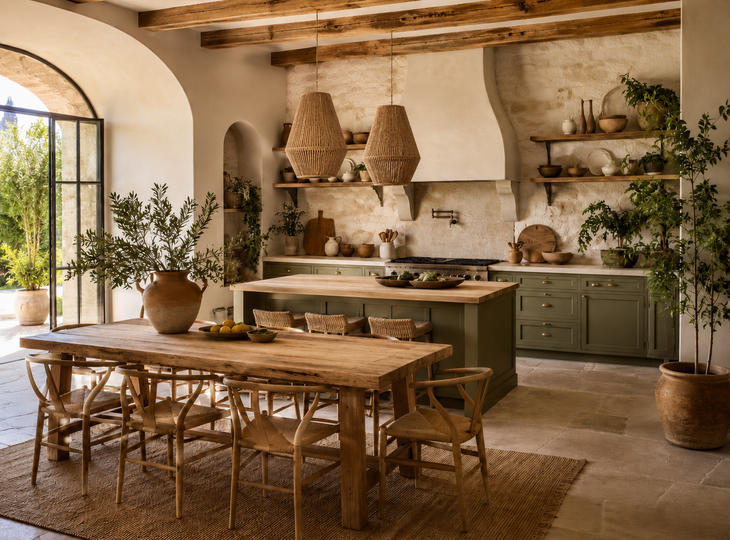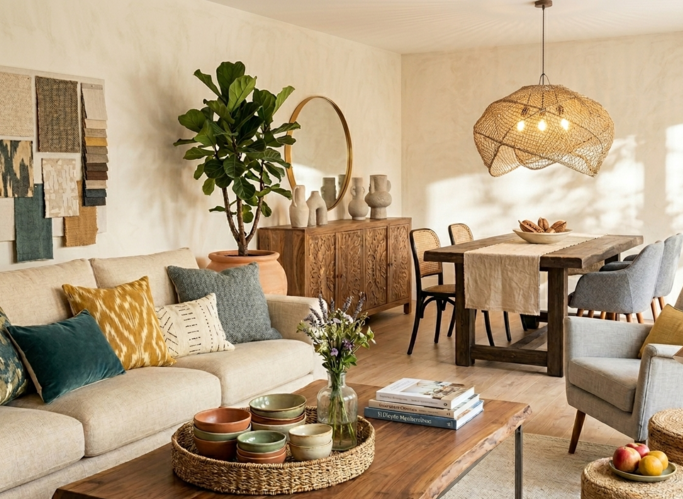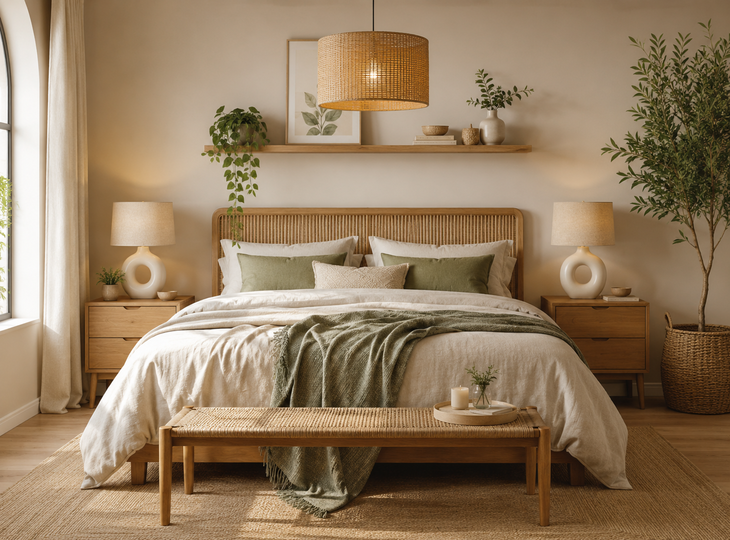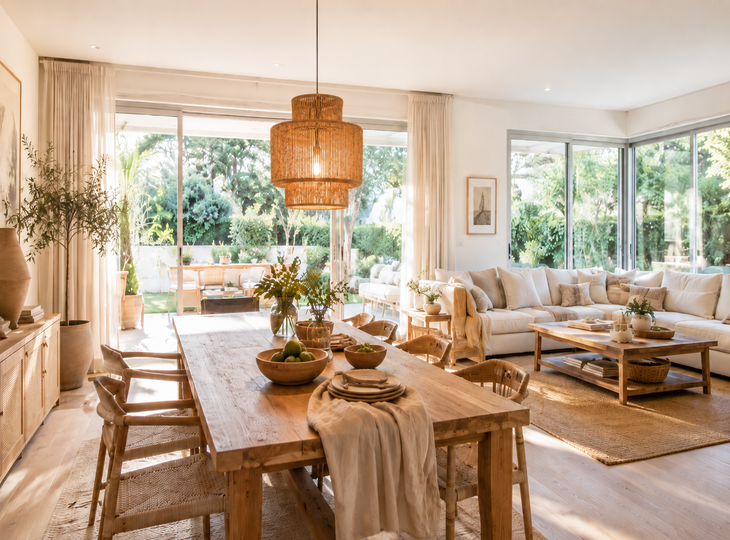
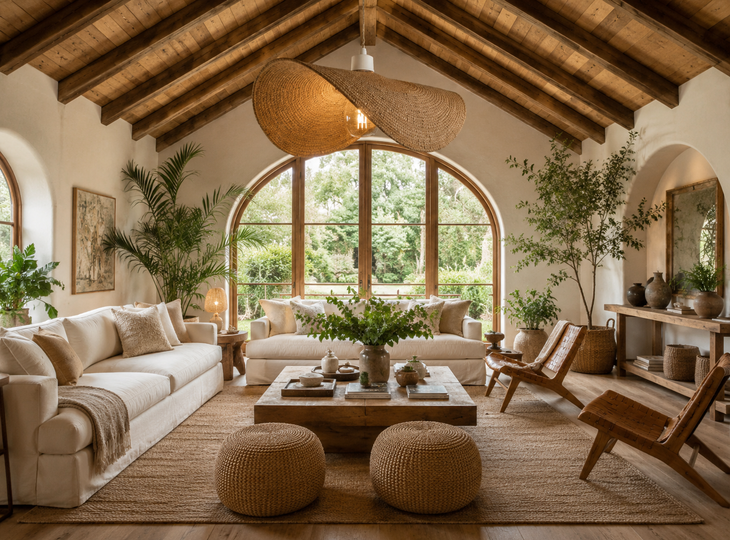
The lighting of a space directly influences how the environment is perceived, its sense of depth and the way materials relate to each other. In the case of the natural style, light plays a central role in interior design as it helps to define the atmosphere and create a sense of comfort.

Table of Contents
The influence of lighting on the perception of spaces
Light modifies how the environment is perceived. The intensity, color temperature and direction influence the perception of volume, the texture of materials and the feeling of spaciousness or seclusion.
In poorly lit spaces, lack of uniformity generates areas of excessive shadow that reduce visual depth. On the other hand, excessively intense or poorly distributed lighting eliminates nuances and generates a flat environment.
Natural lighting helps to connect the exterior and interior in a more fluid way. The idea is to imitate how daylight changes, which is not always the same, but varies according to the orientation of the space and the time of day. This behavior allows the materials to create a natural ambience and the space to maintain coherence without the need for artificial effects.
Characteristics of lighting in the natural style
The natural style in lighting is based on the integration of light with organic materials and the reduction of artificial visual elements. The light accompanies the space reinforcing the coherence of the environment.
This type of lighting also seeks to integrate the light source within the decorative object itself and reduce marked contrasts. As a result, all the elements form part of a whole. If you are looking for how to apply the natural style to your home, in this article you will find ideas and keys that will help you to design the different rooms.
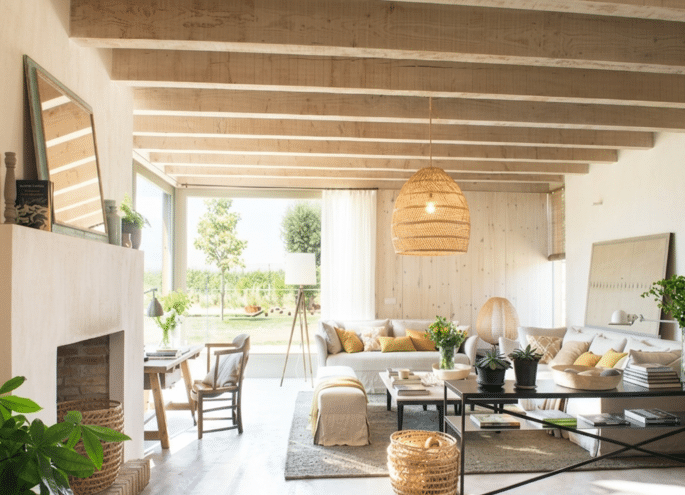
Use of natural materials in lamps
One of the most representative aspects of the natural style is the incorporation of organic materials in lamps:
Wood
Wood softens the presence of the light point and makes it blend better into the space. Its texture and tones create a more natural transition between the light source and the environment. Depending on the finish, it can range from light tones that enhance luminosity to darker tones that add depth.
In addition, wood has natural imperfections that break the uniformity adding warmth and authenticity to the whole.
Natural fibers and organic textiles
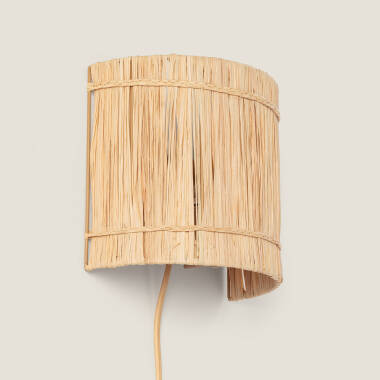
Plant fibers, such as rattan, bamboo or linen, allow an irregular diffusion of light that mimics the behavior of natural lighting. This type of material generates soft and dynamic shadow patterns, adding visual richness. The light is softened and the result is a more natural and pleasant sensation.
Earth tones
Earth tones, beige, sand, terracotta, soft browns harmonize the environment. These tones reduce the visual contrast between the light and the environment.
At a technical level, these finishes absorb part of the light intensity, softening the emission and avoiding aggressive reflections. This results in a more stable and less invasive lighting.
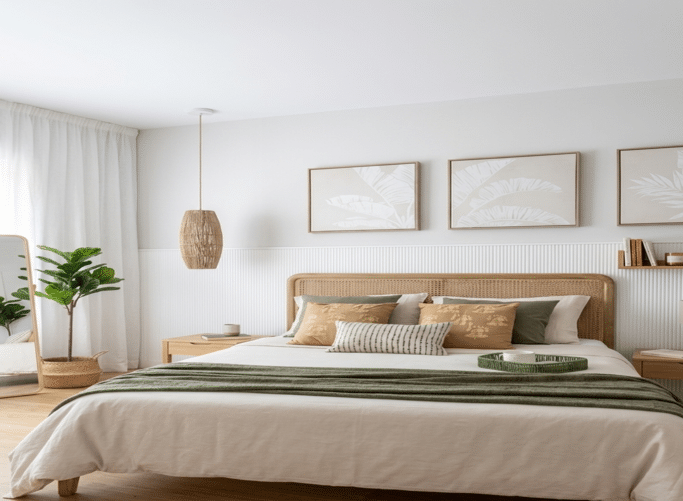
Types of lamps for natural lighting
The choice of the type of lamps is key to achieve a coherent result with the natural style:
Hanging lamps
Natural style hanging lamps are commonly used in dining areas or transitional spaces. Their function is to generate a central focus of light without producing glare. The composition of natural materials reinforces the visual integration with the environment.
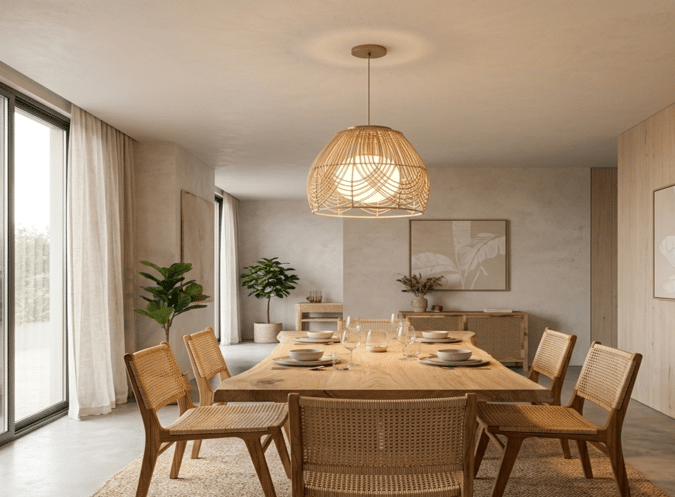
Table lamps
Table lamps provide localized light without saturating the environment. They are usually used in side tables, desks or reading areas, where a more controlled light level is required. Materials such as wood, ceramic or natural fibers predominate in this type of luminaire, together with textile shades that soften the light emission. Their design tends to be discreet, with organic shapes and neutral colors.
Floor lamps
Natural style floor lamps oriented towards walls or ceilings create indirect lighting, reducing visual fatigue. This system artificially reproduces the behavior of reflected light in natural environments.
By avoiding direct exposure of the light point, a more balanced and less aggressive atmosphere is achieved.
Wall lamps
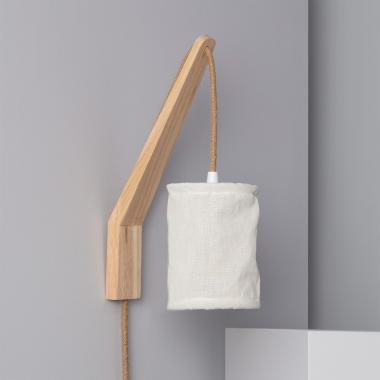
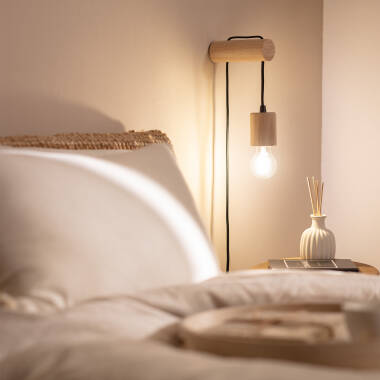
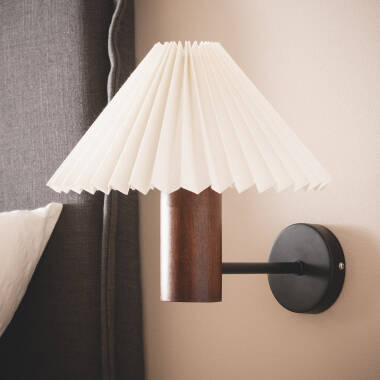
Wall lamps or sconces are used to generate light continuity and reinforce the ambience without visually overloading the space. In the natural style they are designed with simple shapes projecting light towards walls or ceilings to create soft effects. This type of lighting is ideal for corridors or spaces where a complementary light is sought.
Recommended products
In Stock, delivery in 15-20 days
31.99 £
Bardo Natural Fibres Wall Lamp
View product
In Stock, delivery in 24/48h
31.99 £
Kanzu Wall Lamp
View product
In Stock, delivery in 24/48h
20.99 £
Torse Wall Lamp
View product
In Stock, delivery in 16-21 days
36.99 £
Leonessa Wooden Wall Lamp
View product
Ceiling lamps
Natural style ceiling lights act as the main source of illumination in most rooms and, in the natural style, designs that distribute light evenly are prioritized. Shades that prevent glare and reduce stark contrasts are also used. In many cases, organic materials are incorporated to achieve a sense of warmth.
Light distribution in natural spaces
In spaces designed with a natural style, the way in which light is distributed is very important. It is not just a matter of choosing lamps, but also of deciding where to place them. Instead of concentrating the lighting in a single point, the aim is to distribute it throughout the space in a balanced way, following the architecture and avoiding overly illuminated areas or very marked contrasts.
The lighting is organized on several levels that work together. First, a general light that illuminates the entire space uniformly. Then, an ambient light that helps to create atmosphere and give depth. And finally, a spot light that is used to highlight specific elements or materials.
Thanks to this combination, the light is more evenly distributed and the space maintains a balanced visual sensation.
Relationship between light and architectural materials
In interior areas, the effect of light depends very much on how it is combined with materials such as stone, wood or ceramics.
Stone, for example, reflects light softly and absorbs some of it, giving a sense of solidity. Wood introduces warmth and helps to soften the coldness of artificial lighting. Textiles, on the other hand, diffuse light and avoid sharp contrasts.
The idea is not that everything is illuminated in the same way, but that the materials are part of how light is perceived in the space.
Color temperature
Color temperature greatly influences how a natural space feels. When it is too high, the environment can feel cold or unwelcoming, while warmer tones make the space feel more pleasant.
In interior areas with this design style, temperatures between 2200K and 3000K, similar to sunset light or soft lighting, are often used. This range helps to rest the eyes and makes organic materials look more natural.
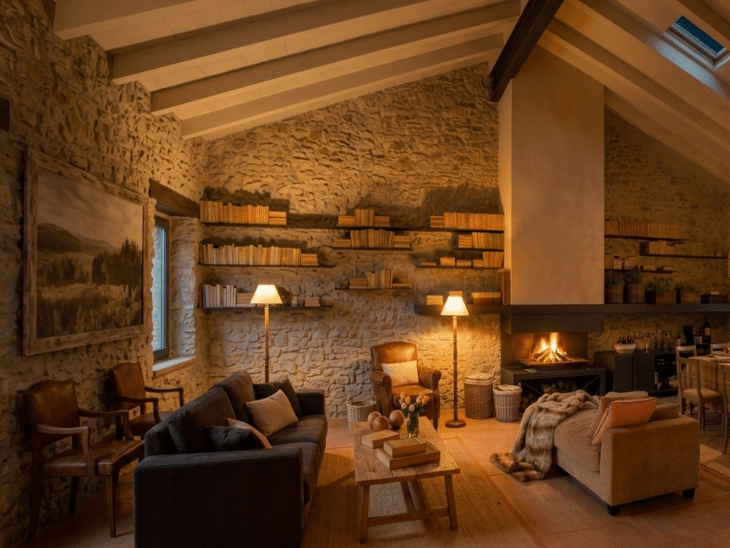
Keys to Natural Lighting
Natural lighting goes beyond technology or materials; it is a way of understanding space. It is about imitating the behavior of exterior light inside the interior, taking into account its changes and how it adapts to each situation.
It does not seek a totally uniform lighting or striking effects, but a sense of balance. Selecting lamps appropriate to your room and with a natural style including organic materials along with a careful distribution helps to create coherent and comfortable spaces.