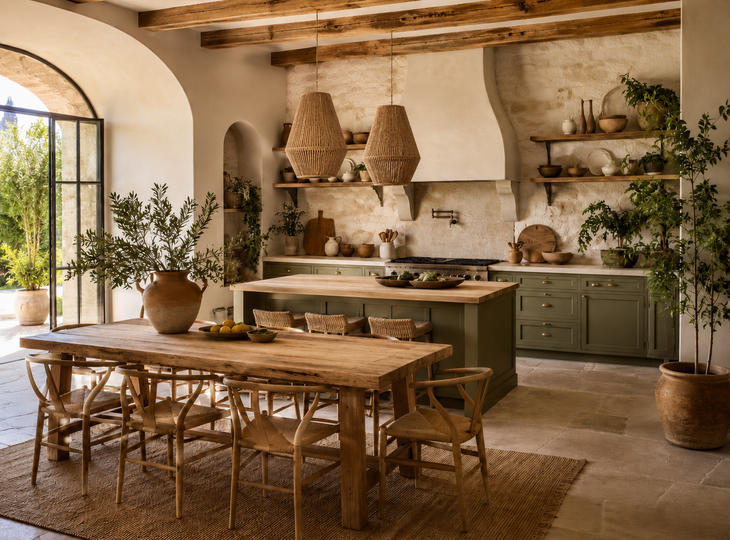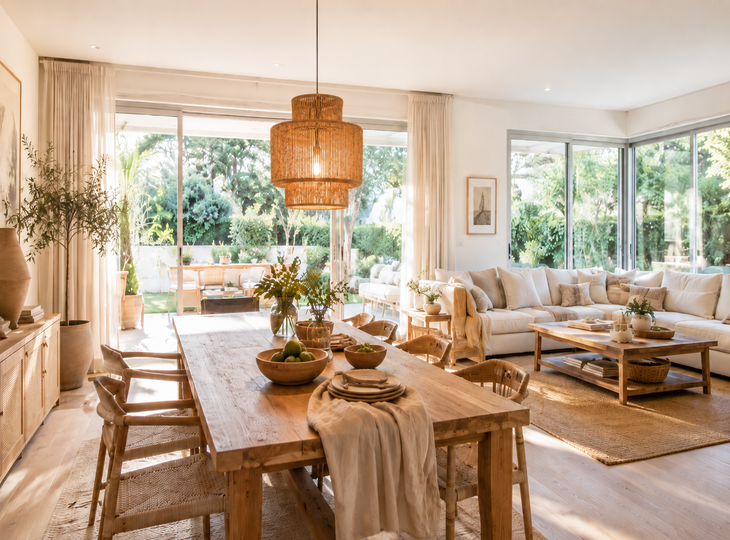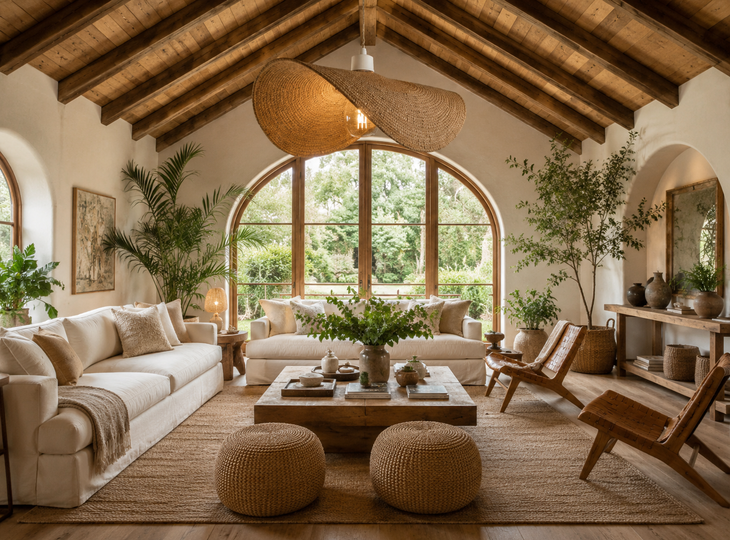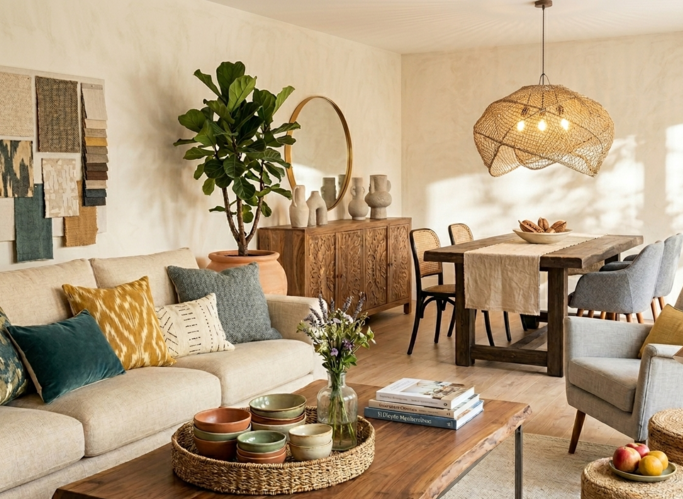
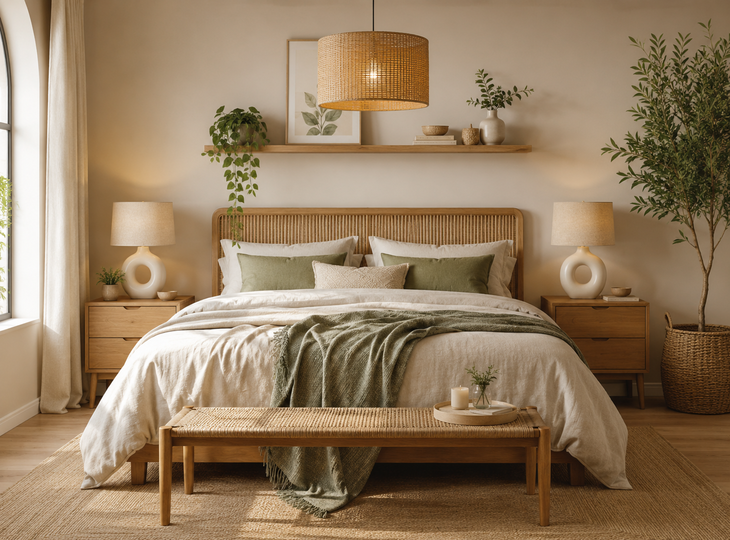
Applying the natural style in the home consists of creating warmer spaces connected to nature through materials, soft colors, textures, plants and well thought-out lighting.

This style can be created little by little, choosing the pieces of the decoration and without the need for a complete renovation. Below we will detail the necessary keys to apply it:
Table of Contents
Keys to apply the natural style at home.
To apply the natural style in the home, it is necessary to observe how the house is: how much natural light it receives, what materials already exist, what colors predominate and how each room is used.
Clear the space
The first step in applying the natural style is to reduce visual noise. A room full of furniture or decorative objects that have no clear function can become cluttered, even if all the materials fit the natural aesthetic.
Before incorporating new pieces, it is a good idea to review what is already in the house. The natural style needs a certain lightness so that light and materials have prominence. This is achieved by selecting the best pieces and observing which ones are useful and go according to your home.
Introduce wood
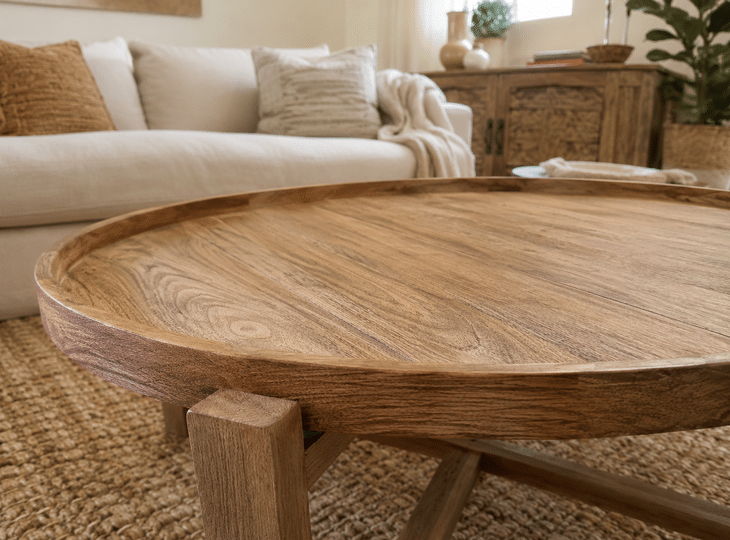
Wood is one of the most used materials to achieve the natural style. It brings warmth and texture. It can be incorporated in different furniture.
A dining table, bedside tables or a bookcase can be enough to change the perception of a room. The important thing is to choose natural finishes, preferably matte, where the grain and texture of the material can be appreciated.
Light woods help create light and airy spaces, so they work very well in small apartments or rooms with little light. Medium or darker woods add depth and can be used in specific pieces to give character to the whole.
It is also best to avoid overly glossy or artificial finishes. This style works best when the materials appear simple. A wood with visible grain and a slightly uneven surface can be more natural than an overly polished piece of furniture.
Use a color palette inspired by nature.
It is necessary to work with a soft palette based on shades reminiscent of the landscape: off-white, beige, sand, different shades of green, etc.
It is best to use neutral tones as a base and reserve more intense colors for specific details. For example, warm white or beige walls allow the addition of green cushions, an earth-colored blanket, etc.
In living rooms and bedrooms, ecru and beige tones help to create a relaxing atmosphere. In kitchens and dining rooms, ochre and earth tones are a good fit as they add warmth.
A good way to apply this palette is to choose three levels of color: a main tone for walls and large furniture, a secondary tone for textiles and a small range of accents for decorative details, thus achieving a natural result.
Add plant fibers
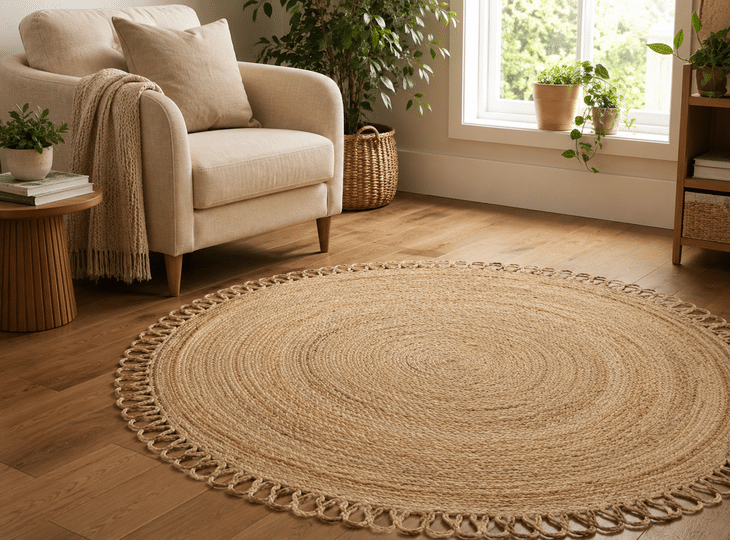
Plant fibers are a simple way to apply natural style. Materials such as rattan, wicker, bamboo add texture and help the space feel warmer.
They can be introduced by means of lamps, rugs, baskets, etc. It is preferable to combine them with wood or ceramics so that the whole has more visual richness.
In addition, these fibers can help to soften very plain spaces. A white kitchen or a bedroom that is too neutral can gain warmth by adding pieces of natural fibers.
Replace heavy textiles with natural fabrics
Another point to keep in mind when applying the natural style is the selection of light fabrics. Linen or cotton work well in curtains, cushions or blankets.
In the bedroom, a cotton or linen coverlet can add a cooler feel. At the windows, light curtains allow light to filter through without darkening the room.
If the house has a very cold base, textiles can be a good option to achieve warmth. Changing thick curtains for lighter fabrics, replacing bright cushions with linen ones or adding a natural rug can change the atmosphere.
Integrate plants into the design
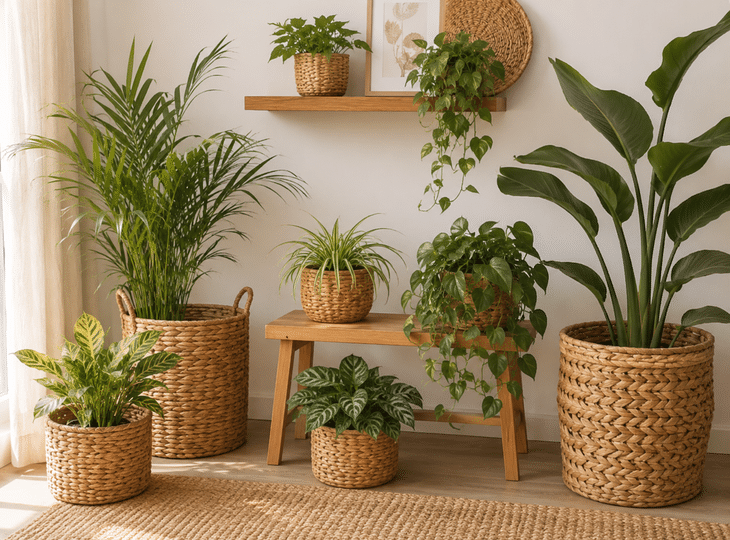
Plants are one of the most visible keys to the natural style, thanks to them you can achieve color and life. Plants can be used as part of the composition of each room.
It is also important to choose the right pots. Those made of clay, ceramic or vegetable fibers fit better than bright plastic containers or too intense colors. To achieve better aesthetics, you can work with the same range of materials and vary the sizes. If the house does not have much light, it is advisable to choose resistant plants adapted to interiors.
Use handcrafted pieces
Decorative details help to complete the natural style, but should be chosen sparingly and without overloading.
The important thing is that these accessories maintain a relationship with the rest of the materials and colors. Thanks to these pieces you can make the space not look too flat. Irregular surfaces, matte finishes and pieces with a handcrafted look add visual depth and make the home feel warmer.
Apply natural style to home lighting
Natural lighting is essential to reinforce this style, as it allows the tones of the house, textures and plants to be perceived with greater harmony.
Whenever possible, it is advisable to make the most of natural light. To do this, it is advisable to avoid curtains that are too opaque or furniture that blocks the windows. In addition, light fabrics allow light to filter softly, creating a more pleasant atmosphere.
Artificial lighting should also be well thought out. A single central light, cold or too intense, can make the space lose its naturalness. On the other hand, combining natural style lamps with different points of light helps to create depth and allows you to adapt the ambience to each moment of the day.
Recommended products

In Stock, delivery in 16-21 days
18.99 £
Natural Braided Cable
View product

In Stock, delivery in 16-21 days
2.28 £
Natural Fabric Cable
View product
In Stock, delivery in 15-20 days
69.99 £
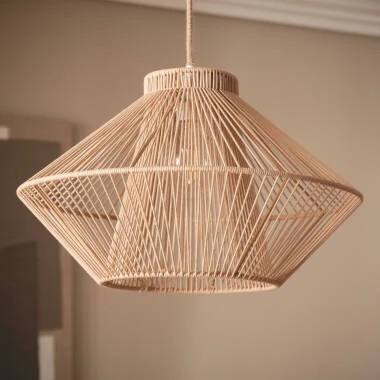
Hana Natural Cotton Rope Pendant Lamp
View product
In Stock, delivery in 24/48h
38.99 £
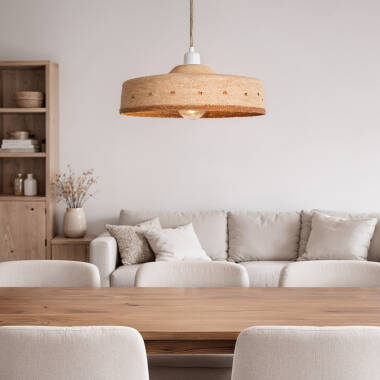
Arya Natural Fibres Pendant Lamp
View product
Natural lighting in the living room
In the living room, lighting should help create a comfortable atmosphere. It is a room designed to rest, so it is not advisable to rely only on a lamp.
For example, a natural ceiling lamp or a floor lamp next to the sofa together with an indirect light can create a pleasant atmosphere. It is also advisable to place the plants near areas with good natural light so that they are part of the design and do not seem isolated elements.
Natural lighting in the kitchen
In the kitchen, lighting should be both aesthetic and functional. Although the natural style seeks warm environments, this room needs enough light in the work areas, such as the countertop or sink.
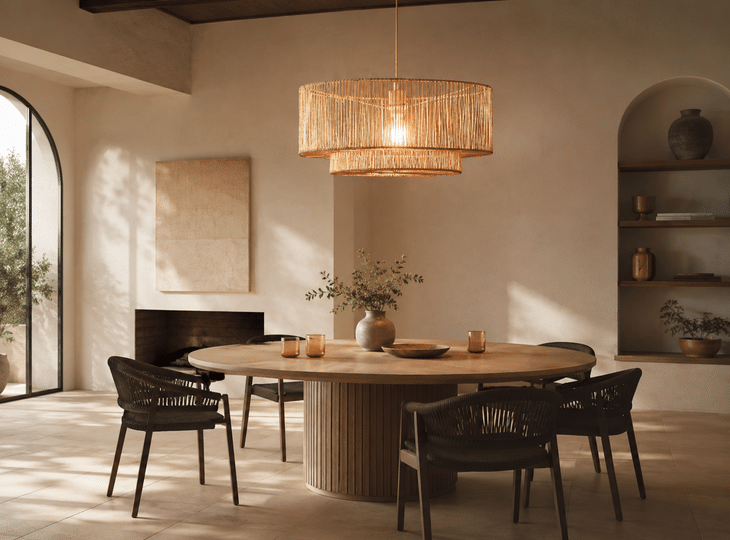
To achieve balance, functional lighting can be combined with more decorative details. For example, natural hanging lamps over an island can add warmth, while more direct light under tall furniture makes everyday tasks easier.
Natural lighting in the bathroom
The bathroom can also incorporate natural-style lighting fixtures if they provide sufficient illumination. In this room, lighting should be practical, for example in the mirror area, but it can also help create a more relaxing feeling.
Well-placed warm or neutral light avoids uncomfortable shadows and makes the space feel more pleasant. If the bathroom has natural light, it is a good idea to enhance it with light colors and mirrors. Moisture-resistant plants can also be added, provided there is enough light.
Natural lighting in the bedroom
In the bedroom, the lighting should favor rest. It is therefore advisable to avoid overly white or powerful lights and opt for warm, well-distributed lighting.
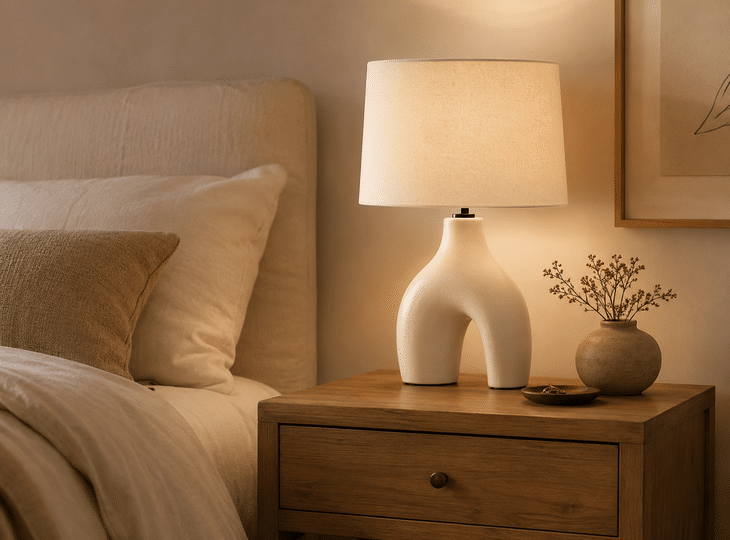
In addition to general lighting, it is advisable to incorporate table lamps or sconces. Wooden lamps or sconces with natural fibers help to create a relaxing atmosphere.
It is also important to take advantage of natural light during the day. Light curtains of linen or cotton allow you to maintain privacy without darkening the room too much. In this way, the bedroom feels more serene and connected to the outside.
How to achieve a natural and balanced result at home
To apply the natural style well, the key is to advance little by little. First you can work on the color palette, then the textiles and finally, the plants and decorative details.
A natural style house should convey calm, but also be practical. The furniture should be adapted to daily use and the materials should be resistant. The most successful result is the one that seems simple, but is well thought out.