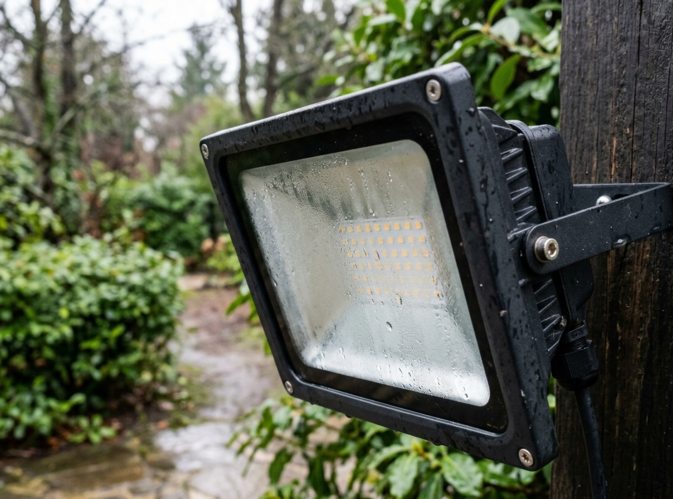
Powering a LED Floodlight: what you need to know before installation.
The installation of an LED floodlight requires knowledge of its components and an understanding of the operation of the power supply system. In this article, we will discuss in detail the fundamental aspects related to powering an LED floodlight:
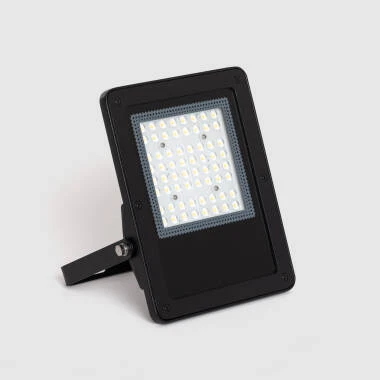
The power supply of an LED Floodlight is the component responsible for transforming and regulating the electrical power coming from the mains so that the LEDs in the floodlight operate safely and efficiently. In technical terms, it converts the alternating electric current (AC), which comes from the mains, into direct current (DC) with the exact voltage and current required by the light emitting diodes.
It also stabilizes the current, protects against overloads, short circuits and voltage spikes, and ensures that each diode receives a constant electrical flow. This is important because LEDs are sensitive to current variations; any irregularity can cause irreversible damage.
To ensure the efficient power supply of a LED floodlight, it is advisable to understand each of the elements that make up its electrical system. The correct integration and sizing of these components protects the equipment and its installation environment:
Internal power supply
The internal power supply is the core of the floodlight’s electrical system.
This internal power supply keeps the supplied current constant in the event of mains fluctuations. This prevents flickering, changes in light intensity and overheating.
Built-in protections
A reliable power supply system incorporates protections that protect the equipment and the environment against adverse conditions of the electrical network. Among the most common are:
Fuses: They automatically switch off the circuit in case of overcurrent, preventing damage to LEDs and electronic components.
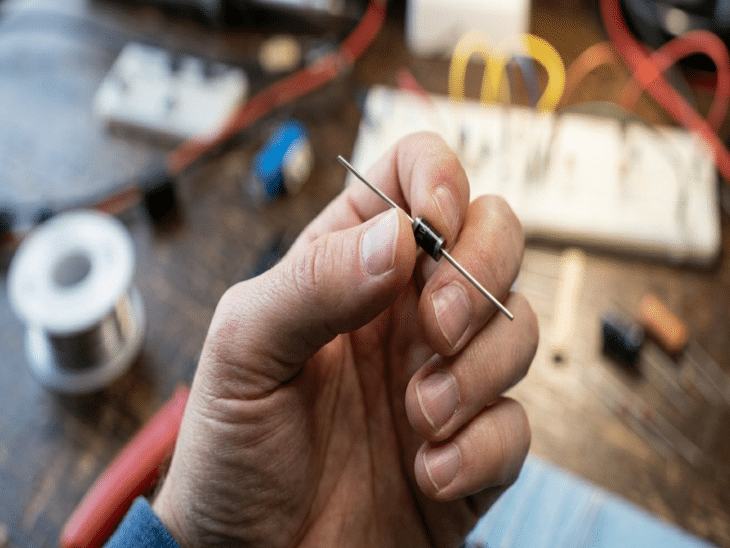
Varistors: Protect against voltage peaks or transient overvoltages, absorbing excessive energy before it reaches sensitive elements.
Short-circuit protection circuits: Detect wiring or component failures and disconnect power to prevent damage and electrical hazards.
Interaction between components
A high quality power supply loses efficiency if the protections are insufficient. Therefore, the electrical system must ensure that the LED driver delivers the required current to the diodes operating in the necessary voltage range, as well as having adequate thermal management to prevent heat build-up from affecting the stability of the circuit. This ensures that the LED floodlight can work stably.
Fundamental electrical requirements
Before installation, it is necessary to analyze the electrical requirements of the floodlight. The main aspects to consider include voltage and current rating, power consumption and power quality.
Voltage and current rating
Voltage and current rating represent the basic electrical parameters that must be supplied by the power supply for the floodlight to operate properly. Most LED floodlights operate in the range of 220-240 V AC, which is then internally converted to DC by their power supply. Verification of these specifications is necessary, as an overload of voltage can lead to excessive heating and diode degradation.
It is also important to ensure that the rated current does not exceed the capacity of cables and connectors to avoid the risk of overheating or fire.
Power consumption
Knowing the energy consumption of an LED floodlight is necessary when sizing the electrical system and planning operating costs.
Incorrect sizing of the electrical circuit can lead to problems such as voltage drops or overheating of the power supply and cause a loss of efficiency.
Therefore, it is advisable to use LED floodlights with certified efficiency, you can know it thanks to the energy label and dimension the protections according to the maximum expected current.
Power quality
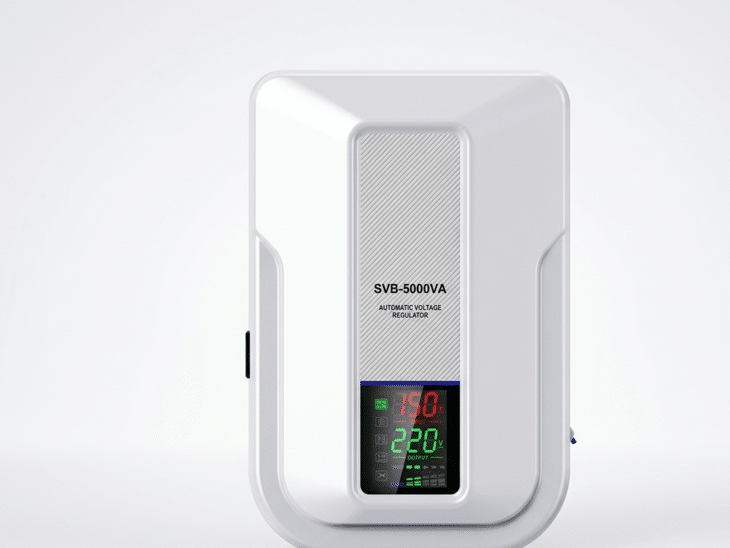
For a LED floodlight to work safely, a stable electrical current is needed. As mentioned above, LEDs are very sensitive to irregularities in the power supply, to minimize these risks, it is recommended to use current stabiliser and surge suppressors.
Installation considerations
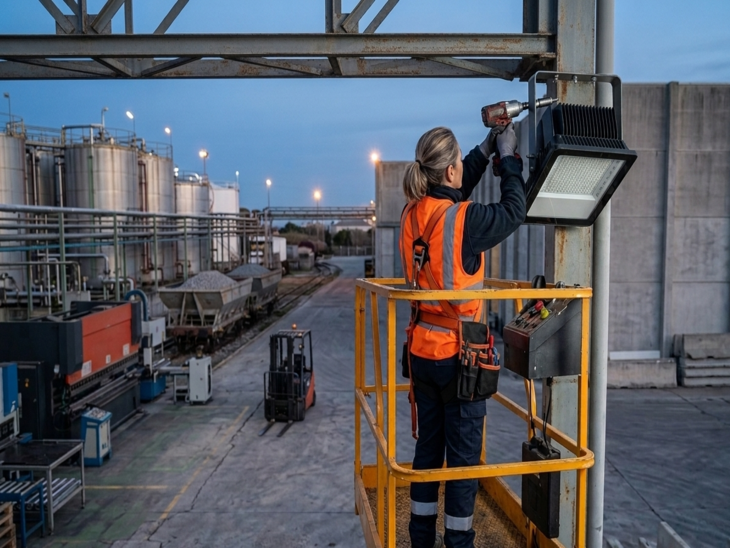
Performing a structured and safe installation will extend the life of the equipment. Best practices include:
LED floodlight location and ventilation
Another point to take into account is thermal dissipation, since, although LED floodlights generate less heat than other lighting systems, they are sensitive to high temperatures that can affect both their luminous efficiency and their useful life; therefore, it is necessary to check that the ventilation systems work properly and do not present obstructions, as well as to respect an adequate mounting distance to avoid proximity to surfaces or equipment that accumulate heat.
In industrial environments it is advisable to incorporate additional cooling systems to maintain stability during prolonged operations.
Cable and connector selection
A point to be taken into account is the choice of electrical cables and connectors, which must be physically compatible and able to safely withstand the rated current of the equipment. In this regard, the cross-section of the conductors must be sized taking into account the maximum current and the length of the electrical wiring, since an insufficient cross-section can cause voltage drops that reduce brightness and affect lighting uniformity. It is also advisable to use highly conductive copper conductors to reduce internal resistance and heat losses.
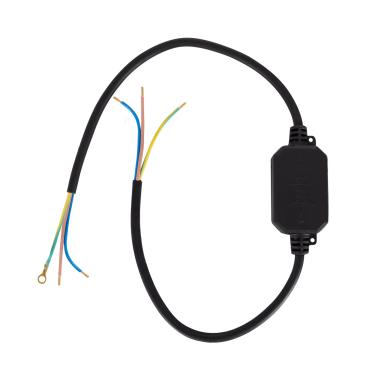
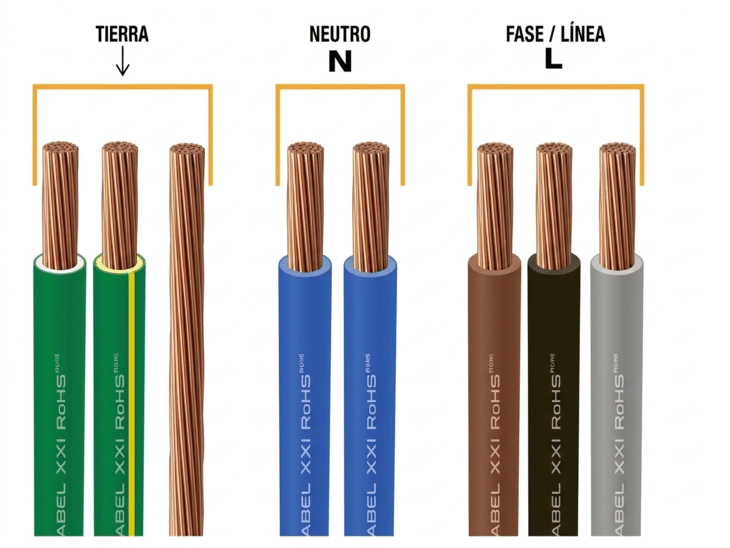
In existing installations, it is also important to correctly identify and connect the phase, neutral and ground conductors according to the standardized electrical color code. This code makes it possible to quickly distinguish each function: the phase (usually in brown, black or gray) is the active conductor, the neutral (blue) closes the circuit and the ground (green and yellow) ensures protection against indirect contacts. Respecting this coding significantly reduces the risk of connection errors that could compromise the safety of the installation.
Maintenance and monitoring
Proactive monitoring ensures consistent performance, we recommend following the guidelines below:
Voltage monitoring
Voltage variations or voltage drops can reduce diode life and affect color uniformity. In order to keep good control, it is recommended to install digital meters and periodically record the values.
Cleaning of electrical components
Accumulation of dust or moisture in the floodlight can obstruct airflow, increase internal temperature and cause micro short circuits. Periodic cleaning of the components can help maintain the LED floodlight by using compressed air to remove dust, clean contacts and avoid liquids that can penetrate the circuits.
Periodic verification of protections
It assures that fuses and varistors work correctly and can act against overloads. Replacing deteriorated elements and testing their operation can prevent failures or irreversible damage to the LEDs. Preventive maintenance, combined with proper installation, can help extend the life of the floodlight. If you need more information on how to install an LED floodlight, please consult our complete guide.
Before installing any LED floodlight, it is recommended to perform a detailed analysis of the electrical environment and implement reliable protection measures. This approach ensures that the projector operates to provide good performance and minimize risks.