

When an LED floodlight fails to turn on, the problem is often more complex than it seems. These devices, renowned for their energy efficiency and long life, are not exempt from failures. In many cases, the cause of the failure is not in the flood light itself, but in the installation or power supply. Before deciding to replace the projector, it is essential to correctly identify the source of the problem to avoid unnecessary costs and ensure that the solution is effective.

Table of Contents
Check the power supply
Before assuming that LED flood light is damaged, it is essential to check the power supply. Although it may seem obvious, many projectors that do not turn on are simply not receiving power.
- Check the switch: The switch is one of the most frequent points of origin for power problems. A false internal contact within the mechanism can prevent current from flowing properly to the LED flood light, even when everything seems to be in order. To check this, manipulate the switch several times and make sure that it clicks firmly. In some cases, by gently touching the wires at the switch connection, you can feel for looseness or wear that prevents current flow. Detecting a problem at this point allows the fault to be remedied without replacing the bulb. In LED flood light with motion sensors, it is also advisable to verify that these are working properly, since a failure in these controls can simulate that the spotlight does not turn on.
- Check the circuit breaker: The next step is to go to the electrical panel and check the circuit breaker corresponding to the circuit where the flood light is installed. If the circuit breaker has tripped, this indicates that there has been a power surge or short circuit, which may prevent the spotlight from turning on. It is important to identify if the automatic trips again when it is reset, as this indicates that the problem may be in the electrical installation and not in the spotlight. Checking this point ensures that a fault that could affect other devices connected to the same circuit is not overlooked.
- Check the flood light connections: It is essential to make sure that the connections are tight, with no signs of oxidation or loose wiring. Water or dust infiltration into these connections is a frequent cause of failure, especially in rainy or humid climates.
Exhausted service life
LED floodlight can last between 15,000 and 50,000 hours depending on quality and manufacturer. However, they do not always fail gradually; sometimes they simply stop lighting. Constant exposure to the elements can reduce this lifespan, and floodlight do not always show gradual wear; sometimes they simply stop turning on suddenly. Understanding the causes of the factors that influence the lifespan of an LED flood light allows you to correctly diagnose the problem and avoid unnecessary replacements.
Common causes are:
- Deteriorated internal electronics: Internal components regulate current and ensure that the LED operates stably. Over time, humidity, sun exposure and voltage fluctuations can deteriorate them, causing the bulb to stop lighting. This failure usually manifests itself as a complete shutdown with no prior flickering.
- Damaged capacitors: Capacitors help stabilize current and filter voltage variations in the lamp driver. When damaged, the internal circuitry cannot maintain a constant flow of power, causing the LED to stop working immediately. This failure is common in outdoor bulbs exposed to high temperatures or humidity. It may manifest itself with a sudden shut-off or a slight buzzing sound.
- Faulty internal driver: The driver controls the power to the LED. If the driver fails, the current does not reach it properly, preventing the light from turning on. This is usually caused by manufacturing defects or voltage fluctuations. Signs of a defective driver include failed ignition attempts and lack of previous flickering indicating gradual degradation.
- Excessive heat build-up: Heat is one of the main enemies of the electronics inside an LED bulb. Although the LED can withstand high temperatures, the internal components, especially in poorly ventilated outdoor fixtures, are sensitive to heat. Prolonged exposure to high temperatures or enclosed luminaires can permanently damage the driver and other components, causing sudden failures.
Recommended products
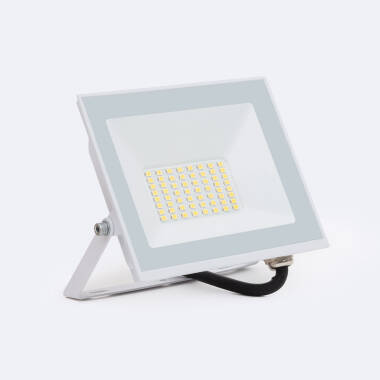
In Stock, delivery in 16-21 days
4.69 £
S3 30W LED Floodlight 120lm/W IP65
View product
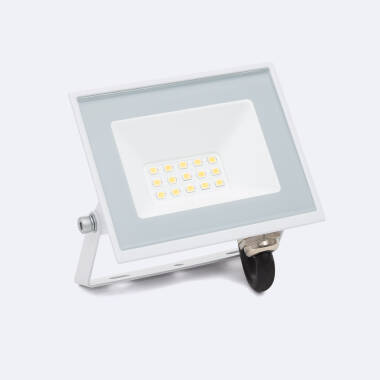
In Stock, delivery in 15-20 days
2.49 £
S3 10W LED Floodlight 120lm/W IP65
View product
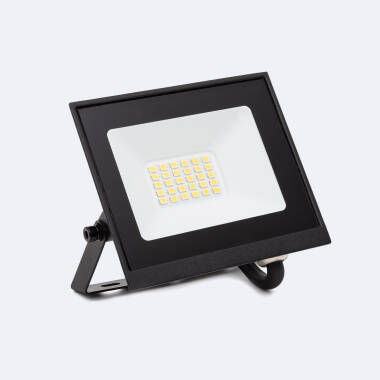
In Stock, delivery in 24/48h
3.99 £
S3 20W LED Floodlight 120lm/W IP65
View product
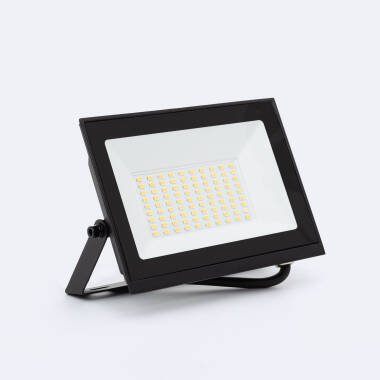
In Stock, delivery in 24/48h
7.19 £
S3 50W LED Floodlight 120lm/W IP65
View product
Moisture and sealing problems
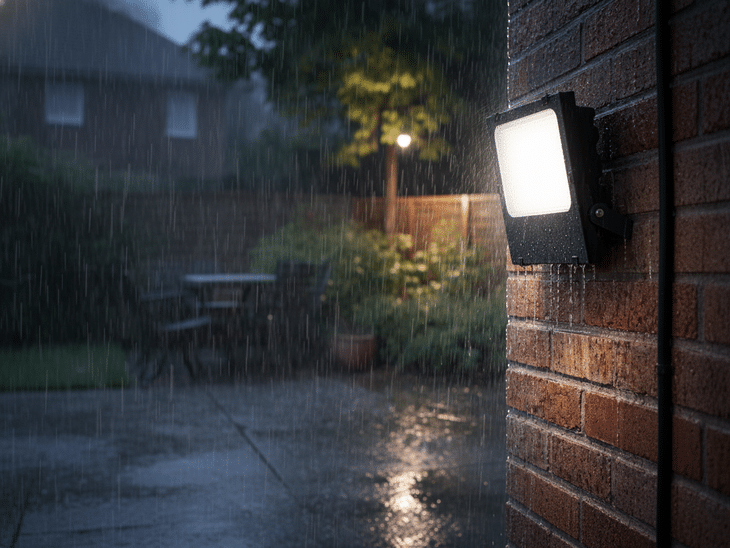
In outdoor models, both floodlights professional use and floodlights residential use are manufactured to withstand more demanding environmental conditions than indoor luminaires. To this end, they are IP-rated, which indicates their resistance to dust and water. In most cases, it is recommended that outdoor floodlights have IP65 protection or higher, which means that they are prepared to withstand rain, splashes and dust without affecting the internal components.
However, over time the sealing system can deteriorate. The rubber gaskets and housing joints are constantly exposed to changes in temperature, solar radiation, humidity and dirt. These factors can cause the material to lose flexibility or crack, allowing small amounts of water or moisture to seep into the LED floodlight. When this happens, electronic components can be affected, causing the luminaire to malfunction.
The presence of moisture inside the fixture usually manifests itself through certain characteristic symptoms, such as flickering of the LED floodlight, small sputters in the internal circuitry or complete shutdown after episodes of heavy rain or high ambient humidity. In some cases, condensation may also be observed inside the protective glass, indicating that the seal is no longer functioning properly.
To prevent such problems, it is advisable to periodically check the condition of the housing and seals of the LED floodlight. Making sure that the covers are tightly closed, that there are no cracks in the structure and that the seals are kept in good condition can help prevent water ingress. Also, keeping the luminaire clean and free of accumulated dirt helps to maintain the integrity of the seal and prolong its life.
Failures due to overheating
Overheating is one of the most important factors affecting the life of LED floodlights. When heat is not dissipated properly, it can build up inside the luminaire and affect the electronic components that allow the floodlight to function normally.
As mentioned above, outdoors the situation can be aggravated by a variety of environmental factors. Direct exposure to the sun for many hours a day, especially in hot climates, can significantly raise the temperature of the fixture before it even begins to operate. If this is added to an installation in poorly ventilated spaces or near surfaces that retain heat, the internal temperature can rise even more, generating unfavorable conditions for the electronic circuits.
Although the LED itself can usually tolerate relatively high temperatures, the component most sensitive to heat is the driver. When the driver is constantly operating at elevated temperatures, its internal components can degrade faster than expected. Over time, this can lead to failures such as sudden shutdowns, intermittent power-ups or, in the worst case, the bulb failing to turn on completely.
To avoid such problems, select the right type of floodlight and make sure they are designed specifically for outdoor use.
Voltage problems
Voltage variations in the mains supply can directly affect the operation of LED floodlights. To function properly, these circuits need a stable power supply. When the voltage is erratic, internal components can be subjected to electrical stresses that accelerate wear and tear or cause sudden failures in the lighting system.
- Voltage spikes: Voltage spikes occur when the electrical voltage momentarily exceeds normal mains levels. Although they usually last only a short time, they can have a significant impact on the floodlight’s electronics. These surges can damage capacitors, resistors and other elements of the driver, which over time can cause the floodlight to stop working or fail. In installations where these spikes occur frequently, the life of the LED floodlight can be reduced.
- Voltage dips: Voltage dips occur when the voltage to the floodlight is lower than the voltage required for the electronic circuitry to operate stably. In these situations, the bulb may have difficulty turning on or produce weaker illumination. If these voltage drops are repeated on a regular basis, the driver may work in unstable conditions for long periods, which increases the wear of the components and increases the probability of a breakdown.
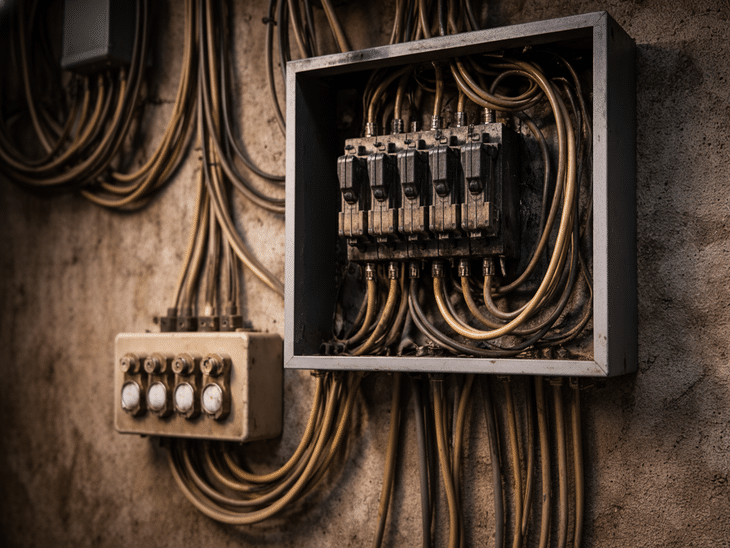
- Old electrical installations: Aged or poorly maintained electrical installations can also cause irregularities in the power supply. Over time, electrical connections and switchboards can deteriorate or become obsolete in the face of current energy demands. This can lead to voltage fluctuations or poor contacts that directly affect the operation of LED floodlights.
To avoid such problems, it is advisable to check the condition of the electrical installation and consider installing a surge protector, especially in areas where voltage variations are frequent. This type of device helps to stabilize the supply and protect electronic equipment.
Use of incompatible dimmers
Some LED floodlights are designed to allow dimming, but many models are not designed to work with dimmers. When a non-dimmable LED floodlight is connected to a dimmer, various problems can occur in its operation.
One of the most common problems is constant flickering of the light, especially when the system tries to dim. This occurs because the floodlight driver is not designed to correctly interpret the dimming signal sent by the dimmer. In other cases, the floodlight may not turn on at all, as the internal circuitry does not receive the necessary voltage to initiate ignition when the dimmer is at certain power levels.
In addition, prolonged use of an incompatible dimmer can cause premature damage to the LED floodlight’s internal driver. The irregular voltage changes generated by an incompatible dimmer place constant stress on the electronic components, which can accelerate their deterioration and significantly reduce their life span.
For this reason, before installing a dimmer, be sure to select a dimmable LED floodlights, as the manufacturer clearly indicates on the data sheet or packaging whether the floodlight supports dimming.
How to know if the LED Flood Light is definitely damaged?
Determining whether an LED floodlight is completely damaged is key to avoid wasted time and potential electrical hazards. Unlike temporary or intermittent failures, some signs clearly indicate that the spotlight can no longer operate safely. Recognizing these signs allows you to make the right decision and replace the floodlight before a malfunction affects other parts of the installation.
- Does not turn on on any attempt: This is the most obvious indicator that the spotlight has failed. When the device does not respond even though the power supply and connections have been checked, it means that the internal components, such as the driver, have completely stopped working. In this case, there is no point in continuing to try to turn it on, as the problem is internal and permanent.
- It has a burning smell: A burning smell when approaching the bulb is a clear sign of overheating or an internal short circuit. This indicates that some electronic component has failed irreversibly, and continuing to use the LED floodlight can be dangerous, as it could cause additional damage. The odor is usually concentrated near the driver or housing where the most sensitive electronics are located.
- A small clicking sound is heard when trying to turn on: This symptom usually occurs when there are internal faults in the driver. The clicking sound is the result of a failed attempt by the circuit to supply power to the LED. Although it may seem like a minor problem, this sound is a sign that the bulb has suffered critical damage and its components can no longer properly control the electrical current.
- Internal blackening is observed: If blackened areas inside the housing or near the electronic components are detected when inspecting the bulb, this is an indication of previous overheating or short circuits. Blackening is often accompanied by physical deterioration of components, and is a clear indication that the projector is no longer safe for use.
In the presence of any of these signs, it is best to replace the LED floodlight completely. This approach guarantees safety and ensures that the new luminaire will perform reliably.
Should an LED floodlight be repaired?
Although it is technically possible to replace the internal driver of an LED floodlight, this repair is generally not recommended. It requires advanced knowledge of electronics and can be dangerous if not performed correctly, and the cost of the intervention rarely justifies the savings over a complete replacement. For these reasons, in professional and home environments it is always recommended to replace the floodlight with a new one for long-term reliable operation.