
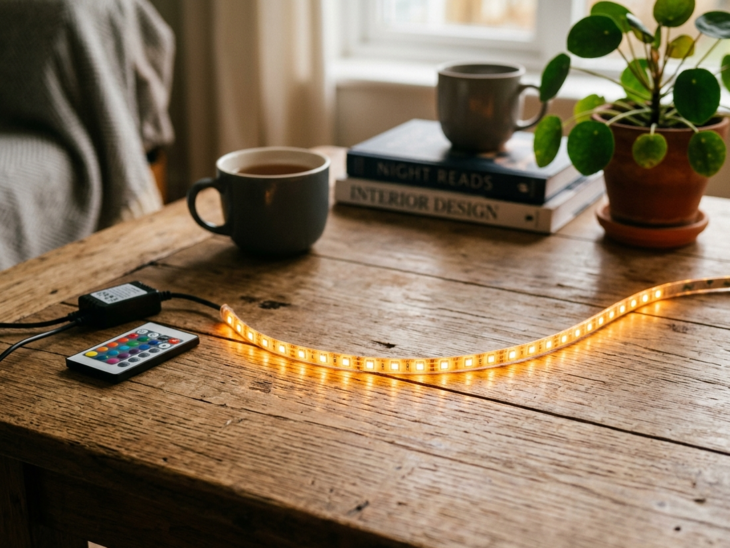
LED strip lighting has transformed the way all kinds of spaces are designed, from residential to commercial settings. Its energy efficiency and ease of installation have driven its adoption in projects where integrating other lighting solutions was previously unfeasible. However, beyond its advantages, there is a fundamental factor that determines its true value: the lifespan of the LED strip.
Understanding how long an LED strip lasts and what factors influence its performance allows you to optimise your investment and ensure consistent results over time. Unlike other lighting technologies, LEDs do not usually fail suddenly; instead, they undergo gradual degradation that affects their ability to emit light.
Table of Contents
What is the lifespan of an LED strip?
When discussing the lifespan of an LED strip, it is important to distinguish between operation and optimal performance. Technically, lifespan is defined as the period during which the device maintains an acceptable level of brightness, typically until it reaches 70% of its initial luminous flux.
Under ideal conditions, an LED strip can provide between 30,000 and 50,000 hours of operation. This means that, with daily use of 5 hours, the lighting could remain functional for more than 20 years.
Below, we analyse the factors that contribute to degradation in order to better understand how an LED strip behaves.
Recommended products
In Stock, delivery in 15-20 days
15.49 £
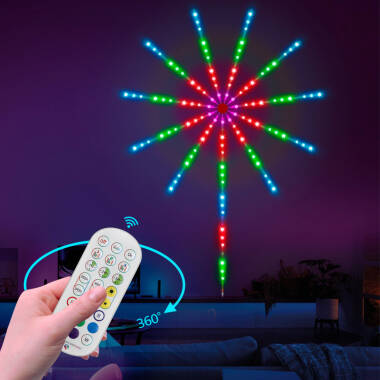
LED Strip Digital SPI in RGBIC KIT Firework Effects with APP and Remote Control
View product
In Stock, delivery in 16-21 days
177.99 £
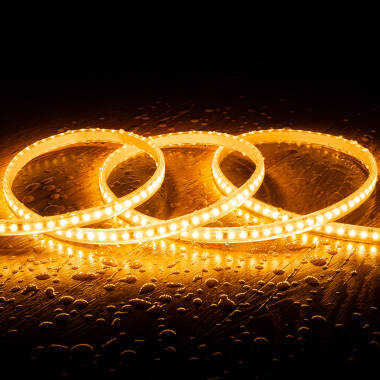
220V LED Strip Autorectified SMD Dimmable 120LED/m 10W/m 1000lm/m 12mm Wide Cut at Every 10cm IP65 Custom Length
View product
In Stock, delivery in 15-20 days
19.89 £
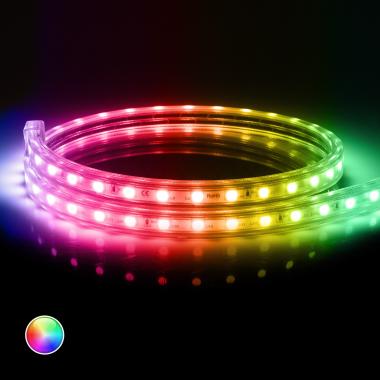
220V LED Strip SMD in RGB 60LED/m 10W/m 16mm Wide Cut at Every 100cm with IR Remote IP65 Custom Length
View product
In Stock, delivery in 15-20 days
12.19 £
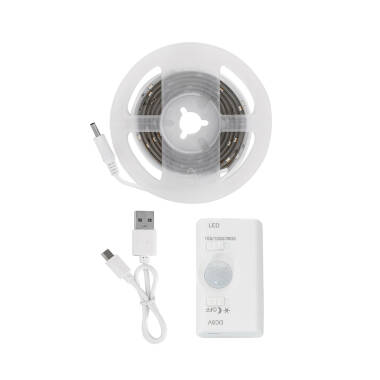
1m LED Strip with Motion Sensor 30LED/m IP20 Rechargeable Battery
View product
Components that determine durability
The long-term performance of an LED strip depends on the quality of each of its elements. Although it may appear to be a uniform product at first glance, it is actually a system made up of multiple interdependent components.
Quality of the LED chip
The chip is the core of light emission. Its materials and energy efficiency determine the stability of the luminous output. High-end chips tend to experience less loss of intensity over time and generate less heat during operation.
By contrast, lower-quality options tend to degrade more quickly, causing colour variations and noticeable reductions in brightness.
Circuit board and conductive materials
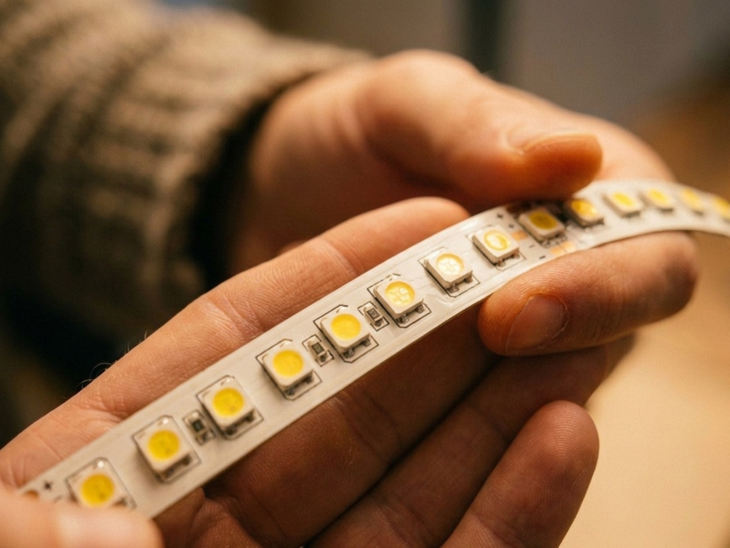
The base on which the LEDs are mounted plays a crucial role in heat dissipation. Materials with high conductivity allow heat to be distributed evenly, preventing build-up that could damage components.
A poor-quality board increases operating temperature, accelerating internal wear and affecting both the chips and electrical connections.
Power supply
The power supply is responsible for delivering the energy required for the strip to operate. A low-quality unit can cause voltage spikes and current drops, significantly reducing lifespan and potentially preventing the strip from turning on altogether. If you want to learn all the reasons why your LED strip may not turn on, you can find them here.
dIMMERS
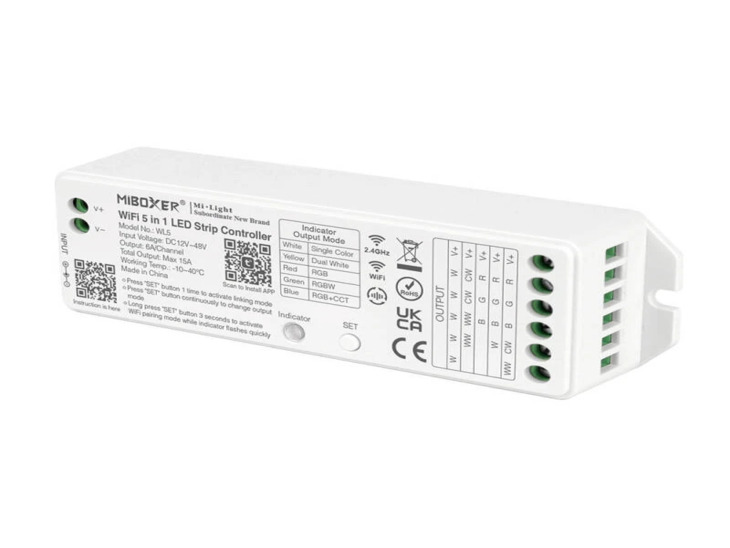
These elements regulate the flow of current to the LEDs. Poor design can lead to electrical fluctuations that negatively impact system stability. Maintaining stable regulation is essential for good performance.
The impact of heat on LED strip lifespan
One of the most significant factors affecting the lifespan of an LED strip is thermal management. If not properly controlled, heat build-up becomes the main enemy of system stability and longevity.
Rising temperatures directly affect the LED chip. As heat increases, the internal electrical behaviour changes, leading to a gradual reduction in luminous output. This process is typically gradual rather than immediate, resulting in a steady loss of brightness that becomes noticeable over time.
Moreover, heat does not only affect the chip. Other critical components, such as solder joints and adhesive materials, also degrade. Connections may weaken, causing intermittent faults or partial disconnections. Adhesives, meanwhile, lose their bonding strength, which can result in the strip detaching, especially in long-term installations.
Another important aspect is the relationship between temperature and energy efficiency. The higher the temperature, the lower the system’s efficiency. This means that, to achieve the same level of lighting, the system must operate under more demanding conditions, generating even more heat in a cycle that accelerates wear.
When temperatures exceed the levels recommended by the manufacturer, internal materials degrade more rapidly. This reduces the actual lifespan well below expected levels and, in extreme cases, can cause premature failure or irreversible damage to entire sections of the strip.
To prevent this, thermal dissipation must be considered from the installation design stage. An effective solution is to mount the strip on metal surfaces such as aluminium profiles. Aluminium acts as a heat sink, distributing heat evenly and preventing critical hot spots.
Additionally, aluminium profiles for LED strips help protect the strip from external factors such as dust and moisture, indirectly preserving its performance.
Environmental conditions and their impact
The environment in which an LED strip is installed also plays a key role in its longevity. Factors such as humidity and dust can affect material behaviour.
- Humidity: The presence of water or vapour can cause corrosion in electrical contacts. Although there are models with specific protection, prolonged exposure to humid environments can compromise their integrity.
- Dust and particles: The accumulation of particles hinders heat dissipation and can affect component adhesion. In industrial environments, certain particles may also be harmful to materials.
- Ambient temperature: Installing LED strips in high-temperature environments increases thermal stress. Conversely, moderate temperatures support more stable operation.
- Usage and operating habits: The way an LED strip is used directly influences its lifespan. Although they are designed to withstand long operating periods, certain habits can accelerate wear. Continuous use at maximum power generates more heat, while dimming reduces thermal load. Similarly, avoiding excessively frequent switching on and off helps maintain system stability.
Signs of degradation
As an LED strip approaches the end of its lifespan, certain indicators begin to appear. Recognising these signs early allows for preventive action and helps avoid complete system failure.
- Gradual reduction in brightness: Light intensity decreases over time due to chip wear. Initially subtle, this change becomes more noticeable with time.
- Colour shift: The emitted light changes tone, shifting towards cooler or warmer hues due to internal material degradation.
- Intermittent flickering: Irregular light fluctuations may indicate power supply issues or faulty connections.
- Uneven lighting across sections: Some parts of the strip function properly while others remain dim or off, usually due to internal connection failures.
- Noticeable overheating: The strip reaches higher-than-normal temperatures, indicating poor heat dissipation.
- Delayed start-up: A slight delay occurs between activation and stable light output, often linked to reduced circuit efficiency.
- Uneven colour zones: In RGB LED strips or dimmable LED strips, visible colour differences appear between sections, reflecting chip or signal control deterioration.
- Adhesive failure: The strip loses adhesion to the mounting surface, typically due to heat or ageing of the adhesive material.
- Electrical noise or interference: Buzzing sounds or interference in nearby devices may suggest unstable power supply.
Detecting these signs early allows action to be taken before complete failure occurs, facilitating maintenance and extending system performance.
Strategies to extend lifespan
To maximise the lifespan of an LED strip, good practices must be applied from installation through to maintenance.
- Installation on suitable profiles: Using aluminium profiles improves heat dissipation and protects the strip from external factors, especially in intensive-use installations.
- Selection of quality components: Investing in certified products reduces the risk of premature failure. Material quality directly affects system stability.
- Electrical supply control: Using appropriate power supplies and avoiding overloads ensures a stable energy supply and protects internal components.
- Protection against adverse conditions: Choosing strips with the appropriate protection rating prevents damage from moisture or dust. Selecting the correct protection level is essential for outdoor or industrial installations.
- Preventive maintenance: Regular inspections help identify potential issues before they become critical failures. Cleaning and visual checks help maintain performance.
Calculating lifespan based on daily use
To estimate the actual lifespan of an LED strip, divide the total theoretical hours by the number of hours of daily use.
This type of calculation helps plan replacements and optimise long-term investment. In residential environments, where usage is typically moderate, lifespan can extend over many years. In contrast, in commercial spaces or installations requiring continuous lighting, wear accelerates due to longer daily operating hours.
It is also important to note that this calculation provides a theoretical reference. Factors such as operating temperature and installation quality can shorten or extend the actual lifespan. For this reason, two installations using the same LED strip may show different results over time.
Importance of proper installation
The success of an LED lighting system depends entirely on installation. Proper installation involves considering all the technical aspects mentioned above, such as heat dissipation and the use of quality materials. With careful planning, the strip will operate correctly and without issues.
If you would like to learn more, you can consult a step-by-step guide on how to install an LED strip. Ultimately, LED strips are an efficient and durable solution, provided they are used in accordance with appropriate technical criteria and proper planning.