
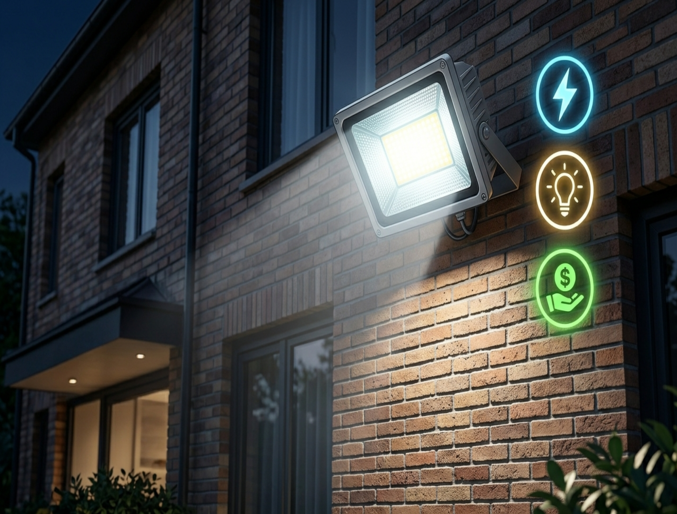
In any outdoor lighting project, it is essential to properly analyse the consumption of LED floodlights. This allows for a reduction in energy expenditure and maximisation of operational efficiency.
While LED technology stands out for its luminous performance and energy savings, actual consumption is subject to various technical variables. In this article, we examine from a professional perspective the factors that determine the energy usage of these devices and how to plan installations that are cost-effective.
Table of Contents
What is the Electric Consumption of a LED Floodlight?
The electric consumption of an outdoor LED floodlight refers to the amount of energy the equipment requires to produce light during operation. This parameter is usually expressed in watts (W), indicating the device’s instantaneous power, and in kilowatt-hours (kWh), reflecting the energy consumed over time. Understanding this distinction is important: while watts determine how much energy is consumed, kWh quantify the actual impact on the electricity bill. In outdoor lighting, electric consumption does not depend on a single variable but on the interaction between the floodlight’s power, daily usage hours, and other factors.
Importance of Electric Consumption in LED Floodlights
- Sizing the electrical installation: Knowing the consumption allows for proper design of the installation, selecting suitable conductors and power supplies. Accurate calculation prevents overloads and voltage drops, especially in installations with multiple light points.
- Calculating energy costs: In environments that require prolonged operation, such as car parks or commercial façades, even small variations in efficiency multiply over hours of use. Correct forecasting facilitates operational cost optimisation.
- Evaluating efficiency versus traditional technologies: LED floodlights stand out for their high efficiency compared with conventional technologies such as halogen or metal halide lamps. While the latter require more power to achieve the same illumination level, LEDs convert a higher percentage of energy into useful light, thereby reducing electricity consumption and saving money.
Recommended products
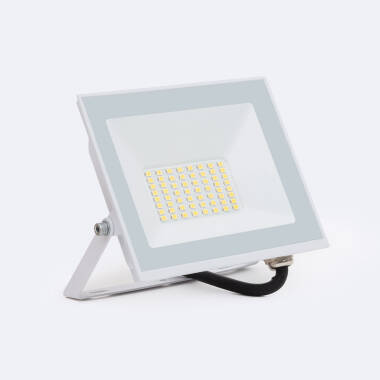
In Stock, delivery in 16-21 days
5.29 £
S3 30W LED Floodlight 120lm/W IP65
View product
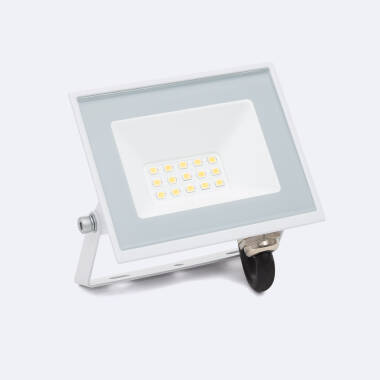
In Stock, delivery in 15-20 days
2.99 £
S3 10W LED Floodlight 120lm/W IP65
View product
In Stock, delivery in 24/48h
7.19 £
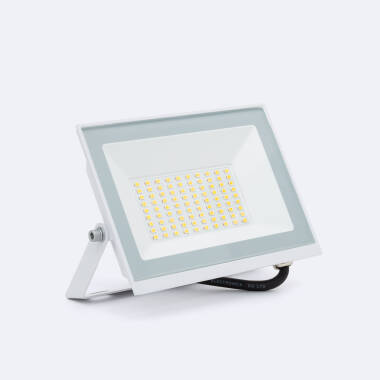
S3 50W LED Floodlight 120lm/W IP65
View product
In Stock, delivery in 24/48h
3.99 £
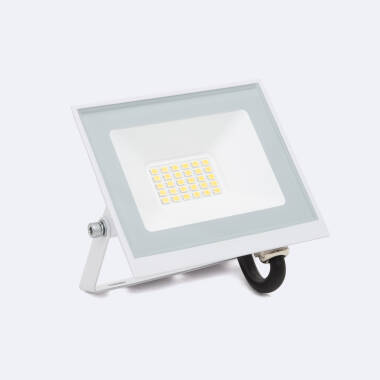
S3 20W LED Floodlight 120lm/W IP65
View product
Factors Affecting Consumption
In addition to power, other elements influence the real consumption of an LED floodlight:
- Luminous efficiency (lm/W): Higher efficiency means lower consumption to achieve the same illumination.
- Quality of the LED driver: An efficient driver minimises energy losses.
- Installation conditions: Ambient temperature and ventilation affect performance.
- Usage and control: Regulation systems can reduce effective consumption.
Average Electric Consumption of a LED Floodlight
LED floodlights can achieve high levels of illumination with relatively low consumption. As a guide, the following consumption ranges can be established according to the application:
Low-Power LED Floodlights
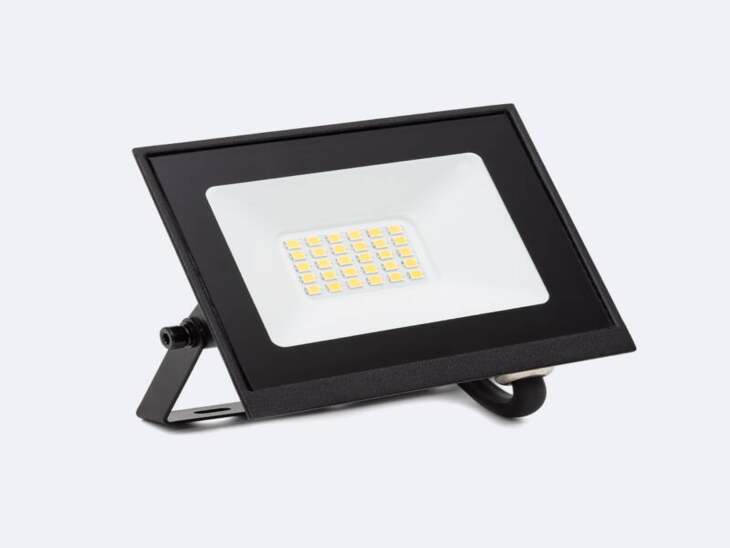
Power ranges between 10 W – 30 W. They are ideal for areas of 10–20 m², such as signage lighting or regular use in gardens and small terraces. For example, a 20W LED floodlight with 120 lm/W and IP65 protection, if used for approximately 4 hours daily, would consume 0.08 kWh per day.
Medium-Power LED Floodlights
Power ranges between 50 W – 100 W. These are most commonly used for areas of 30–60 m² in residential settings, such as patios, façades, access points, or walkways. For instance, a 50W LED floodlight with 120 lm/W and IP65 protection, assuming around 10 hours of daily use, would have a daily consumption of approximately 0.5 kWh.
High-Power LED Floodlights
Power ranges from 125 W – 200 W or more. Designed for areas of 70–100 m² in professional settings, such as car parks, sports facilities, industrial warehouses, or large open spaces where intense illumination is required. One common model in this category is the 150W LED floodlight with 145 lm/W, IP65 HE Frost PRO, dimmable, which, assuming around 10 hours of use, would consume 1.5 kWh daily.
Outdoor LED Floodlight vs Other Lighting Systems: Comparative Consumption
Comparing LED floodlights with other technologies clearly shows their advantage in terms of consumption and efficiency. The table below summarises the main differences:
| Type of Lighting | Power (W) | Efficiency (lm/W) | Details |
| LED Floodlight | 50-70W | 100-150 lm/W | High efficiency, long lifespan, low consumption. |
| Wall Washers LED | 18-38W | 90 lm/W | High energy efficiency. Commonly used for decoration. |
| Outdoor LED step lights | 5-9W | 50-90 lm/W | Provide much lower illumination; typically used for pathway lighting. |
| Outdoor LED Strips (multiple) | 2.5 W/m | 100 lm/W | Commonly used for decorative and ambient lighting. |
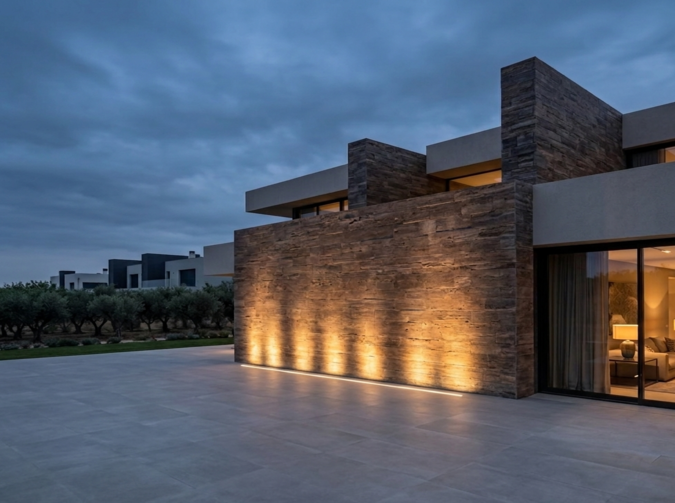
Both wall washers LED and outdoor LED step lights have lower efficiency compared with high-performance LED floodlights, meaning the floodlight makes better use of energy to generate light. In terms of power, wall washers and bollards operate at much lower consumption since they are intended for decoration and pathway marking, whereas floodlights provide powerful, functional general lighting.
In the case of outdoor LED strips, although individually efficient, they are not designed for lighting large surfaces. To achieve illumination levels comparable to a floodlight, multiple metres must be installed, increasing total consumption and complicating the installation.
Tips to Reduce the Electric Consumption of LED Floodlights
Optimising the energy consumption of outdoor LED floodlights also improves the sustainability of installations and extends the lifespan of equipment. Key best practices include:
- Use of dimming: Many LED floodlights allow regulation of luminous flux. Reducing intensity can yield significant energy savings.
- Matching luminous power to real needs: A common mistake is oversizing the floodlight. A prior analysis of the area to be illuminated is recommended to select the appropriate lumen level. Avoiding excessive brightness reduces consumption and minimises light pollution.
- Automated switching on/off: LED motion sensor floodlight ensure they operate only when needed, avoiding unnecessary consumption during idle periods.
- Selecting high-efficiency equipment: It is advisable to choose models with high luminous efficiency and good thermal management, as excess heat reduces efficiency and accelerates LED degradation. Quality equipment guarantees lower consumption.
- Optimising installation: Correct orientation and positioning of the floodlight are important. A well-planned installation ensures coverage of the desired area, avoiding light loss due to dispersion or poorly lit zones that would require increased intensity.
Overall, applying these strategies enables efficient outdoor lighting aligned with energy saving and sustainability criteria.
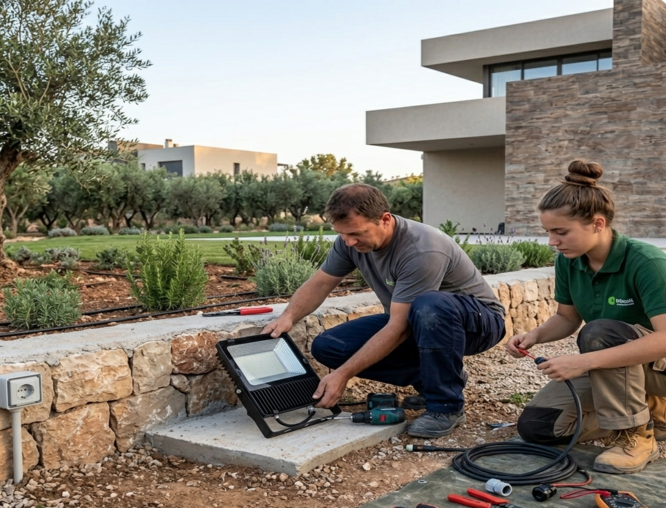
Environmental Impact and Sustainability of LED Floodlights
In addition to high energy efficiency, outdoor LED floodlights contribute to environmental sustainability. By consuming less electricity than traditional technologies, they significantly reduce the carbon footprint, generating fewer indirect CO₂ emissions associated with energy production. This energy saving benefits the environment and provides a more responsible long-term solution.
Furthermore, their long lifespan reduces the need for frequent replacements, decreasing electronic waste and the environmental impact of manufacturing and transporting new luminaires. Many LED floodlights are also designed with recyclable materials and avoid hazardous components such as mercury.
These systems allow better control of light pollution due to their ability to direct light precisely and regulate intensity, preventing unnecessary light dispersion into the sky or unwanted areas, supporting more eco-friendly urban and natural environments.
Understanding the electric consumption of an LED floodlight goes far beyond looking at the wattage on the box. The key to a cost-effective and sustainable installation lies in balancing appropriately sized power with component quality. Choosing high-performance LED solutions results in direct savings on the electricity bill and contributes to environmental sustainability.