The power of an LED strip indicates how much energy it consumes, but it is not the data that best reflects the amount of light it will provide. To know if an LED strip lights will illuminate enough, the most important thing to look at is the lumens, especially the lumens per meter, as this value shows the actual light emitted by each section of the strip.
Watts are still useful for calculating power consumption and choosing the right power supply, but a strip with more watts does not always light more than one with lower wattage. That is why it is important to check the efficiency of the LED chip and the intended use of the installation.
The right choice depends on the type of lighting you need. In this article you will find a complete guide to know what data you should check before buying a LED strip.
The power of an LED strip is expressed in watts, but this mainly refers to the power consumption, not the amount of light emitted.
It is usually indicated in two ways:
Watts per meter (W/m): indicates the consumption of each linear meter of strip.
Total watts (W): consumption of the complete installed section.
To know the total power of the installation, the W/m are multiplied by the total meters. For example, a 10 W/m strip installed in a 4 meter section will have a total consumption of:
10 W/m × 4 m = 40 W
It should be clarified that more power does not always mean better results. A very powerful strip in a small space can generate unnecessary consumption.
Lumens are the measure that indicates the actual amount of light emitted by an LED strip. For this reason, if you want to know whether a strip will illuminate a lot or a little, you should check the lumens per meter.
This is especially important because two LED strips with the same power can give very different results.
The key is the ratio between power consumption and luminous flux. This ratio is known as luminous efficiency and is expressed in lm/W, i.e. lumens per watt. The higher this value, the more light the LED strip provides with less power consumption.
How to tell if an LED strip is bright enough
One of the most frequent doubts is how to know if a LED strip will have enough intensity before installing it. To do this, it is important to check several technical data.
Check the manufacturer’s technical data sheet
This is the most reliable way to know before installing it. This document usually contains essential data such as power per meter, voltage (12V, 24V or 220V), lumens per meter and IP protection rating. This information allows to calculate the total consumption of the installation and to choose a suitable power supply.
Identify the type and density of LEDs
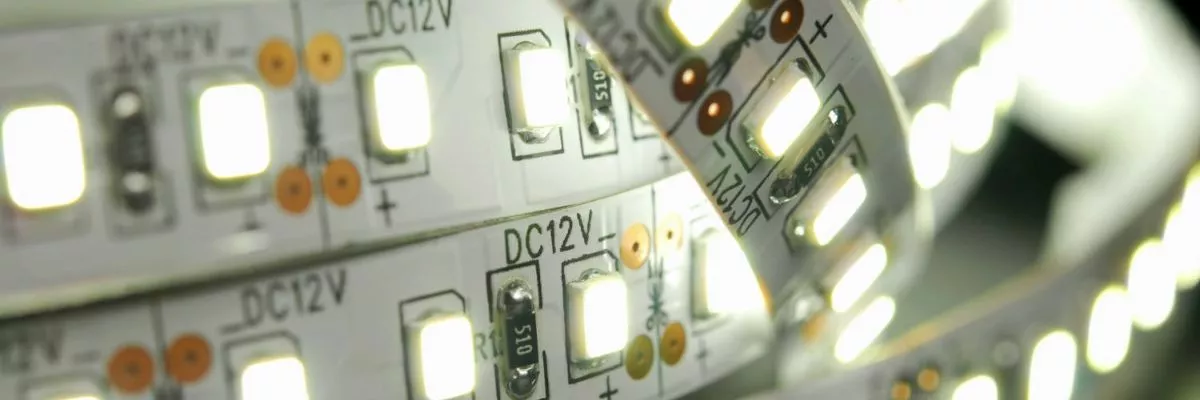
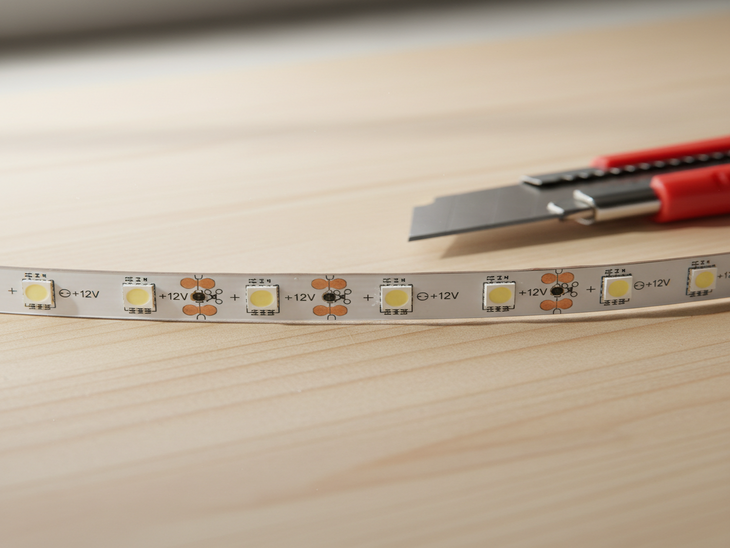
Another important point to consider is the chip size and the number of diodes installed per meter. Technologies such as SMD2835 offer different performances depending on the number of LEDs per meter and emission capacity. Generally speaking, a higher density of LEDs per meter provides more uniform illumination, but also increases power consumption. Similarly, larger chips tend to offer a higher luminous capacity, providing more intense and effective light for applications where a higher level of illumination is required.
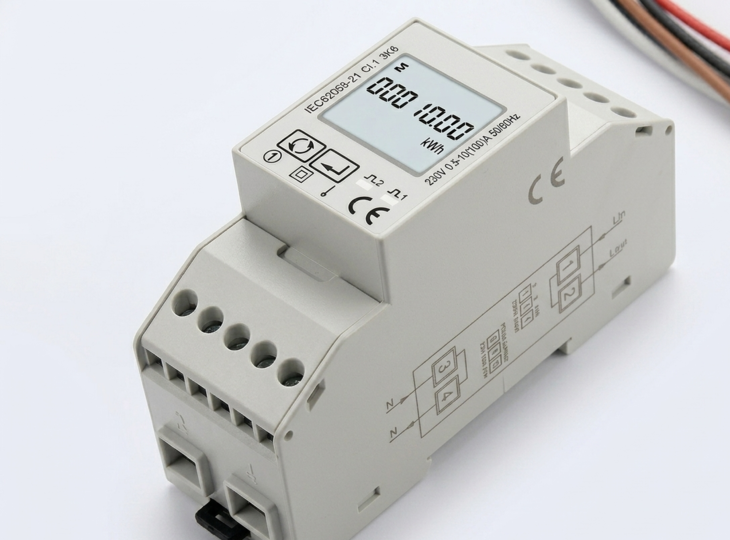
Measuring actual consumption with a wattmeter
Using a wattmeter is a practical way to check the actual performance of the LED strip. This tool allows to know the consumption of the system in operation and to detect energy losses. Thanks to its use it is possible to evaluate if the installation is working properly or if there are problems.
Types of brightness ranges
To know if a LED strip is bright enough, it is much more useful to check its luminous efficiency (lm/W). In this way, you can differentiate between a strip that simply consumes more energy and one that actually makes better use of that consumption to provide a more intense and efficient illumination.
As a guideline:
< 100 lm/W – Low Range
100-115 lm/W – Medium Range
115-140 lm/W – Medium to High Range
≤ 140 lm/W – High Range
Key factors in choosing an LED strip
Choosing an LED strip correctly requires assessing several aspects. Power is important, but must be considered along with lumens, space usage and installation conditions.
Lighting function
The use determines the level of light needed.
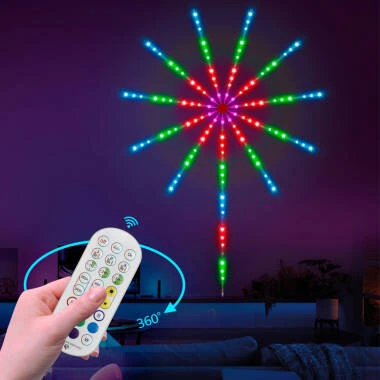
Decorative lighting: For decorative lighting applications, low power LED strips are usually sufficient.
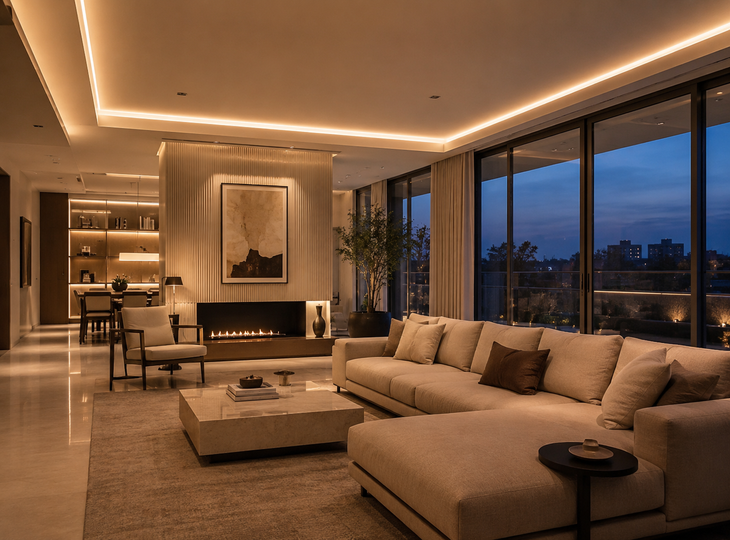
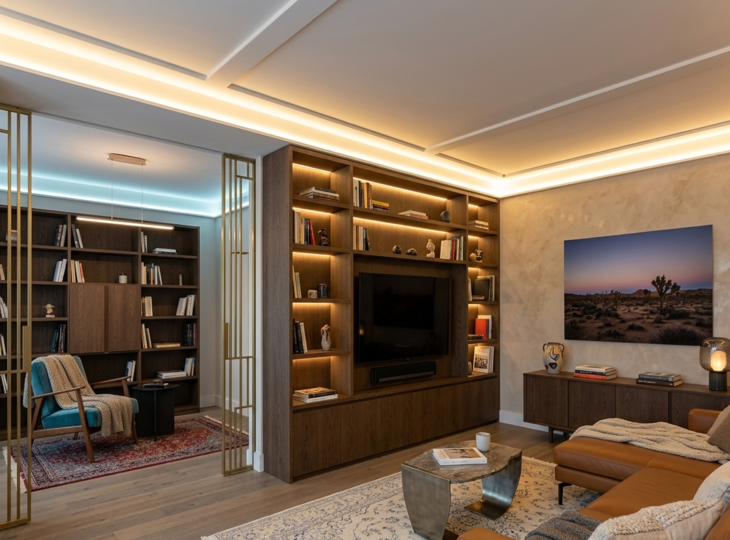
Ambient lighting:For ambient lighting in spaces such as living rooms or bedrooms, it is recommended to use LED strips with a balanced power to generate a comfortable and sufficient light for the room without being excessive.
Functional lighting: It is oriented to spaces where a high and constant level of light is needed to perform tasks, such as kitchens or showcases. In these environments it is important to install bright lighting that improves visibility, thus facilitating daily work.
Actual lumens per meter
Lumens per meter is the most relevant data to know if a LED strip will illuminate a little, a lot or enough. An LED strip with too few lumens may be good for decoration, but it will not be suitable as functional lighting.
Therefore, before making a choice, it is useful to compare products not only by their W/m, but also by the amount of light they offer. A more efficient strip can achieve the same level of illumination with less consumption.
Luminous efficiency
Luminous efficiency indicates how many lumens an LED strip generates per watt consumed. This data lets you know if a strip is making good use of energy or if it needs to consume more to provide the same amount of light.
Installation length
Consumption increases proportionally to the meters installed. This means that the power supply must be sized correctly to support the full load of the system without working at the limit. In addition, it is advisable to add a safety margin of 20 to 30% over the calculated consumption to ensure stable operation.
Thermal management and dissipation
High-power LED strips require higher heat dissipation, since the higher the power consumption, the higher the operating temperature. This thermal increase can affect the system, cause variations in color stability and compromise the safety of the installation if not properly controlled. For this reason, the use of aluminium profiles for LED strips is recommended to promote heat dissipation and ensure ventilation.
Which type of LED strip offers more light?
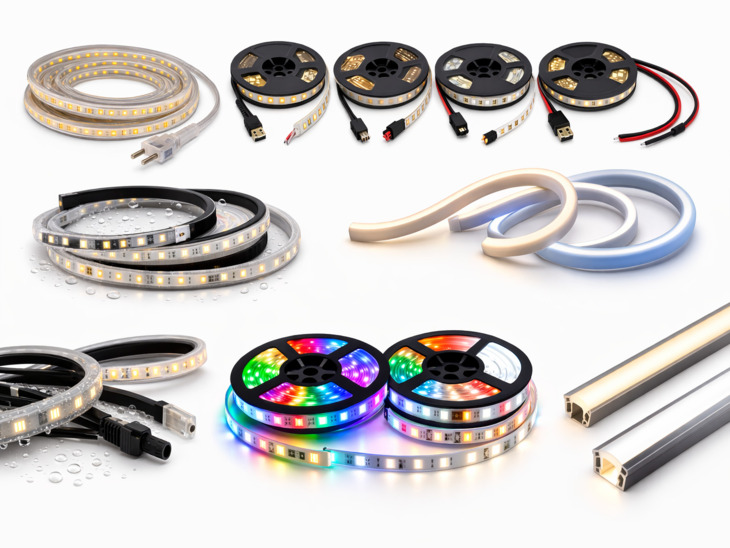
Not all LED strips offer the same performance, knowing the types of LED strips can help you make the right choice. The selection of the LED strip depends on the context of use, since the needs of a house are not the same as those of a technical or commercial project. Therefore, it is important to differentiate between residential solutions and professional systems.
Types of LED strips for residential use
In homes, it is best to seek a balance between luminous intensity, consumption and durability.
COB LED strips
Within this category, COB LED strips stand out for offering uniform light, thanks to their high chip density and continuous emission without visible points. They offer an intense but controlled lighting, avoiding excessive glare, so they are usually used in decorative lighting or indirect lighting systems.
LED Strips 12V DC
12V DC LED strips light are a common choice for small projects or residential installations. As they do not require complex electrical configurations, they allow easy installation for residential environments. They are often used in decorative or environmental indoor installations such as furniture, hallways or small rooms.
RGBW LED strips
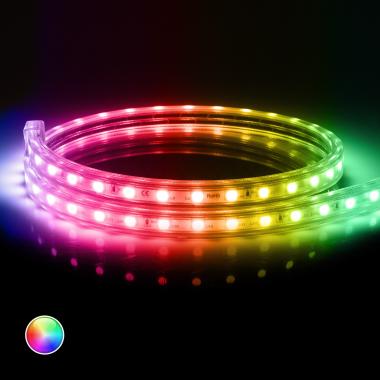
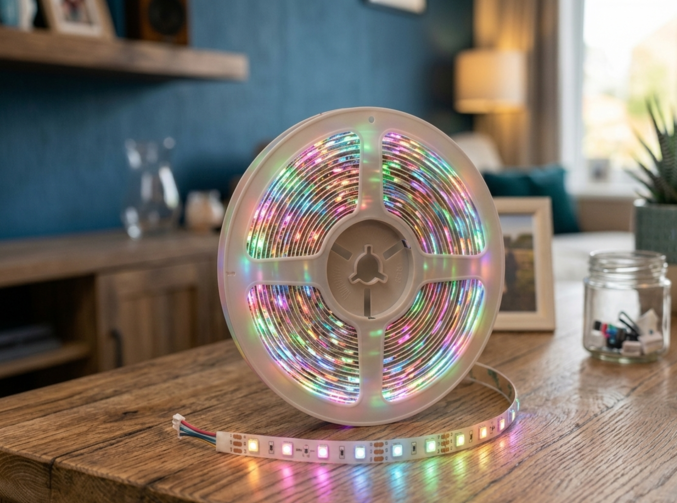
RGBW LED strips stand out for their ability to generate different types of light. They have a medium power suitable for small spaces and a slightly higher power consumption due to the use of multiple color channels, allowing a wide range of color combinations. They are mainly used in spaces where lighting has a decorative rather than a technical function.
Types of LED strips for professional use
In professional projects, the priority is usually to achieve a high luminous flux and resistance in prolonged use.
48V DC LED strips
48V DC LED strips are the most powerful LED strips in the professional field for large-scale technical projects. Their operation with lower current intensity allows higher electrical efficiency and a significant reduction of losses in the system. In addition, they offer high stability in long installations, maintaining uniform illumination even over long distances.
24V LED strips
24V LED strips are another of the most widely used in professional environments due to their excellent performance in medium and large-scale projects. Long run options are available to ensure consistent performance throughout the installation. They are commonly used in shelving, hospitality spaces and shop windows.
220V-240V AC LED strips
220-240V AC LED Strips stand out for their ability to cover long distances with continuous and stable lighting. Their main advantage is the ability to cover long distances without significant loss of intensity, which makes them a solution for large-scale projects. They also have a higher risk of flickering if they do not incorporate a high quality rectifier or have a shorter lifetime than DC strips. This model of LED strips is commonly used in exteriors, facades and large surfaces.
Guideline table to choose a LED strip
LED Strip
Voltage
Typical power (W/m)
Luminous efficiency (lm/w)
Typical meters
Luminance Level
LED Strip 12V DC
12V
9-10 W/m
100 lm/W
5m
Media
LED Strip 24V DC
24V
10-29 W/m
100-140 lm/W
5-20m
Medium-high
LED Strip 48V DC
48V
8-10W/m
100 lm/W
1-50 m
Media
LED strip 220V-240V AC
220-240V
6-8.5 W/m
90-120 lm/W
1-50 m
Medium-high
COB LED Strip
12 / 24V / 220V
10 – 15 W/m
100 lm/W
1-20 m
Media
RGB/RGBWW LED Strip
12 / 24V / 220V
9-18W/m
90 lm/W
5 m
Low
Common mistakes when choosing a LED strip
Choosing only by wattage: this is one of the most common mistakes. A LED strip with more watts does not always light more. The important thing is to check how many lumens it offers and how efficient it is.
Not checking lumens per meter: without this data it is difficult to know if the LED strip will be sufficient for the space. Lumens are the main reference to assess the actual amount of light.
Choosing only by price: Based solely on price, without taking into account the quality of the product. Cheaper options may have insufficient performance.
Insufficient source: Can seriously compromise the performance of the LED fixture.
Ignoring voltage drop: Can affect the performance of the LED strip. In these cases, it is common for the brightness to decrease towards the end of the run and for the illumination to lose uniformity, generating visible differences in light intensity.
Oversizing without need: Thiscan have negative effects on the project. This usually increases energy consumption and complicates heat dissipation management.
Choosing the right LED strip requires taking into account all the factors analyzed, the key is to select the one that best suits the purpose of the space and the use to be given. Thanks to this, you will be able to optimize energy consumption and obtain long-lasting lighting.