Table of Contents

- Origin and Philosophy of Natural Style
- Defining Features of the Natural Style
- Colors, Textures and Finishes
- Essential furnishings: functional and with organic presence
- Application by Environments
- Renovations and Upgrades
- Variations and Fusions of the Natural Style
- Common Mistakes and How to Avoid Them
- Inspiration and Case Studies
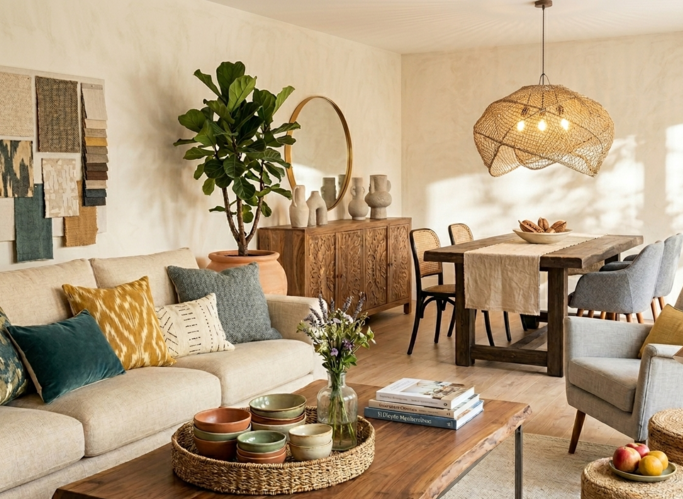
- Natural style décor
Origin and Philosophy of Natural Style
The natural style is built from a way of understanding design and the relationship with the environment. Below we will explain its roots and principles:
Roots and contemporary evolution
Its origin stems from the mixture of Scandinavian functionalism and the modern need for sustainability and connection with nature.
It seeks to create warm and luminous spaces, using organic materials and neutral tones. This style dates back to the early twentieth century with the proposal of an organic construction that seeks harmony in housing.
Philosophy: well-being, simplicity and respect for materials.
The conceptual basis of the natural style focuses on the direct relationship between the user and the built environment.
Physical and environmental factors such as the quality of light, the acoustics of the space and the materials are taken into account. Simplicity is focused on eliminating everything that does not provide a real function, each element has a reason for presence within the whole.
Defining Features of the Natural Style
The features of the natural style are defined by a series of decisions that directly affect how the space is perceived and inhabited. They take into account a set of criteria that work together, from materials to light and the presence of living elements.
Main materials and why they work
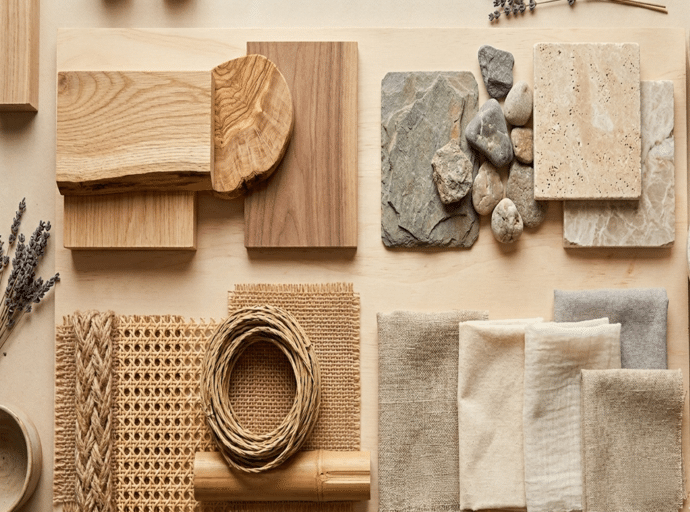
Materials are chosen for their functionality:
- Natural wood: regulates humidity, is a warm and resistant material.
- Stone and mineral derivatives: They provide thermal stability, resistance and a rustic and cozy touch.
- Vegetable fibers (wicker, jute, rattan): It is a very cool material that can be perfect for both indoor and outdoor environments. Rattan, for example, is a light, resistant and moldable fiber, besides being biodegradable.
- Natural fabrics (linen, cotton): Cotton is a soft and breathable material, perfect for winter and summer. Linen, on the other hand, brings elegance to home decoration.
Light and layout: multiplying the outdoor feeling
Natural light is a basic component of the project. From the beginning, its entrance and its variation throughout the day are taken into account, since its behavior changes the atmosphere of the space.
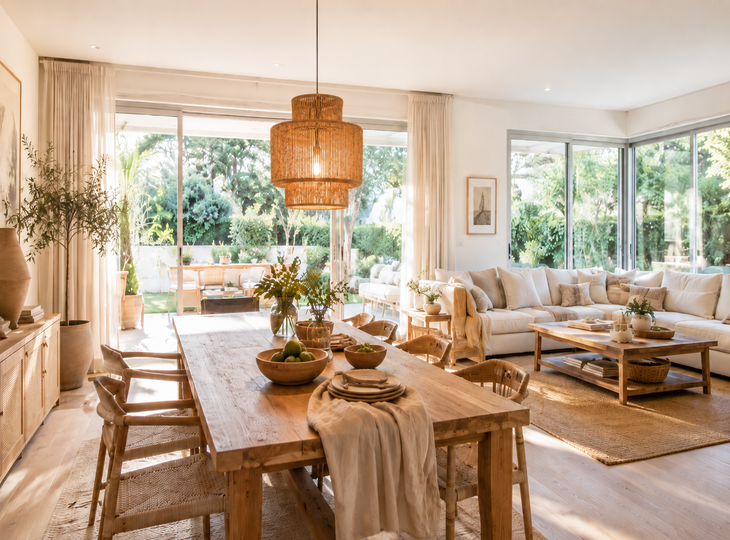
The openings to the outside are part of the design, trying to achieve continuity of space. Their function is to eliminate the rupture between interior and exterior, allowing the landscape to be part of the architectural composition. To this end, frames are reduced and elements that generate visual noise are eliminated.
When organizing the furniture, light and openness are taken into account. Priority is given to open distributions to generate a feeling of spaciousness and continuity in the space.
Plants and living elements as the structure of the project
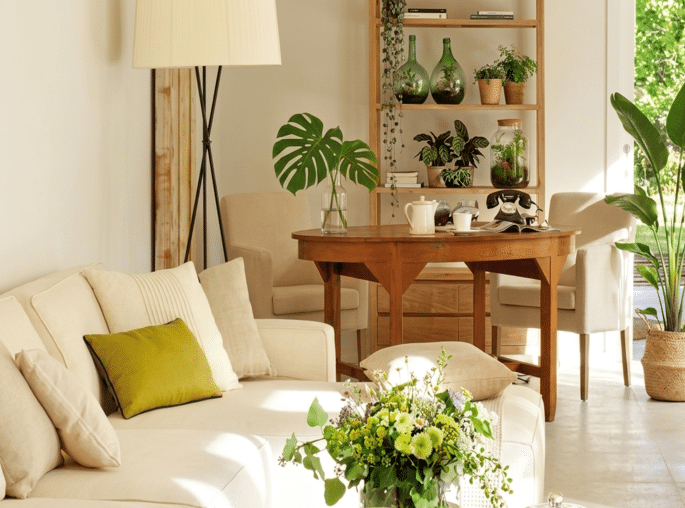
Vegetation is an important factor in the decoration, it helps regulate humidity and improves air quality, contributing to more balanced conditions of habitability. It also acts as a natural acoustic resource, softening reverberation in spaces where hard materials predominate. In addition, it allows the space to be organized in a subtle way, creating visual separations without the need for partitions.
From the visual point of view, vegetation provides depth. The different heights and shapes generate layers that break the uniformity of the interior and avoid a flat perception of the whole, achieving dynamism without introducing artificial elements.
The choice of species should be based on their behavior inside the interior. Plants are selected that adapt well to variable light conditions, maintain stable growth and do not require excessive maintenance.
Colors, Textures and Finishes
Colors and textures are a fundamental part of the definition of the natural style, since they determine to a great extent the atmosphere of the space:
Base palette: warm neutrals and earth tones.
The color palette is based on soft and natural tones, avoiding strong contrasts or too intense colors. The idea is for the space to have a sense of continuity and calm. Sand and limestone tones predominate as a base providing light, while soft earth tones add warmth. Greens help to reinforce the connection with the vegetation and ochers help to give some contrast.
Overall, it is not intended that everything is the same, but that the colors blend together to create a balanced environment.
Textures to create warmth and touch
Textures make environments feel more alive. Materials that react differently to light and touch are combined. Open-pore wood, for example, adds depth and a warmer feel. Textiles that are denser help reduce noise and make the room feel more enveloping, while natural fibers add a different aesthetic.
Essential furnishings: functional and with organic presence
Furniture is selected based on its durability and how it fits in with the overall space, as well as its material. Furniture is often selected with a simple aesthetic with soft curves, rounded edges or straight lines.
When possible, it makes sense to go for local production or handcrafted pieces, as they allow for greater control over materials and processes, as well as maintaining a more direct relationship with the origin of each element.
Application by Environments
The application of the natural style in each room is based on the idea of adapting the design to the way in which the space is lived. Each environment is worked in a specific way:
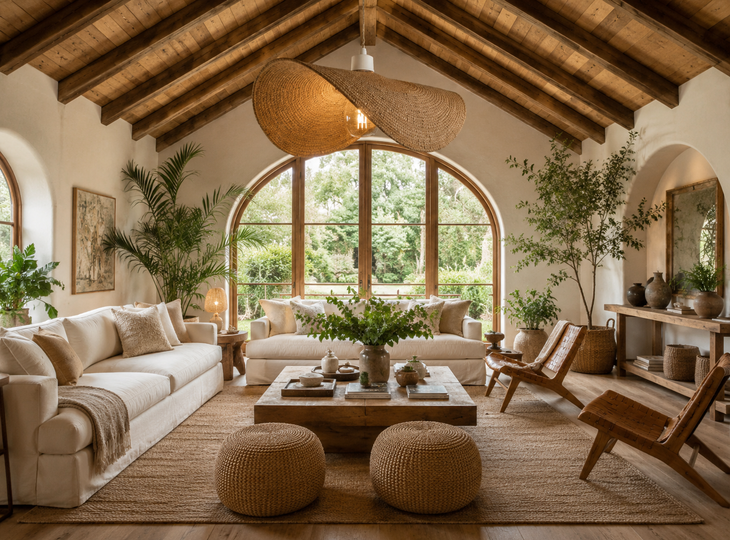
Living room: flexible area, textures and large plants.
The living room is the heart of the house, a space where social and relaxing moments coexist. It is designed as a flexible space that adapts to different uses throughout the day.
The distribution is organized into different areas according to their function. The first is designed for conversation, with seats arranged in relation to each other and with points of support nearby. Another is oriented to rest, always looking for the best relationship with natural light and views to the outside. And the third is left for circulation, keeping the space free. Normally the furniture is oriented towards natural light to create more natural compositions.
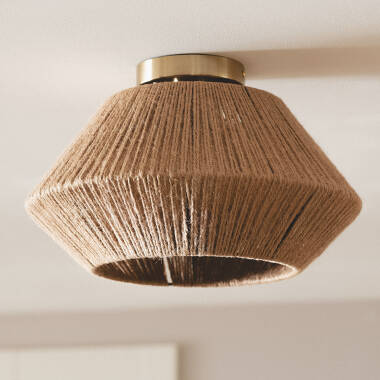
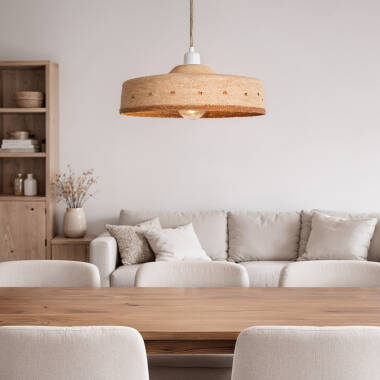
The lighting that is usually used is warm light and several sources spread throughout the room. Natural style lamps are very common, as they have that aesthetic and help to reinforce a more relaxed atmosphere.
In this type of environments it is also common to use natural floor lamps, made of materials such as wood, bamboo, rattan or jute, which provide visual texture and a softer light. These lamps illuminate and have a stand, so you can change their location according to your needs.
Recommended products
In Stock, delivery in 24/48h
55.99 £
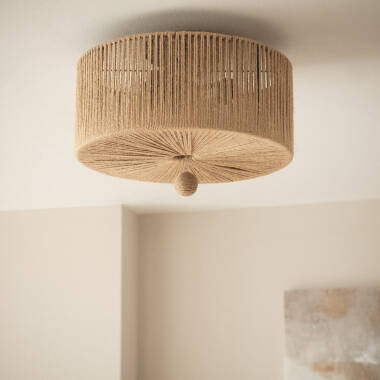
Modigliani Natural Rope Ceiling Lamp
View product
In Stock, delivery in 15-20 days
40.99 £
Moksha Natural Rope Ceiling Lamp
View product
In Stock, delivery in 24/48h
38.99 £
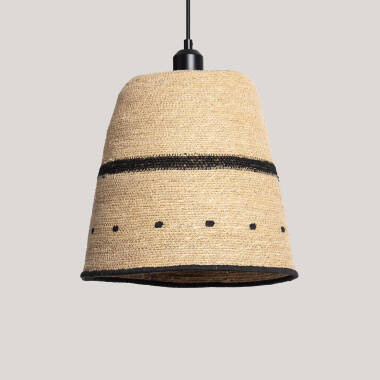
Arya Natural Fibres Pendant Lamp
View product
In Stock, delivery in 15-20 days
27.29 £
Vanisha Natural Fibres Pendant Lamp
View product
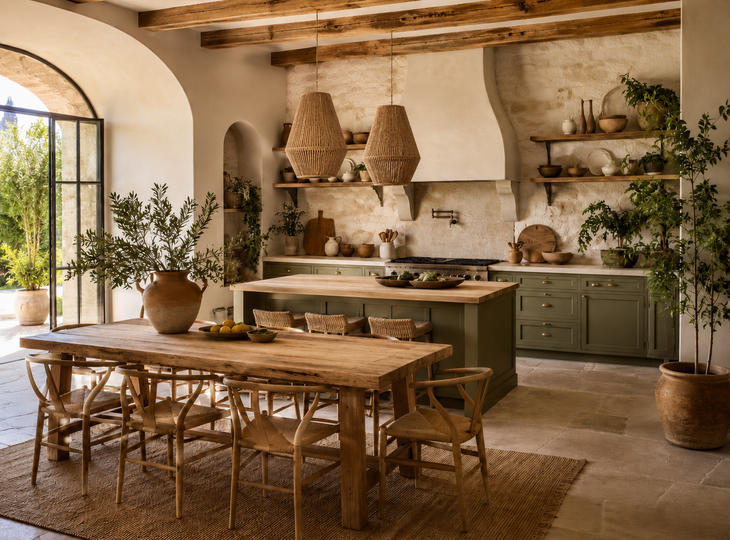
Kitchen: noble and functional materials
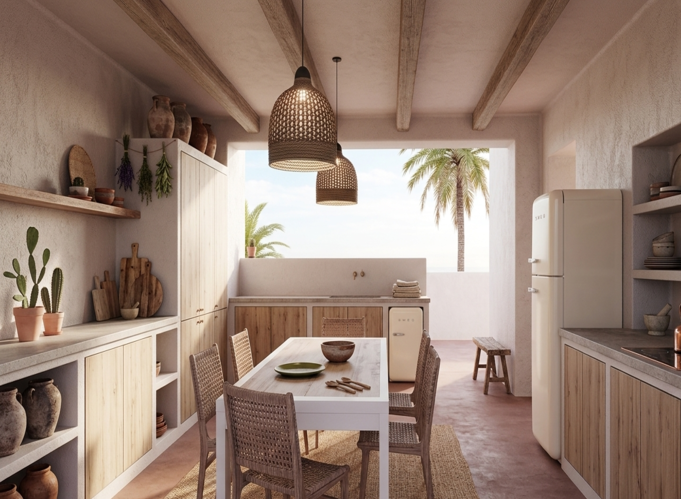
The kitchen is a more demanding space, so more resistant and easy to clean materials are selected. From these functional needs, its aesthetics are also defined.
Mineral surfaces such as natural stone and technical porcelain are combined with treated wood furniture. One of the key principles is to reduce visible elements to a minimum. Exposed hardware or exposed appliances are avoided. Storage is integrated into compact volumes, rather than scattered throughout the space. This reduces the feeling of clutter and makes the kitchen feel cleaner and tidier.
Bathroom: natural spa with continuous material
The bathroom is designed to convey a sense of order and cleanliness through the elimination of unnecessary materials. Reducing joints and surface changes helps to make the whole feel more uniform.
Continuous or very low modulation wall coverings are used, this choice avoids unnecessary visual breaks and reinforces the idea of a more fluid space. The furniture, whenever possible, is integrated into the architecture itself. Instead of single pieces, washbasins and storage areas are considered as part of the whole.
Vegetation is introduced occasionally, in areas where humidity and light conditions allow it, in order to soften the presence of colder materials.
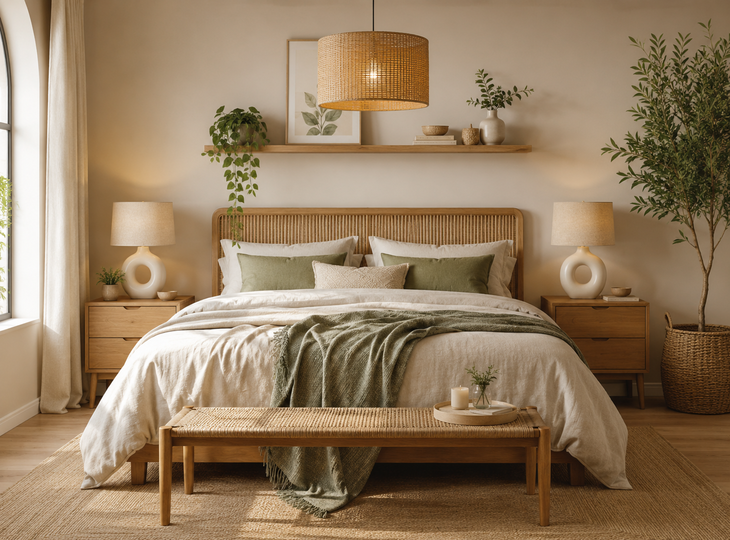
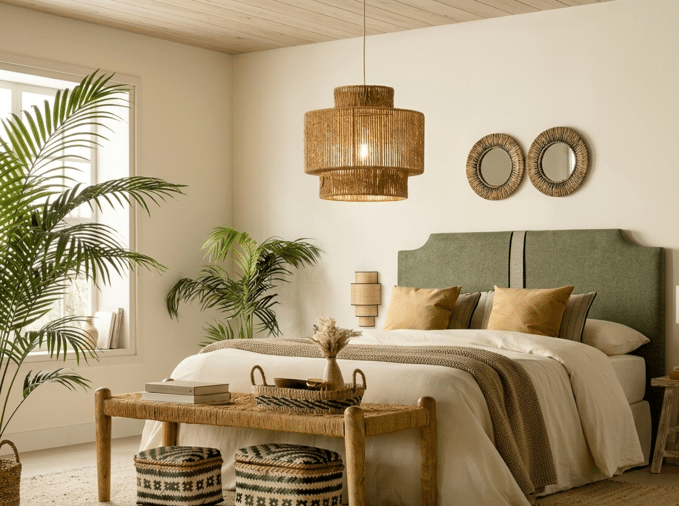
Bedroom: tactile and breathable shelter
The bedroom is a space designed to reduce stimulation and promote rest.
Materials are selected to avoid excessive reflections and help generate calm. For this reason, glossy or highly reflective surfaces are avoided and matte finishes are prioritized. Linen is usually used in bed linen and curtains for its pleasant feel and its ability to regulate temperature. Wood gives a feeling of warmth and is usually present in headboards or auxiliary furniture.
When selecting the lighting, avoid direct or too intense lights. It is common to use natural hanging lamps or table lamps, made of materials such as wood, ceramic, wicker or rattan. Their lighting accompanies the space with a warmer and diffused light, helping to create a relaxed atmosphere that favors disconnection throughout the day.
Small spaces: maximizing the perception of calm
In small spaces, design focuses on reducing visual stimuli. Strong color and material contrasts are avoided in favor of more uniform palettes and smooth transitions. This helps the space feel larger and less fragmented.
Storage is integrated discreetly within the architecture, concealing what is necessary to reduce the presence of objects in plain sight. Mirrors can be used strategically to expand visual depth. Properly placed, they help reflect natural light without cluttering or distorting the environment.
Renovations and Upgrades
Renovations within the natural style do not always involve major interventions, but can start with one-time or more in-depth adjustments. In both cases, the objective is to improve the quality of the space.
High-impact, low-cost interventions
There are changes that do not require complex works but can transform the perception of a space. In many cases, small, well thought-out decisions are enough to update the environment.
Adjusting the color palette to more neutral tones helps to unify the whole space. Swapping synthetic textiles for natural fibers improves both the feel and the overall sensation. Incorporating plants adds volume and a more direct connection to nature. Also, replacing handles and small details with materials such as wood or aged brass allows you to renew the furniture without replacing it completely.
All in all, these are simple interventions that do not modify the structure of the space, but do improve how it is perceived and experienced.
Investment that the work deserves
The most important investments are those that have a direct and lasting effect on how the space functions.
Changing floors for natural wood or stone can help you achieve more resistance and improve the thermal behavior of the space. It is also interesting to open gaps or enlarge windows to increase the entry of natural light and strengthen the connection with the outside. Likewise, working on thermal and acoustic insulation contributes directly to improving day-to-day comfort.
On the other hand, it is important to update carpentry to improve performance and reinforce the visual continuity between indoors and outdoors.
Variations and Fusions of the Natural Style
The natural style admits different interpretations depending on the approach and the level of intervention in the design:
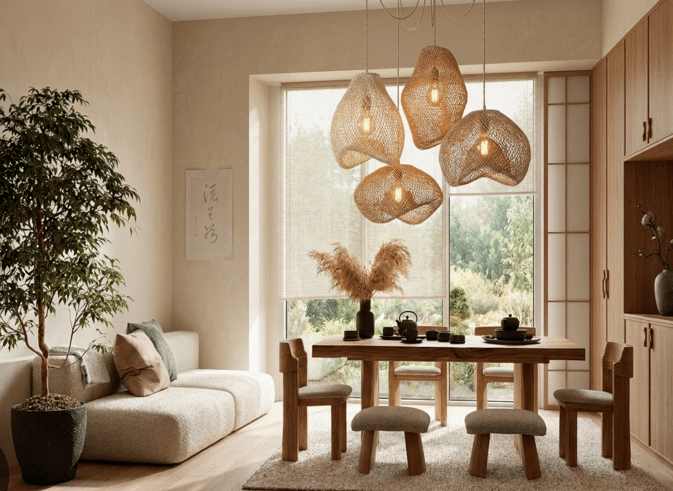
Natural + Japandi
The combination between natural style and Japandi is based on a very careful reduction of elements, where each piece has a clear reason within the whole.
The space is organized giving prominence to the emptiness that becomes an active part of the design. This emptiness allows light and materials to be perceived with more intensity. The colors are kept in a neutral and soft range, with broken whites, warm grays and sand tones as a base. Light wood, such as oak or ash, is also used to generate a sense of visual calm throughout the space.
The ensemble is kept very controlled and unnecessary elements are reduced. Lighting is integrated into the architecture to reinforce a calm and balanced atmosphere.
Natural rustic / Soft Cottagecore
In this version of the natural style, the space gains density and material richness. Here the aim is not to eliminate complexity, but to organize it in a coherent way through materials and their repetition.
Handcrafted pieces, handmade finishes and materials with more surface variation are introduced. Irregular ceramics, woods with visible marks, thick fabrics and untreated natural fibers give a more authentic feel.
The depth of the space is built through the layering of textures rather than the use of color. The palette is kept restrained, with powdered tones, soft earths and warm neutrals.
References to the rural world are reinterpreted from a modern perspective, adapting it to contemporary homes without losing functionality.
Advanced Biophilic design
Advanced biophilic design consists of integrating nature as a structural part of the project. Its principles are directly applied in the way space is organized, materials are chosen and the environment is managed.
An important part is based on introducing patterns inspired by nature into the interior design, in rhythms and structures reminiscent of natural processes such as branching.
Water can be incorporated as an environmental element, its presence brings changes in sound and thermal perception. We also work with the natural behavior of the environment: light, ventilation, humidity, etc. The aim is for the space not to be static, but to respond naturally to external conditions.
Common Mistakes and How to Avoid Them
One of the most common mistakes is to substitute natural materials for industrial imitations. Although they may seem similar at first glance, they break the coherence of the whole and reduce the quality of the space.
Another common mistake is to incorporate too much vegetation without a clear logic. When there is no hierarchy or order, the result is no longer balanced and the space loses meaning.
It is also common to work with neutral palettes without introducing a variety of textures. This generates flat interiors, without depth or visual richness. The solution is not to add color, but to diversify materials and finishes.
Finally, not taking into account the maintenance of natural materials can affect their behavior over time. Therefore, it is important to design already considering how they will age and evolve in daily use.
Inspiration and Case Studies
Natural style manifests itself differently depending on the architectural context. Its application depends on the relationship between structure, environment and living conditions. Below we explain different cases for your reference:
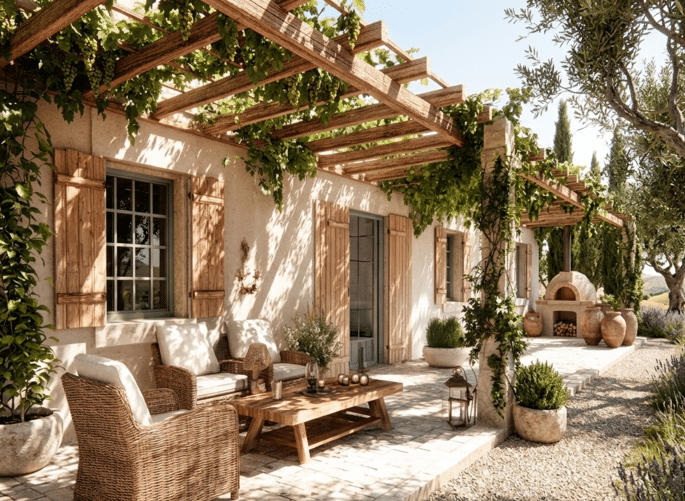
Modern cottages and cabins
In houses located in natural environments the style can be developed more. This is because it is not necessary to intervene much and it adapts to the terrain instead of imposing itself on it.
Developing this style is usually easier, instead of making abrupt cuts, smooth transitions such as porches, large openings or progressive changes of material are used. Wood and stone are often used to provide lightness and solidity. In these projects, the passage of time is not considered a deterioration, but part of the design. The aging of materials reinforces their integration with the landscape and provides long-term coherence.
Urban apartments: natural within the city
In urban environments, the natural style must adapt to more limited conditions: less light, less space, more noise and less contact with the outside.
The priority is to make the most of available natural light. Partitions are reduced to allow continuity between rooms and light enclosures are used to avoid cutting off the view.
The elimination of compartmentalization helps to reorganize the space in a more fluid way. Vegetation acts as a substitute for the natural outdoor environment. It helps to soften the environment and enhances the sense of connection with the organic within an urban context.
Natural style décor
Natural style is not a closed aesthetic, but a way of designing space according to the coherence of materials, light and everyday use. Decisions should be made based on what really matters in each case: functionality, environmental quality and the relationship with the environment. The result is a balanced and durable space in your home.