
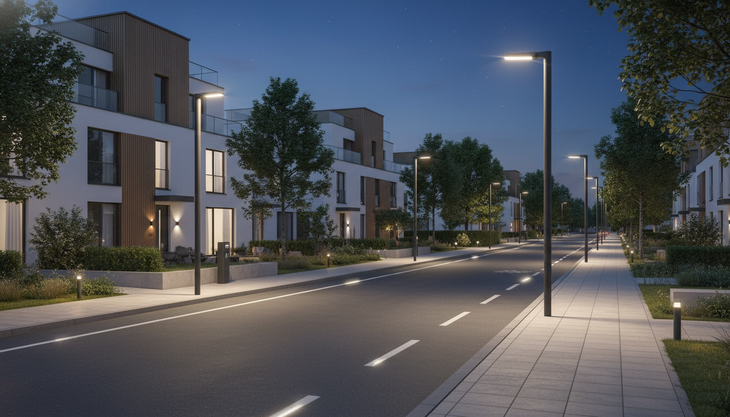
The modernization of street lighting in residential areas presents municipalities and property managers with complex challenges. Outdated lighting systems cause high energy costs and often no longer meet current requirements in terms of light quality and safety. LED street lighting has established itself as a forward-looking technology that provides a sustainable solution to these problems. This guide is aimed at decision-makers in local authorities, housing associations and planning offices who are looking for efficient path lighting for their projects.

Table of Contents
- Energy efficiency as a key argument for LED street lighting
- Safety through optimum illumination
- Different luminaire types for different requirements
- Intelligent control systems for maximum efficiency
- Solar energy as a sustainable alternative
- Maintenance and long-term servicing
- Environmental protection and ecological responsibility
- Project planning and implementation
- Choosing the right color temperature
- Conclusion: Future-proof investment in modern lighting
Energy efficiency as a key argument for LED street lighting
Switching to LED street lighting enables savings of up to 50 percent compared to conventional sodium vapor or mercury vapor lamps. This reduction has a direct impact on municipal budgets and amortizes the investment costs within a few years. Modern LED street lights achieve luminous efficacies of over 150 lumens per watt and thus clearly outperform all conventional light sources. The long service life of up to 100,000 operating hours also minimizes maintenance costs and significantly reduces the personnel required to replace lamps. In the range for LED streetlights you will find luminaires in various wattage classes from 40W to 200W for different requirements.
Recommended products
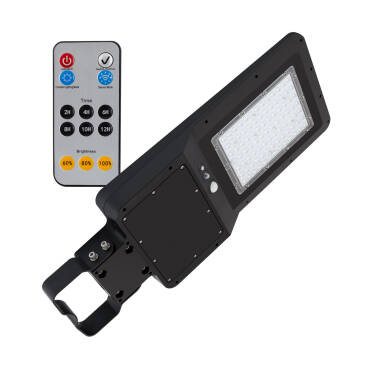
In Stock, delivery in 24/48h
199.99 £
Solar LED Street Light 4800 lm 110 lm/W with Motion and Twilight Sensor
View product
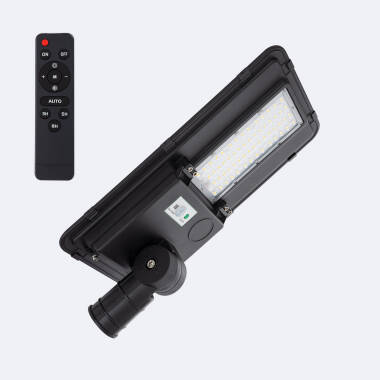
In Stock, delivery in 15-20 days
57.99 £
Solar LED Streetlight Sinai 1000 lm 125 lm/W with Motion Sensor
View product
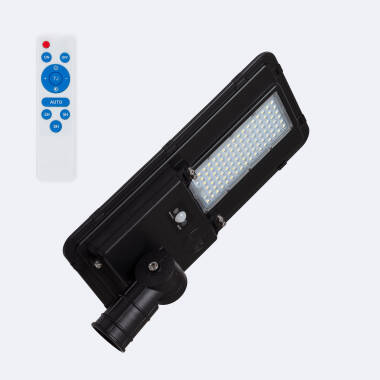
In Stock, delivery in 15-20 days
201.99 £
Solar LED Streetlight Sinai 6400 lm 160 lm/W with MPPT & Motion Sensor
View product
In Stock, delivery in 16-21 days
199.99 £
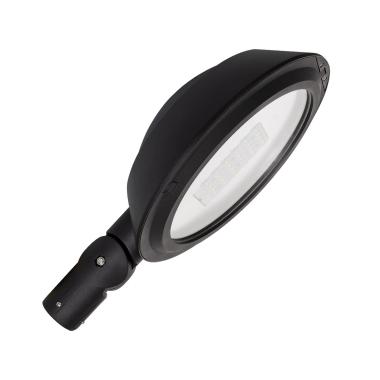
40W LED Streetlight 1-10V Dimmable LUMILEDS PHILIPS Xitanium Arrow
View product
Safety through optimum illumination
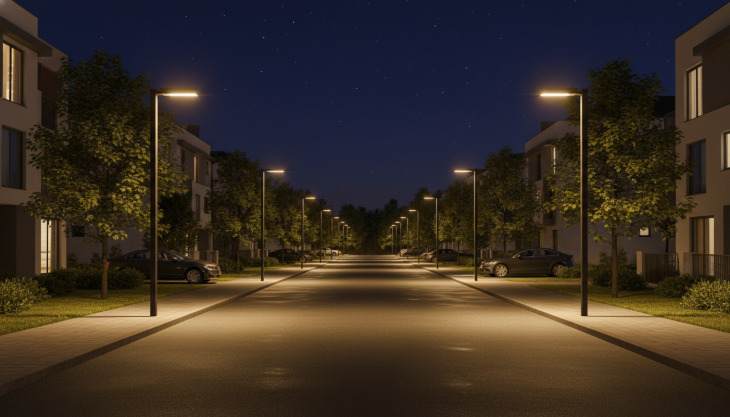
Well-designed path lighting makes a significant contribution to safety in residential areas. Uniformly illuminated streets and paths increase the subjective safety of residents and demonstrably reduce the risk of accidents. LED streetlights enable precise light control, which minimizes spill light and reduces light pollution. The directional light distribution ensures that the light reaches exactly where it is needed. Warm white light colors between 2700K and 3000K are recommended for residential areas, creating a pleasant atmosphere while providing the necessary brightness for safe orientation.
Different luminaire types for different requirements
Choosing the right luminaire depends on the specific conditions on site. Classic post-top luminaires are suitable for main street lighting and are mounted at heights of between 4 and 8 meters. They provide wide-area illumination and are available in various designs that blend harmoniously into the cityscape. For larger projects and public contracts, special LED street lighting is available for projects.
LED path luminaires are the ideal choice for footpaths, parks and green spaces. With lower mounting heights of 1 to 3 meters, they create people-friendly lighting at eye level. The range of LED Step Lights includes modern and classic designs for every architectural context.
Intelligent control systems for maximum efficiency
Modern LED street lighting goes far beyond simply switching lights on and off. Programmable LED street lights enable time-controlled dimming, which further reduces energy consumption during low-traffic periods. Between midnight and the early hours of the morning, the illuminance can be reduced to 50 to 70 percent without compromising safety.
Motion sensors offer a further opportunity to save energy. The luminaires react to passers-by and vehicles and automatically increase the brightness as required. Dimmable LED street lights with integrated sensors combine both functions and adapt dynamically to actual requirements.
Solar energy as a sustainable alternative
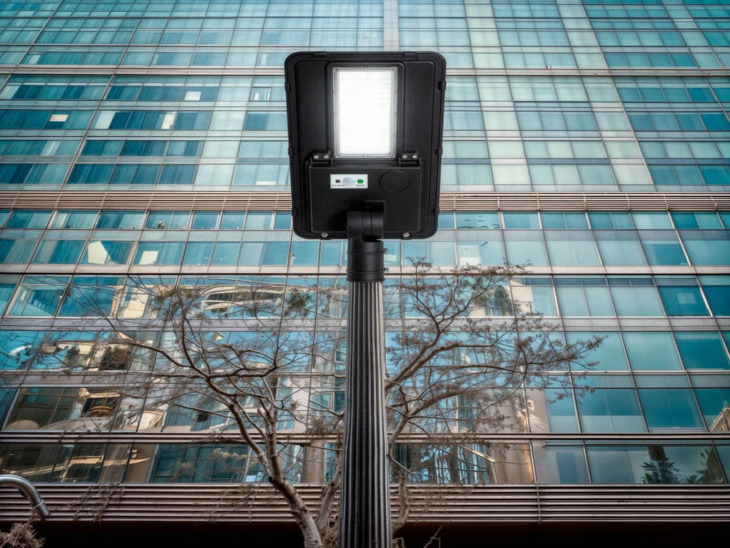
Solar LED street lights are ideal for locations without a mains connection or as a particularly environmentally friendly solution. These self-sufficient systems use solar energy during the day and store it in integrated rechargeable batteries for night-time lighting. Modern lithium-ion batteries ensure reliable operation even after several cloudy days. They can be installed without the need for costly groundwork to lay cables, which significantly reduces overall costs and speeds up implementation.
Maintenance and long-term servicing
A major advantage of LED technology is the drastic reduction in maintenance costs. While conventional light sources have to be replaced every two to four years, high-quality LED street lights achieve operating times of 15 to 20 years without the need to replace light sources. For local authorities, this means a considerable reduction in the workload of building yards and fewer traffic obstructions due to maintenance work.
Modern lighting systems also enable predictive maintenance. Integrated monitoring functions allow operators to monitor the condition of each individual luminaire remotely. Failures are reported automatically and the gradual reduction in light output can be detected at an early stage. This transparency enables needs-based maintenance planning and prevents unexpected dark spots in the road network. The matching accessories for street lighting, such as replacement brackets and mounting materials, make maintenance even easier.
Environmental protection and ecological responsibility
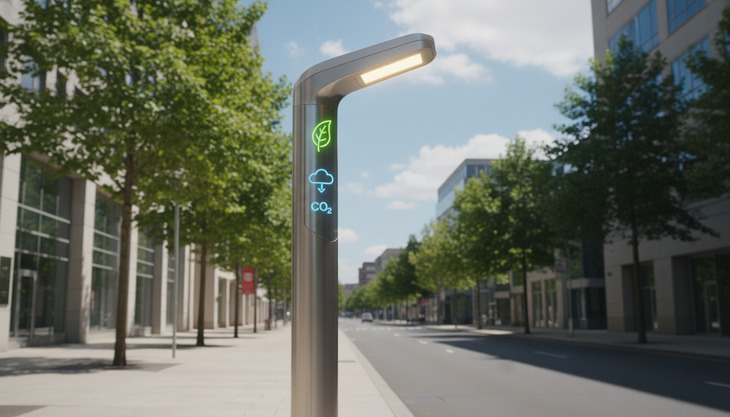
Switching to LED street lighting makes a measurable contribution to climate protection. A municipality with 1,000 light points can save 50 to 100 tons of CO2 annually through modernization. This reduction supports municipal climate protection concepts and contributes to achieving national climate targets. In addition, unlike older technologies, LED lights contain no mercury and can be recycled in an environmentally friendly way at the end of their service life.
An increasingly important aspect is insect-friendly lighting. Conventional lamps with a high UV content attract nocturnal insects and contribute to their decline. LED streetlights with warm white light and targeted radiation significantly reduce this attraction. The precise light control also minimizes light pollution, protects the natural night sky and respects the needs of residents for an undisturbed night’s sleep
Project planning and implementation
Successful conversion to LED street lighting requires careful planning. The first step is to take stock of the existing lighting infrastructure. This involves documenting mast locations, cable routes and current energy consumption. Lighting design in accordance with DIN EN 13201 ensures that the new luminaires meet all normative requirements and achieve the desired illuminance levels.
In addition to light output, mechanical properties also play a role when selecting luminaires. The IP protection class should be at least IP65 to ensure reliable operation in all weather conditions. The IK impact resistance is particularly relevant in public areas where vandalism must be expected.
Choosing the right color temperature
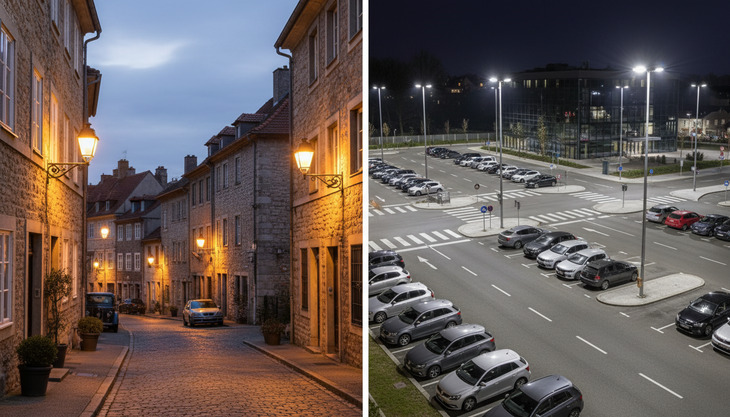
The choice of color temperature influences both the atmosphere and the functionality of the lighting. Warm white light with 2700K to 3000K is particularly suitable for residential areas and creates a cozy atmosphere. It is perceived as more pleasant by residents and reduces light emissions in the blue wavelengths, which can disrupt sleep patterns. Neutral white light with 4000K offers a higher color rendering and is suitable for areas where good visibility is important, such as at intersections or parking lots.
Conclusion: Future-proof investment in modern lighting
Switching to LED streetlights and modern path lighting is an economically sensible and ecologically responsible decision for local authorities and property managers. The combination of energy savings, improved lighting quality and intelligent control options makes LED the ideal technology for outdoor lighting in residential areas. With the right planning and high-quality products, you can create a lighting infrastructure that will meet the requirements of the coming decades.